

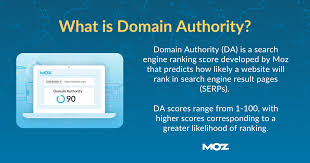
Running an online store is one of the most competitive businesses on the internet. Every product category, every brand name, every “best of” keyword is contested by dozens or hundreds of competing websites — many of them large, well-funded retailers with years of SEO investment behind them. For small and medium eCommerce store owners, understanding and building website authority is not just a nice-to-have strategy. It is the difference between generating consistent organic traffic and depending entirely on paid advertising to survive.
The moz da pa checker gives eCommerce businesses the authority intelligence they need to compete smarter, build stronger backlink profiles, and identify the realistic ranking opportunities that their competitors are overlooking. This guide is written specifically for online store owners, eCommerce managers, and digital marketers working in the product-selling space.
Why Authority Matters More in eCommerce Than Almost Any Other Niche
eCommerce SEO is uniquely challenging for one simple reason: the websites you are competing against are often household names. When someone searches for “best running shoes,” they are met with results from major retailers, established review sites, and brands that have been building their online authority for over a decade.
This means that for a newer or smaller eCommerce store, winning on broad, high-volume product keywords right out of the gate is rarely realistic. But here is the good news: the moz da pa checker reveals that even the biggest eCommerce players have authority weaknesses at the page level, in long-tail keyword categories, and in niche product segments where smaller stores can absolutely compete and win.
Knowing where those weaknesses are — and knowing your own authority position relative to them — is only possible when you are regularly using the moz da pa checker as part of your SEO strategy.
Step One: Benchmark Your eCommerce Site’s Current Authority
Before developing any SEO strategy for your online store, you need an honest baseline. Open the moz da pa checker and run your own domain through it. Record the following:
Your Domain Authority (DA): This is your store’s overall authority score. A new eCommerce store typically starts at DA 1. After a year of active SEO work, reaching DA 15 to 25 is realistic. Established stores with consistent link-building efforts can reach DA 30 to 50 over time.
Your Key Product and Category Page PA Scores: Your homepage DA tells only part of the story. Run your most important category pages and top product pages through the moz da pa checker to check their individual PA scores. These are the pages that need to rank for competitive product keywords, so their Page Authority matters just as much as your overall domain strength.
Your Spam Score: Make sure your own site carries a low Spam Score. If your store has ever used black-hat link-building tactics or purchased links from low-quality sources, your Spam Score may be elevated — which can suppress your rankings even if your DA looks reasonable.
Step Two: Analyze Your eCommerce Competitors with the Moz DA PA Checker
Once you have your own baseline, the next step is understanding where your competitors stand. This competitor authority analysis is one of the most valuable things the moz da pa checker can do for an eCommerce business.
Identify Your Real SEO Competitors
Search for the five to ten product keywords most important to your store. Note the websites appearing on page one — these are your actual SEO competitors, and they may be very different from the businesses you think of as commercial competitors. A review blog, a niche authority site, or a comparison website may consistently outrank dedicated eCommerce stores for certain product searches.
Run Competitors Through the Moz DA PA Checker
Paste all competitor URLs into the moz da pa checker and collect their DA, PA of ranking pages, and Spam Scores. This data reveals three critical insights:
The authority bar you need to clear. If the top-ranking product pages for your target keywords have PA scores averaging 28, you know what Page Authority your own category pages need to reach to compete.
Competitors with inflated authority. Some high-DA competitors may have built their authority through tactics that carry a high Spam Score. The moz da pa checker exposes this — and while Google may not have penalized them yet, it signals that their authority is fragile and potentially beatable through cleaner, more sustainable link building.
Gaps and opportunities. Often, the moz da pa checker reveals that certain competitors ranking for valuable product keywords have surprisingly low DA or PA scores. These are your immediate opportunities — keywords where your store can compete with focused content and a targeted link-building push.
Using the Moz DA PA Checker to Prioritize eCommerce Category Pages
Most eCommerce SEO strategies involve dozens or hundreds of category pages, each targeting different product segments. You cannot optimize and build links to all of them simultaneously — so prioritization is essential.
The moz da pa checker helps you prioritize eCommerce category pages in two important ways:
Identify your strongest existing category pages. Run all your main category URLs through the moz da pa checker and rank them by current PA score. Your highest-PA category pages are your strongest SEO assets — prioritize them for additional link building and content optimization first, since they are closest to ranking competitively.
Identify your most important underperforming pages. Compare the PA of your key category pages against the PA of competing pages that currently outrank you. The categories with the largest authority gap and the highest commercial value should be your priority link-building targets.
This data-driven prioritization ensures that every link-building effort you make is focused on the pages that will deliver the greatest return for your store’s organic traffic and revenue.
Link Building for eCommerce: How the Moz DA PA Checker Guides Every Decision
Building backlinks to an eCommerce store requires a different approach than link building for a blog or informational website. Product and category pages are harder to earn natural links to than informational content — but the right strategy, guided by the moz da pa checker, can make it highly effective.
Product Review Outreach
Reach out to bloggers, influencers, and niche publication editors who write product reviews in your category. Before contacting anyone, run their website through the moz da pa checker. Target reviewers with a DA of at least 20 and a Spam Score below 10 percent. A genuine product review with a backlink to your product page from a relevant, authoritative site is one of the most powerful link types for eCommerce.
Resource Page Link Building
Many websites in your niche maintain resource pages — curated lists of recommended tools, products, suppliers, or services. These pages are excellent link-building targets for eCommerce stores. Use the moz da pa checker to evaluate every resource page you identify before reaching out. Look for high PA on the resource page itself — since that is the page that will actually link to you — not just the overall domain DA.
Supplier and Manufacturer Links
If you stock branded products, reach out to the manufacturers or suppliers and request a link from their “where to buy” or “authorized retailer” page. Run these brand websites through the moz da pa checker first. Links from high-DA brand websites are extremely valuable — both for their direct authority transfer and for the trust signal they send to search engines about your store’s legitimacy.
Data-Driven Content for Earning Natural Links
eCommerce stores that publish original research, buying guides, product comparison articles, and industry data reports earn natural backlinks from other websites far more effectively than stores that only publish product descriptions. Use the moz da pa checker to identify high-DA websites in your niche that regularly link out to data and guides — then create content specifically designed to earn those links.
The Moz DA PA Checker and eCommerce Product Pages: What You Need to Know
One nuance that eCommerce store owners need to understand about using the moz da pa checker is the difference between category pages and individual product pages from an authority perspective.
Category pages tend to accumulate higher PA scores over time because they are more linkable than individual product pages. Other websites are far more likely to link to “Best Hiking Boots” than to a specific SKU page for one particular boot model.
Product pages typically have lower PA scores and should be supported primarily through strong internal linking from high-PA category pages. When you use the moz da pa checker and notice that your product pages have very low PA, the solution is usually not direct link building to those pages — it is improving the internal linking structure from your stronger category and blog pages.
Understanding this distinction helps you use the moz da pa checker data more accurately and build a more effective eCommerce link architecture.
Tracking eCommerce SEO Progress with the Moz DA PA Checker
eCommerce SEO is a long-term investment, and tracking progress systematically is essential for maintaining focus and demonstrating results. Here is a simple monthly tracking system using the moz da pa checker:
Monthly Domain Check: Record your overall DA and Spam Score every month. Look for a gradual upward trend in DA over time as your link-building efforts accumulate.
Quarterly Category Page Audit: Every three months, run your top 10 to 20 category pages through the moz da pa checker and record their PA scores. Compare to previous quarters to identify which pages are gaining authority and which may need additional link support.
Competitor Authority Check: Every three months, re-run your top five competitors through the moz da pa checker. Note whether the authority gap between your store and your competitors is narrowing — which indicates your strategy is working — or widening, which signals a need to accelerate your efforts.
New Backlink Quality Verification: Every time you secure a new backlink for your store, run the linking website through the moz da pa checker to verify its DA, PA of the specific linking page, and Spam Score. This ongoing verification ensures that your backlink profile stays clean and consistently high quality.
Common eCommerce SEO Questions Answered with Moz DA PA Checker Data
Why are my products not ranking even though I have thousands of them? The number of products on your site has little to do with ranking — authority does. Use the moz da pa checker to compare your DA against the sites currently ranking for your product keywords. If there is a significant authority gap, that is your primary problem to solve.
Should I focus on my homepage or category pages for link building? Run both through the moz da pa checker. If your homepage DA is already reasonable but category page PA scores are low, shift your link-building focus to earning links directly to your most important category pages. Homepage links raise overall DA but do not always help individual category pages rank faster.
My competitor has a lower DA than me but still outranks my store. Why? Look at the PA of the specific pages they are using to rank, not just their overall DA. Use the moz da pa checker to check the PA of their ranking page versus the PA of your competing page. A higher page-level PA on their specific ranking page — even from a lower overall DA domain — can explain why they outrank you for individual keywords.
How many backlinks do I need to raise my eCommerce DA? Quality matters far more than quantity. Ten backlinks from DA 40 websites will raise your DA more than one hundred links from DA 5 websites. Use the moz da pa checker to vet every link prospect and focus on quality above all else.
Conclusion: The Moz DA PA Checker Is Essential for Every eCommerce SEO Strategy
The eCommerce landscape is competitive, fast-moving, and unforgiving to websites that ignore their authority metrics. The moz da pa checker cuts through the complexity and gives online store owners exactly the data they need to make smarter decisions — which keywords to target, which competitors to benchmark against, which link-building opportunities to prioritize, and how to measure progress month after month.
You do not need to outspend your largest competitors to win organic traffic for your store. You need to outsmart them — and that starts with understanding your authority position and acting on that data consistently. The moz da pa checker makes that understanding instant, free, and actionable.
Make the moz da pa checker part of your eCommerce SEO routine starting today. Check your store. Check your competitors. Check every link prospect. And watch as the authority data you collect drives smarter decisions, stronger rankings, and more sustainable organic growth for your online store.
