

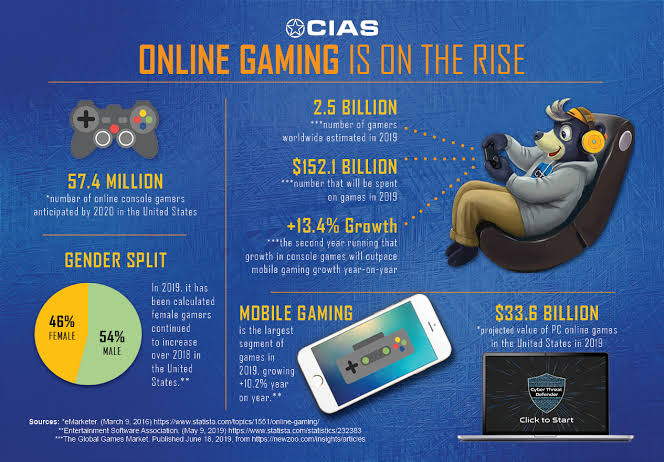
If you didn’t grow up with online slot gacor , your child’s request to play Roblox or Fortnite can feel like being asked to sign off on something you don’t understand. The good news is that the basics aren’t complicated, and a parent who knows a handful of things can make online gaming a normal, safe part of a kid’s life rather than a source of worry.
What they’ll actually be playing
For younger kids, the big three are Roblox, Minecraft and Fortnite. Roblox isn’t one game but a platform where users make and share thousands of games, which is why it’s so popular and why it needs the most supervision. Minecraft is a building and survival game with a gentle reputation, though its online servers vary in tone. Fortnite is a cartoon-styled shooter with no blood, an enormous player base, and heavy cosmetic spending.
Older kids and teens drift toward Call of Duty, Valorant, FIFA, mobile battle royales and whatever their friend group has settled on. Games have age ratings, PEGI in Europe and ESRB in North America, and they’re a useful starting point, though most kids play games rated above their age, and the rating says nothing about the online community.
Who they’ll be talking to
This is the part that worries most parents, and it’s worth being precise about. Online games generally have text chat, voice chat, or both. In a random public match, your child could be grouped with anyone. Most of those people are other kids and ordinary adults. A small number are not.
The practical risks are: exposure to adult language and hostility, scams that target children (fake giveaways, “free Robux,” phishing links), and, rarely, adults attempting to build inappropriate relationships, usually by moving the conversation to a private platform like Discord or Snapchat.
What helps: keep voice chat set to friends-only until you’re confident your child can handle public lobbies. Every major platform lets you do this. Make sure your child knows never to share their real name, school, city or photos, and that anyone asking them to move to another app or keep a secret is a red flag to tell you about immediately. Then actually ask, now and then, who they played with. Make it a normal conversation rather than an interrogation.
Discord deserves a specific mention. It’s a chat app most gaming kids use, and it’s where much of the social side happens. It has weaker moderation than games do, and its servers can range from lovely to awful. If your child uses it, know which servers they’re in.
Spending
Most games your child will want are free, and this is where money enters. In-game purchases are bought with virtual currencies, V-Bucks, Robux, COD Points, which are designed to make real costs hard to track. A skin priced at 1,200 V-Bucks is around ten dollars, but the currency bundles never match the prices exactly, so there’s always a little left over that nudges toward another top-up.
Kids also face social pressure to spend. Default characters are visibly “free” and get mocked. Battle passes create fear of missing out.
The fix is structural rather than behavioural. Don’t attach your card to any gaming account. Use prepaid gift cards, which set a hard ceiling. Turn on purchase passwords, which every platform offers. And decide on a monthly amount, if any, and stick to it, the way you would with any pocket money.
Be aware of loot boxes and gacha mechanics, randomised paid rewards that several countries now regulate as gambling. If a game your child plays has them, that’s a conversation worth having about what a random reward is designed to do.
Time and limits
The question every parent asks is how much is too much, and there’s no good number. What the research does say is that the harm from gaming comes from what it displaces, not from the hours themselves. If your child is sleeping enough, keeping up at school, seeing friends offline and doing at least one other thing they care about, the gaming is probably fine. If any of those are slipping, that’s the signal.
Limits that hold are the ones set in advance and tied to the game’s structure. “Two matches then dinner” works better than “twenty minutes,” because a match in progress is a real commitment to their teammates and ending it mid-way is genuinely stressful for them. Learn how long a round of their game takes, then set limits in rounds.
Keep consoles and PCs in shared spaces for younger kids. Use the built-in parental controls, which are now decent on every platform: they can limit playtime, restrict chat, block purchases, and filter by age rating. Set these up together, explaining why, rather than silently.
And protect sleep above all else. Devices out of bedrooms at night is the single highest-value rule.
Play with them
The advice parents least expect and most need. Sit down and play, or at least watch. You’ll understand within an hour why they like it, what the social dynamics are, and whether the community they’re in is a good one. Kids are far more likely to tell you about a problem if you’ve shown you don’t think the whole activity is stupid.
Online slot depo 10k is where a lot of childhood friendship now happens. Treated with the same ordinary attention you’d give any place your child spends time, it’s not a threat. It’s just where the playground moved.
