

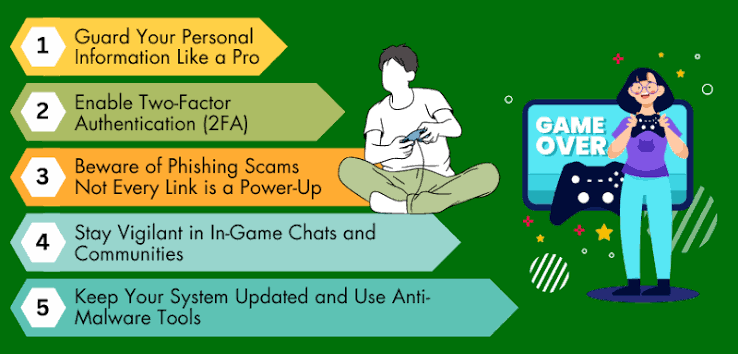
A gaming account is worth more than most people realise. Years of progress, hundreds of dollars of skins, a rank you grinded for, friends lists, sometimes a linked payment method. To a scammer, that’s a package worth stealing, and the tools to steal it are cheap and widely shared. The good news is that most attacks rely on you making a small mistake, and those mistakes are easy to stop making.
Start with the account itself
Turn on two-factor authentication everywhere it’s offered. Steam, slot depo 1k, PlayStation, Xbox, Riot, Battle.net, Discord. All of them support it. Use an authenticator app rather than SMS if you can, because phone numbers can be hijacked. This single step blocks the majority of account takeovers, because a stolen password alone won’t get anyone in.
Use a different password for every gaming account. This sounds tedious, but the reason it matters is specific: when a random gaming forum from 2014 gets breached, that email and password combination gets sold and tried against every major platform. If you reused it, you’re in. A password manager makes this painless.
Check which email is attached to each account and make sure that email itself is locked down with its own two-factor. Your email is the master key. Anyone who controls it can reset every password you own.
The scams you’ll actually see
Most gaming scams aren’t technical. They’re social. Someone convinces you to hand over access yourself.
The fake friend message. A Discord or Steam friend sends you a link, often something like “is this you in this video?” or “vote for my team.” The account has been compromised and the link leads to a login page that looks real. You enter your details, and now your account is compromised too, and the message goes out to your friends. Never log in through a link someone sent you. Go to the site directly.
The trade scam. Someone offers a great deal on skins or items, then asks you to confirm through a “middleman” or a screenshot, or swaps the item at the last second in the trade window. Steam’s trade confirmation was built to stop this, but people still get caught by pressure and excitement. Slow down. If a trade feels rushed, it’s probably meant to be.
The fake giveaway. A streamer lookalike account or a site promising free currency, skins or gift cards. There is no free currency. Every one of these is either a phishing page or a way to get you to install something.
The “I work for the game company” message. Support staff will never contact you through in-game chat or Discord DMs asking for your password or a verification code. If someone claims to be from the company, they aren’t.
Kids are targeted with all of these more than adults, and they’re targeted through platforms like Roblox and Minecraft with the same tricks. If you have children who game, walk them through these patterns. They’re far more likely to spot a scam if they’ve heard about it beforehand.
Money and payments
Don’t attach a debit card directly to a gaming account. Use a credit card, which has chargeback protection, or better, prepaid gift cards and platform wallet top-ups. If an account is compromised, a prepaid balance is the most that can be lost.
Turn on purchase confirmations. Most platforms let you require a password or PIN before any purchase. This stops both hackers and children from draining a balance.
Check your transaction history now and then. Small unauthorised purchases are often a test before larger ones.
Be careful with third-party key sellers and skin markets. Some are legitimate. Many are not, and buying a key that was purchased with a stolen card can get the game revoked from your account, or the account flagged.
Privacy while playing
Your username follows you. If you use the same gamertag across platforms, and it’s also your Instagram handle, anyone who wants to find your real identity has an easy path. Consider using different names for gaming and social media, especially if you play competitive games where people get angry.
Voice chat reveals more than you think. Your accent, background noise, other people in the room. You don’t have to talk in public lobbies. Party chat with friends is safer.
Streaming adds another layer. If you stream, be aware of what’s on screen and audible. Notifications, browser tabs, mail on the desk behind you. Streamers have been doxxed from a reflection in their glasses.
Limit what your profile shows. Most platforms let you hide your real name, friends list, game activity and location. There’s rarely a good reason to leave these public.
Swatting and harassment
This is rare but serious. If someone gets your home address, they can make a false emergency call that sends armed police to your door. It’s happened to streamers and to ordinary players who won an argument. Protecting your address is the only defence: never reveal your city in voice chat, don’t share photos that show identifiable locations, and keep your real name off your slot depo 1k profiles.
For general harassment, use the tools. Block, mute, report. Don’t engage. Most platforms now act on reports faster than they used to, and a documented pattern of abuse from one account gets it banned.
If something goes wrong
Change the password on the affected account and on the email linked to it. Contact the platform’s support through the official website, not through any link you were sent. Most platforms will restore stolen items once, if you can prove ownership. Check your other accounts, because credentials tend to get reused.
Then figure out how it happened, and close that door. Almost every compromise comes down to a reused password, a missing two-factor code, or a link that should never have been clicked. Fix those three things and you’re safer than the vast majority of players.
