

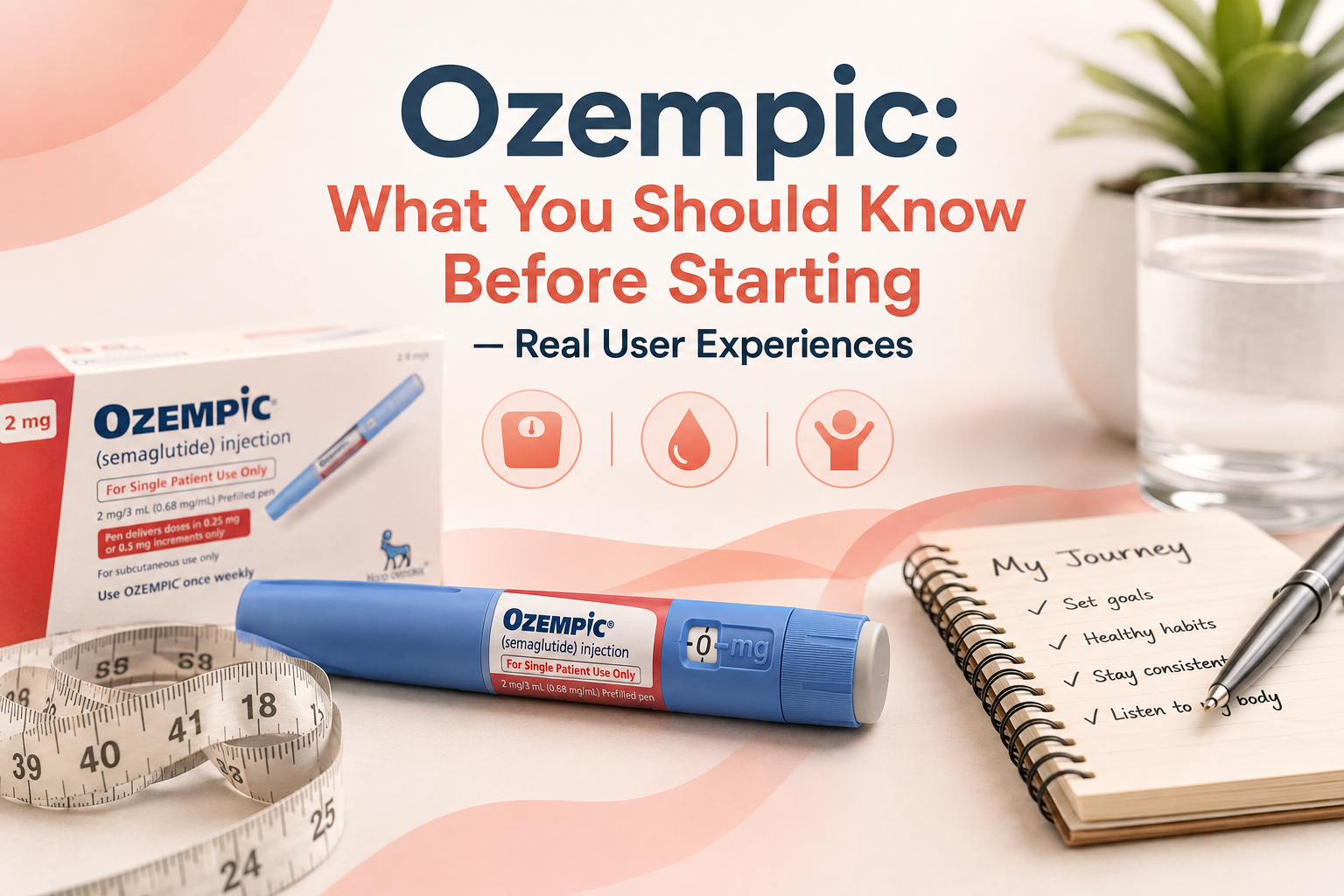
When your doctor first mentions Ozempic, a flood of questions hits immediately. Does it actually work? What are the side effects? How long until you see results? And most importantly — where can you find honest information instead of another glossy brochure?
I went through this myself, which is why I decided to pull together everything I learned from my own journey and from other people who have already walked this path. One resource that helped me set realistic expectations early on was Ozempic Review — a platform packed with real user stories, effectiveness ratings, and candid discussions about side effects.
What Is Ozempic and Why Is Everyone Talking About It?
Ozempic (active ingredient: semaglutide) is an injectable medication originally developed to control blood sugar in type 2 diabetes. Over time, it became clear that it also helps with weight loss — and that discovery made it explosively popular.
The mechanism is straightforward: the drug mimics the GLP-1 hormone responsible for feelings of fullness. You eat less, your body takes in fewer calories, and weight gradually drops. Sounds perfect, right?
But reality, as always, is a bit more complicated.
The Real Experience: The First Weeks Are the Toughest
One of the most valuable lessons I learned the hard way: the first 2–4 weeks can be genuinely challenging. Nausea, fatigue, headaches — these are not just warnings on a leaflet, but real companions during the adjustment period.
But here is the key: if you are willing to change your eating habits alongside the medication, everything becomes much easier. The classic mistake is trying to eat the same portions as before. Ozempic quite literally “switches off” your ability to overeat, and if you ignore that signal, your body will protest.
💡 Advice from those who have been there: reduce your portions before you start feeling discomfort. Listen to your body — this is not a cliché, but a genuine survival strategy for the early stages.
Results That Inspire
After a few months of consistent use, the picture changes dramatically. Here is what people typically report:
- Weight loss — from 8 to 20+ kg over several months
- Improved A1C levels — in some cases dropping from 8.1 to 5.6
- Stable energy levels after the adjustment period
- Reduced food cravings — especially for sugar and fast carbs
Of course, results are individual. But the overall trend is clear: the medication works if you work with it.
Side Effects: Honest and Without Panic
Let us be frank. Ozempic is a potent drug, and your body reacts to it. The most common side effects:
Таблица
| Symptom | Frequency | Duration |
| Nausea | Very common | 1–2 weeks |
| Fatigue | Common | 1–2 weeks |
| Headache | Moderate | A few days |
| Constipation | Moderate | Variable |
| Reduced appetite | Constant | Throughout treatment |
The good news: most symptoms disappear within the first month. The key is not to give up at the first hurdle and to stay in touch with your doctor.
Where to Find Trustworthy Information?
Official leaflets give dry facts, while marketing materials often paint an overly rosy picture. So where do you find the balance between “everything is terrifying” and “everything is perfect”?
For me, the turning point was finding a space where real users share unfiltered experiences. If you are just considering this medication or are at the very beginning of your journey, I highly recommend checking out Ozempic Review. It is a dedicated platform where people rate effectiveness, ease of use, and overall satisfaction — complete with honest stories about side effects and practical tips for getting through the first few weeks.
Key Takeaways
- Ozempic works, but it demands discipline — both in taking the medication and in managing your diet.
- The first weeks are a patience test. Get through them, and it gets easier.
- Do not eat your old portion sizes — your body is already signaling that it has had enough. Listen.
- Read real reviews before you start — it helps you prepare mentally and avoids panic when things do not go perfectly.
Ozempic is not a magic pill (well, it is an injection), but a tool. And like any tool, it only produces results in capable hands.
Important: This article is for informational purposes only and does not replace medical advice. Always consult a healthcare professional before starting any treatment.
