

Balancing Technology and Personal Care:
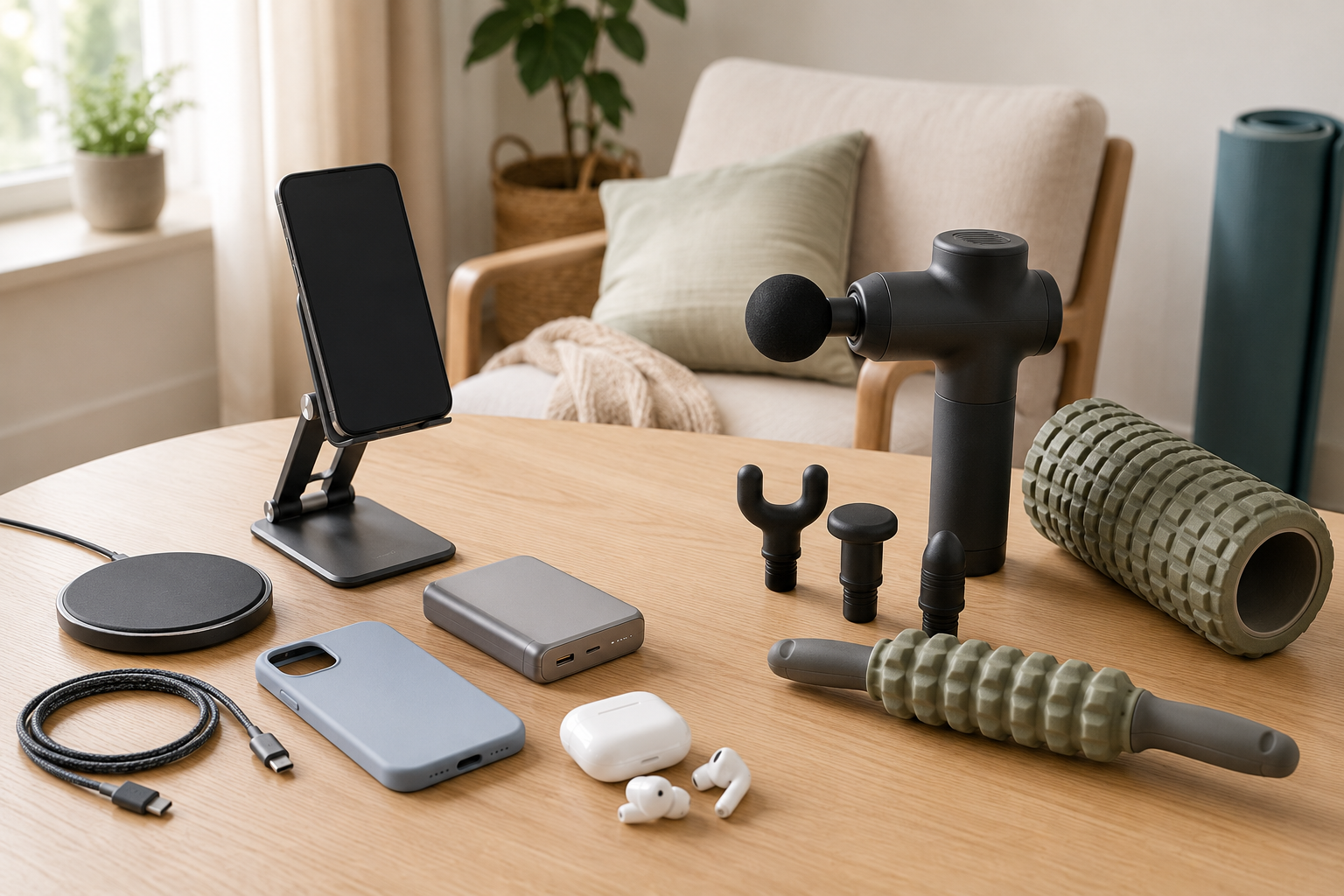
Smartphones are used for communication, work, navigation, entertainment, shopping, and managing daily schedules. A phone accessories store may provide products that help users charge, position, protect, or carry their devices. At the same time, some people include massage in a general relaxation or personal-care routine.
These categories may appear unrelated, but both require thoughtful product selection. A phone stand should match the device and intended surface. A charging product should meet the phone’s connection and power requirements. Massage products should be used only for their stated purpose and should not be expected to diagnose, treat, or cure a medical condition unless supported by appropriate authorization and evidence.
The phrase healthy massage is not a formal medical diagnosis or a guaranteed treatment category. In this guide, it refers to a cautious, comfort-focused approach that respects personal health conditions, product instructions, reasonable pressure, and the limits of available evidence.
Customers should identify the exact purpose of each purchase before comparing products. This prevents unnecessary accessories from accumulating and reduces the risk of selecting an item whose claims do not match its documented function.
Technology and personal care can exist within the same routine, but neither should be guided by promotional language alone. Compatibility, safety instructions, realistic expectations, maintenance, and retailer policies should remain part of every decision.
Shopping at a Phone Accessories Store
A phone accessories store may carry cases, screen protectors, charging cables, power adapters, wireless charging pads, power banks, phone holders, tripods, earbuds, and storage products. Items that look similar may support different phone models, connectors, charging methods, and device dimensions.
Shoppers should begin by recording the exact phone model. A case designed for another generation may block cameras, buttons, speakers, or charging ports. Phone holders should be checked against the device’s width, height, weight, and regular case thickness.
Charging accessories require additional attention. The cable connector, adapter output, phone compatibility, and included components should be reviewed together. A product may include a cable without a power adapter, or it may require a separate compatible component to provide the advertised function.
Power banks should be compared through documented capacity, ports, dimensions, weight, charging instructions, and package contents. They should be stored and transported according to manufacturer guidance and inspected for swelling, cracks, unusual heat, or other visible damage.
Screen protectors and cases should be evaluated for fit rather than appearance alone. A protector may interfere with a case if their dimensions overlap, and an attached wallet or grip may affect wireless charging or phone-holder compatibility.
Before ordering, review the warranty, return terms, shipping details, and customer-support options. Keep packaging until the accessory has been tested with the intended phone and setup.
Phone Positioning and Everyday Ergonomics
Phone stands and holders can create a consistent location for a device, but they do not automatically correct posture or prevent discomfort. The mounting height, viewing angle, task duration, and surrounding workstation all influence how the product is used.
The Occupational Safety and Health Administration advises that smartphones and tablets should be used with relaxed shoulders, arms near the torso, and the neck in a neutral position without excessive bending to view the screen.
For desk use, a stand can raise the screen, but extended typing may still require a suitable keyboard or another arrangement. Users should avoid positioning the phone so far away that they repeatedly reach forward or twist their body. A stable base and clear cable route can prevent the device or charging cable from occupying the work area unnecessarily.
Vehicle holders require a separate safety review. They should not block the driver’s view, mirrors, controls, displays, or airbags. Local laws concerning windshield mounts and mobile-device use may vary. A mounted phone does not make handheld interaction safe or lawful while driving.
Tripods and clamp holders should be placed on stable surfaces and outside walking areas. A clamp should not be attached to furniture, gym equipment, or another object unless both the holder and surface are suitable for that use.
Phone accessories can support organization, but regular movement, suitable positioning, and responsible device use still require personal attention.
Understanding Healthy Massage and Its Limits
Massage includes different techniques that manipulate soft tissues through manual pressure or mechanical products. People may seek massage for relaxation, temporary comfort, or as part of a broader wellness routine. However, the effects vary by condition, technique, practitioner, and individual health status.
The National Center for Complementary and Integrative Health reports that massage may provide short-term relief for some types of pain, but the evidence is not strong for many conditions. Massage should not be used as a reason to postpone medical evaluation.
A healthy massage approach uses realistic expectations. It does not assume that stronger pressure produces greater value, and it does not treat pain as proof that the technique is working. Massage should be stopped if it causes sharp pain, numbness, unusual swelling, skin irritation, dizziness, or worsening symptoms.
The NCCIH states that the risk of harmful effects from massage therapy appears low, but rare serious effects have been reported. Some reports involved vigorous techniques or people with a higher risk of injury
People who are pregnant, recovering from surgery, managing a recent injury, taking medication that affects bleeding, or living with another health condition should ask a qualified healthcare professional whether massage is appropriate for them.
Massage is a personal-care option, not a universal response to pain or illness.
Selecting and Using Massage Products Responsibly
Massage products may use rollers, vibration, percussion, compression, or heat. Before purchasing, shoppers should review the intended body area, available settings, product dimensions, power source, session controls, cleaning instructions, and stated restrictions.
A powered massage product should begin at a comfortable setting. It should not be used on an injured, swollen, numb, or otherwise concerning area without professional guidance. The product should not be applied over the front or side of the neck, directly over bones, or on another area that the manufacturer excludes.
Products that include heat require additional caution. Users should understand the available temperature settings and automatic shutoff function. Individuals with reduced sensation may not recognize excessive heat promptly and should obtain professional advice before use.
The FDA distinguishes general wellness products from products intended for diagnosing, curing, treating, mitigating, or preventing disease. Claims that move beyond general wellness may place a product in a different regulatory category.
Shoppers should therefore examine claims carefully. Statements promising to eliminate disease, repair structural damage, or replace medical care should not be accepted without relevant evidence and authorization.
Powered products should be inspected for damaged cables, cracked housings, unusual noise, excessive heat, or malfunctioning controls. They should be cleaned and stored according to the manufacturer’s instructions and kept away from water unless specifically designed for permitted exposure.
A Combined Shopping Checklist
Before purchasing from a phone accessories store, confirm the phone model, case dimensions, connector type, charging requirements, accessory size, mounting method, included components, warranty, and return conditions. Identify whether another adapter, cable, application, or subscription is required.
For phone holders, check the intended surface, adjustment range, device weight limit, and cable access. For chargers and power banks, review the manufacturer’s compatibility information, power requirements, storage instructions, and visible safety markings.
Before purchasing a massage product, identify the intended body area and whether the goal is general relaxation or another use. Review the massage method, intensity levels, heat settings, session controls, size, power source, cleaning instructions, health warnings, and warranty.
Do not select massage products based only on dramatic medical claims. Ask a healthcare professional about persistent pain, unexplained symptoms, recent injuries, or conditions that may affect massage safety.
For both categories, calculate the full cost, including required adapters, replacement parts, batteries, subscriptions, or return shipping. Save receipts and product descriptions, then inspect each item promptly after delivery.
A phone accessory and a healthy massage product serve different needs, but the purchasing principles remain similar: understand the intended function, confirm compatibility, follow instructions, recognize limitations, and avoid unsupported promises.
This article is for general educational purposes and does not provide medical advice, diagnosis, or treatment.
