

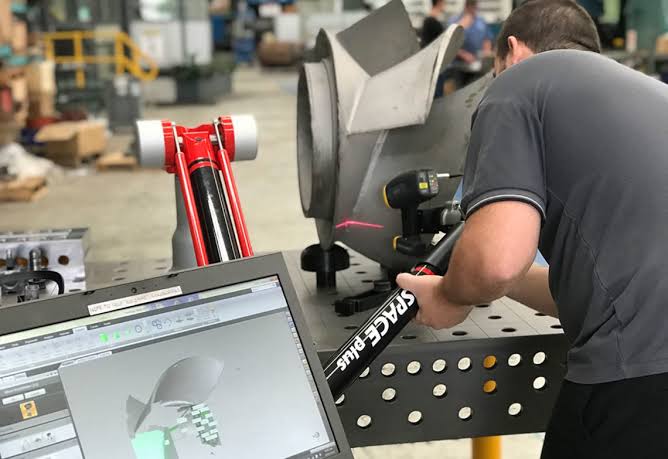
When a critical machine component fails, the problem is not always the failure itself. Sometimes, the bigger issue is finding a replacement. The original manufacturer may have discontinued the part, stock may be unavailable, or the expected delivery time may be too long for a business that needs to keep operating. This is where reverse engineering services in Dubai can become a practical business advantage.
This is where reverse engineering can become a practical business advantage. Instead of relying entirely on an original supplier, companies can capture an existing component, recreate its geometry digitally and develop a manufacturing route based on the part they already have.
With 3D scanning and reverse engineering, a physical component can become useful digital information for reproduction, modification or further development. The value goes beyond replacing one part. For businesses with older equipment, specialised components or products that need improvement, reverse engineering can reduce supplier dependency, support faster decision-making and give engineering teams greater control over what happens next.
Overview: What Is Reverse Engineering and Why Does It Matter for Businesses?
Reverse engineering is the process of analysing an existing physical component and recreating its geometry as digital design data. Using 3D scanning and reverse engineering, engineers can capture the dimensions and shape of a part, convert the information into a CAD model and then validate the digital version before manufacturing. Businesses commonly use this approach when original parts are obsolete, unavailable or difficult to source. It can also support product improvements, spare-part development and the digitisation of existing components. For manufacturers, the main advantage is flexibility: instead of depending entirely on an OEM or an outdated drawing, a company can work from the physical part and create a digital reference for future engineering and production needs.
What Reverse Engineering Actually Gives a Business
At a technical level, reverse engineering starts with understanding an existing component. The physical part is examined and captured using 3D scanning equipment, producing detailed digital data that represents its geometry. That information can then be developed into a CAD model for further engineering work.
But for a business, the important part is what happens after the scan.
A usable reverse engineering CAD model creates a digital reference for a component that may previously have existed only as a physical object. Engineers can use that information to study the part, make controlled changes, create prototypes or develop a route towards manufacturing.
The process can also include verification before a final component is produced. Simply capturing the shape of a part does not automatically make the resulting model suitable for production. Dimensions, interfaces, functionality and application requirements still need to be considered.
As Pir Arkam, Founder & CEO of Proto21, explained in a 2026 interview:
“Anyone can buy the technology. What’s most important is the input parameters; how you run the machine and the expertise you bring.”
Pir Arkam, Founder & CEO, Proto21
That distinction is important. Reverse engineering is not simply a matter of putting an object under a scanner. The quality of the final result depends on how the captured information is interpreted, developed and validated.
When the Original Spare Part Is No Longer an Option
One of the clearest applications of spare parts reverse engineering is dealing with components that are no longer readily available.
Industrial equipment can remain in service for many years. The machine may still perform its job well, but the company that originally supplied one of its components may have stopped producing it. Older machinery can therefore create a strange situation: replacing the entire system may be unnecessary, but keeping it operational becomes difficult because of one missing part.
This is where reverse engineering obsolete parts can provide another option.
Instead of starting with an original CAD file or technical drawing that may no longer exist, engineers can work from the physical component itself. The part can be scanned, converted into digital data and developed into a model that can support reproduction or further engineering.
For a business, that can mean having an alternative when:
- the original component has been discontinued
- the supplier no longer carries the required part
- replacement stock is difficult to locate
- the quoted lead time is too long
- the cost of sourcing an original part has become impractical
That does not mean every obsolete component should automatically be reverse engineered. Material requirements, tolerances, operating conditions, safety considerations and the condition of the original part all need to be assessed first.
The business benefit is having another route available when the conventional supply chain no longer provides an easy answer.
Reducing Downtime When Replacement Parts Are Delayed
Consider a production machine that has been running reliably for years. A relatively small component fails, but the manufacturer quotes several weeks for a replacement.
The component may be small. The business impact is not.
Depending on the machine, the delay could affect production schedules, maintenance planning, customer commitments and other processes connected to that equipment. Waiting for the original part may still be the right choice in some cases, particularly when the component is safety-critical or subject to specific manufacturer requirements.
In other situations, however, businesses may need to explore alternative ways of restoring the equipment.
This is one area where reverse engineering for manufacturing can be useful. An existing component can provide the physical reference needed to create a digital model. Once the geometry has been captured and appropriately validated, the business has a clearer basis for evaluating manufacturing options.
The potential advantages include:
- reducing the time spent searching for unavailable parts
- giving maintenance teams another replacement route to consider
- reducing disruption caused by extended supplier lead times
- creating digital records for components that may be needed again
The advantage is not simply speed. It is having an additional path when supplier availability becomes a bottleneck.
For companies operating older or specialised machinery, that flexibility can make a meaningful difference.
The Replacement Does Not Always Have to Be Identical
Reverse engineering is often associated with copying an existing part. That is certainly one application, but it is not the only one.
Once a physical component has been converted into a digital model, engineers have an opportunity to examine whether the original design can be improved.
Perhaps a section can be made lighter without compromising its intended function. Maybe a geometry can be modified to make manufacturing easier. A component could also be redesigned around a different material or production method, provided the new design is properly assessed for its application.
This is where industrial reverse engineering moves beyond straightforward reproduction.
The original part becomes a starting point rather than necessarily being the final design.
Depending on the application, an engineering team may investigate:
- Weight: Can unnecessary material be removed?
- Strength: Are there areas that could be reinforced or redesigned?
- Manufacturability: Can the geometry be adapted for a more practical production method?
- Function: Does the component need to perform differently from the original?
- Material: Could another material be more suitable for the operating conditions?
The aim should not be to change a component simply because changes are possible. Any modification needs to be based on the part’s intended function and followed by appropriate engineering assessment and validation.
That is what separates useful reverse engineering from simply making a digital copy.
Where Industrial Reverse Engineering Can Make a Real Difference
Reverse engineering can be useful across industries where equipment, components and products have long service lives or where physical parts need to be recreated without complete digital records.
Aerospace
Aerospace applications can involve complex components, older systems and demanding dimensional requirements. Reverse engineering can help create digital references for existing parts, although critical aerospace applications require appropriate engineering validation and compliance before a component can be used.
Oil and Gas
Oil and gas equipment can remain operational for extended periods, making spare-part availability an important consideration. When an older component becomes difficult to source, reverse engineering may provide an alternative route for assessing and reproducing the part.
The potential value is particularly clear when equipment is specialised and replacing an entire system is not a realistic option.
Automotive
Automotive applications range from replacement components for older vehicles to product development and design improvement. Physical components can be digitised when original design information is unavailable, allowing engineers to work from an existing part rather than starting from scratch.
There can also be scope to refine the design while maintaining the interfaces and fit required by the existing assembly.
Industrial Machinery
For industrial machinery, the biggest advantage can be continuity. A machine does not necessarily become obsolete simply because one component is difficult to obtain.
Reverse engineering services can help businesses investigate whether an existing component can be digitised, reproduced or redesigned for a specific application.
Across these sectors, the common thread is not the scanning technology itself. It is the need for greater control over physical assets, replacement parts and engineering information.
Is Reverse Engineering More Cost Effective Than Waiting for the OEM?
It is tempting to frame reverse engineering as the cheaper alternative every time. That would be too simplistic.
The cost depends on the component, its complexity, the required material, manufacturing method, validation requirements and the quantity needed. In some cases, buying an available OEM replacement will be the most practical option.
The calculation changes when a part is discontinued, the OEM lead time is unusually long or replacement costs are high.
| Consideration | OEM Replacement | Reverse Engineering Route |
| Part availability | Depends on OEM stock and production | An alternative route may be possible from the existing component |
| Lead time | Can be extended for obsolete or specialised parts | Depends on scanning, engineering and manufacturing requirements |
| Cost | Includes OEM pricing, sourcing and potentially shipping | Includes scanning, engineering and manufacturing costs |
| Obsolete components | May no longer be available | Existing parts can potentially be used as physical references |
| Digital information | May remain with the original manufacturer | A digital model can be created for future engineering use |
| Future flexibility | Continued dependence on the original supply route | Greater control over future replacement options |
The comparison should therefore include more than the price of a single replacement.
If a machine is losing valuable production time while a replacement part is being sourced, the cost of that delay may be significant. Likewise, if a component is likely to be needed again, creating a verified digital reference can have value beyond the immediate repair.
Reverse engineering is not automatically the more economical choice. It becomes particularly interesting when availability, lead time, supplier dependency and future requirements are all part of the decision.
From a Replacement Solution to a Competitive Advantage
The strongest case for reverse engineering is not that it replaces every conventional manufacturing or procurement route. It is that it gives businesses another option.
That matters when supply chains become less predictable or when equipment remains useful long after its original components have become difficult to source.
A company with accurate digital information about its existing components may be better positioned to:
- respond to obsolete or unavailable parts
- reduce dependence on a single supplier
- investigate replacement options more quickly
- maintain digital records of important components
- identify opportunities for design improvements
- support future prototyping and manufacturing
- make better-informed decisions about older equipment
There is also a longer-term advantage to digitisation. Once a physical component has been accurately captured and converted into useful engineering data, the information does not necessarily have to be used only once. It can become part of the company’s engineering reference material for future work.
That can be particularly valuable for businesses managing specialised equipment where original drawings or digital files are incomplete.
In this sense, reverse engineering becomes less about recovering something that has been lost and more about creating a new layer of control around an existing physical asset.
Conclusion: Keeping More Control Over What Comes Next
Reverse engineering can solve a very practical problem: what do you do when a component you need is no longer easy to buy?
But its value extends further. 3D scanning and reverse engineering can turn an existing physical component into useful digital information that supports reproduction, modification, validation and future manufacturing decisions.
For businesses, that can mean less dependence on a single supplier, more options when dealing with obsolete parts and a better understanding of components that may have been difficult to document in the past.
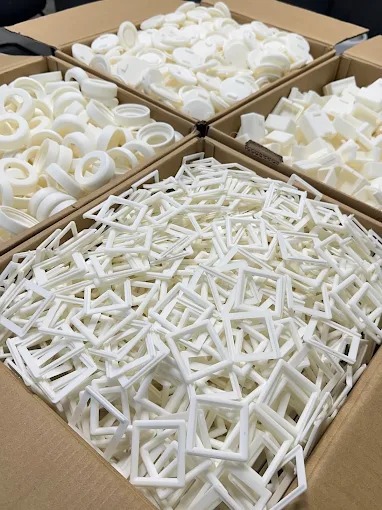
The approach still needs sound engineering judgement. Not every component should be recreated, and not every replacement should be treated as a simple copy. But when the right conditions exist, reverse engineering can give businesses a practical way to respond to supply challenges while opening the door to better designs.
For companies exploring this approach, working with an engineering partner that can connect scanning, digital design, validation and manufacturing can make the process more straightforward. Proto21 offers these capabilities for businesses looking to take a component from physical reference through to a manufacturable outcome.
Frequently Asked Questions
1. What is reverse engineering in manufacturing?
Reverse engineering in manufacturing involves analysing an existing physical component and recreating its geometry as digital engineering data. The resulting model can then support reproduction, modification, prototyping or manufacturing.
2. How does 3D scanning support reverse engineering?
3D scanning captures the geometry of a physical component as digital data. Engineers can use this information to develop a CAD model, inspect the component and make appropriate modifications before moving towards production.
3. When should a business consider reverse engineering an obsolete part?
It can be worth considering when a component is discontinued, difficult to source, subject to a long lead time or no longer supported by the original manufacturer. The suitability of the approach depends on the part and its application.
4. Can reverse engineering be used to improve an existing component?
Yes. Reverse engineering does not have to produce an exact copy. Once the existing geometry is available digitally, engineers can assess opportunities to modify the design for factors such as weight, manufacturability or functionality.
5. Is reverse engineering cheaper than buying an OEM replacement?
Not necessarily. The cost depends on the complexity of the part, engineering requirements, materials, manufacturing method and quantity. It can become more cost-effective when OEM parts are expensive, discontinued or subject to long lead times.
6. What types of spare parts can be reverse engineered?
Many physical components can potentially be reverse engineered, provided their geometry can be captured and the intended application allows it. Industrial machinery components, automotive parts and other specialised components are common applications.
7. How accurate is a reverse-engineered CAD model?
Accuracy depends on the scanning equipment, the condition and geometry of the original component, the modelling process and the required tolerances. Dimensional and functional validation is important before a model is used for production.
8. Which industries commonly use industrial reverse engineering?
Applications can be found across automotive, aerospace, oil and gas, industrial machinery and other sectors where companies need to recreate, document or improve physical components.
9. Can reverse engineering help reduce machinery downtime?
It can provide an alternative route when an important replacement component is unavailable or subject to a long lead time. However, whether it can reduce downtime depends on the component, engineering requirements and manufacturing route.
10. What should businesses consider before reverse engineering a component?
Businesses should consider the component’s function, material, dimensional requirements, operating conditions, safety implications, required tolerances and intended manufacturing method. For critical applications, appropriate engineering and validation should be completed before the replacement is put into service.
