

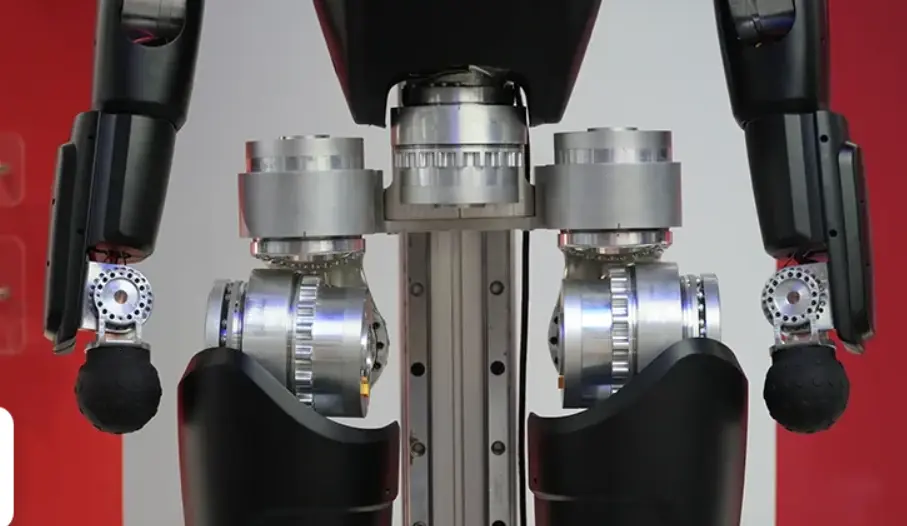
As robotics technology continues to evolve, the demand for smarter, faster, and more precise machines is growing across industries. From manufacturing plants and warehouses to healthcare facilities and service environments, robots are becoming essential tools for improving efficiency and productivity. At the heart of every advanced robotic system lies a critical component known as the robot joint module.
A robot joint module is a self-contained motion unit that enables robotic arms and automated machines to move with precision and flexibility. It typically combines a motor, gearbox, encoder, controller, and communication interface into a compact assembly. This integrated design simplifies robot development while enhancing overall performance and reliability.
The primary function of a robot joint module is to create controlled rotational or linear motion. Similar to the joints in a human body, these modules allow robots to bend, rotate, lift, and position objects accurately. Each joint contributes to the robot’s degrees of freedom, determining how effectively it can perform complex tasks. By coordinating multiple joint modules, robots can achieve smooth and highly sophisticated movements.
One of the key advantages of modern robot joint modules is their compact structure. Traditional robotic systems often required separate motors, controllers, and transmission mechanisms, resulting in larger and more complex assemblies. Integrated joint modules reduce space requirements, simplify wiring, and minimize installation time. This streamlined design helps manufacturers develop robots that are lighter, more efficient, and easier to maintain.
Precision is another major benefit of robot joint modules. Advanced encoders continuously monitor position, speed, and torque, allowing the system to make real-time adjustments. This level of accuracy is essential in applications such as electronic assembly, medical robotics, and laboratory automation, where even minor deviations can affect performance and product quality.
Robot joint modules are widely used in collaborative robots, also known as cobots. These robots are designed to work safely alongside humans in shared workspaces. Integrated torque sensing and intelligent control systems enable joint modules to detect resistance or unexpected contact, improving workplace safety while maintaining operational efficiency.
The rise of artificial intelligence and smart manufacturing has further increased the importance of robot joint modules. Modern modules can communicate with centralized control systems, industrial networks, and cloud-based platforms. This connectivity supports predictive maintenance, performance monitoring, and data-driven optimization, helping businesses reduce downtime and improve productivity.
In addition to industrial applications, robot joint modules are playing a growing role in healthcare, logistics, agriculture, and service robotics. Surgical robots rely on highly precise joints for delicate procedures, while warehouse robots use them for fast and accurate material handling. Agricultural robots employ joint modules to perform planting, harvesting, and crop monitoring tasks with remarkable efficiency.
As automation continues to expand globally, robot joint modules will remain a fundamental technology driving robotic innovation. Their ability to deliver compact design, precise motion control, high reliability, and intelligent connectivity makes them indispensable in the next generation of robotic systems. By enabling smoother movement and greater adaptability, robot joint modules are helping shape a future where robots become even more capable, efficient, and integrated into everyday life.
