

Picture this: it’s Saturday morning, and instead of enjoying your coffee on the patio, you’re wrestling a sputtering gas mower across the yard, dodging tree roots and wiping sweat from your brow. The noise drowns out birdsong, the fumes linger for hours, and by the time you’re done, half the weekend feels wasted. For decades, this ritual has defined homeownership for millions — but it doesn’t have to anymore. The lawn care industry is undergoing a quiet revolution, driven by advances in robotics, artificial intelligence, and battery technology that promise to eliminate the drudgery entirely. Autonomous mowers now navigate complex landscapes, dodge obstacles, and maintain pristine turf without human intervention. But do they truly deliver on that promise? Are the time savings worth the upfront investment? And how does the cut quality compare to a traditional mower pushed by experienced hands? In this article, we’ll trace the evolution from manual mowing to smart automation, put a leading robotic model through rigorous real-world testing, and deliver a head-to-head comparison that gives you the data you need to decide which approach fits your life.
The Evolution of Lawn Care: Understanding Traditional Mowers
Traditional lawn mowers have come a long way since Edwin Budding patented the first mechanical reel mower in 1830, yet the fundamental concept remains surprisingly unchanged: spinning blades cut grass while a human provides the guidance and, often, the power. Manual reel mowers — still favored by small-yard purists — rely entirely on physical effort, offering a quiet, emission-free cut but demanding considerable stamina. Gas-powered push mowers dominate the suburban landscape, delivering reliable cutting force through two-stroke or four-stroke engines that can handle thick, overgrown turf without hesitation. For larger properties, riding mowers and zero-turn models reduce physical labor but introduce significant cost and storage requirements.
Despite their ubiquity, traditional mowers carry well-documented pain points. Gas engines require seasonal oil changes, air filter replacements, spark plug swaps, and carburetor cleaning — tasks that frustrate owners who’d rather spend time elsewhere. Noise levels routinely exceed 90 decibels, enough to mandate hearing protection and irritate neighbors. A typical half-acre lot consumes 60 to 90 minutes per mowing session, and that commitment repeats weekly during peak growing season. Fuel costs, emissions contributing to ground-level ozone, and the physical toll on knees and shoulders round out the drawbacks. These realities form the baseline against which any autonomous alternative must prove its worth.
Robotic Lawn Mower Technology: How Autonomous Mowers Work
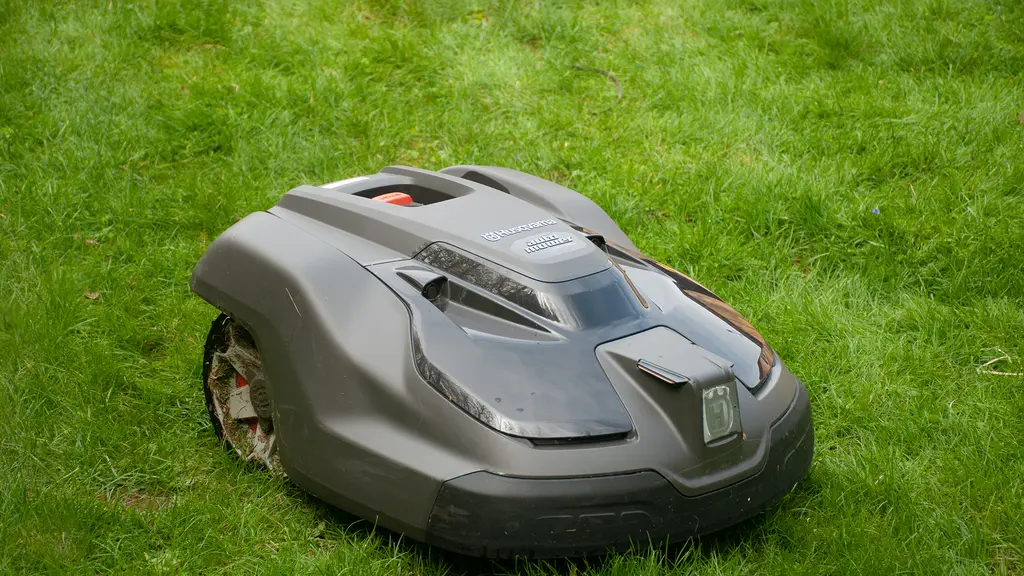
At their core, robotic lawn mowers operate on a deceptively simple principle: navigate a defined area, cut grass to a set height, and return to a charging station when energy runs low. The execution, however, involves a sophisticated interplay of hardware and software that has matured dramatically over the past decade. Early models relied exclusively on perimeter boundary wires — thin cables buried just below the soil surface or staked along lawn edges — to define the mowing zone. The mower’s onboard sensors detect the electromagnetic signal emitted by the wire and reverse direction upon approach, creating a virtual fence that keeps the machine within bounds.
Modern autonomous mowers have evolved well beyond this basic containment strategy. RTK-GPS positioning, accurate to within two centimeters, allows newer units to map lawns in precise grid patterns rather than wandering randomly, dramatically improving coverage efficiency and reducing redundant passes. Inertial measurement units supplement satellite data under tree canopy where GPS signals weaken, while ultrasonic and LiDAR-based sensors scan for obstacles in real time — detecting everything from garden furniture to pets. Battery technology has kept pace with these computational demands; lithium-ion cells now deliver extended runtime with faster charging cycles, enabling coverage of larger properties on a single session. AI-driven path planning algorithms learn lawn geometry over successive runs, optimizing routes to minimize energy consumption and ensure even cutting distribution. Smart connectivity rounds out the package — Wi-Fi and Bluetooth modules link the mower to cloud platforms, enabling remote scheduling, real-time status monitoring, and integration with voice assistants and broader smart home ecosystems.
Key Components and Innovations
Several standout technologies distinguish today’s robotic mowers from their predecessors. Rain sensors automatically pause operation during wet conditions, preventing turf damage and clumping. Multi-zone management lets owners assign different schedules and cutting heights to front and back yards through a single app interface. Anti-theft features — including PIN locks, GPS tracking, and alarm triggers — address security concerns that once deterred buyers. For tech enthusiasts, the real appeal lies in OTA firmware updates that continuously refine navigation logic and add features post-purchase, turning the mower into a platform that improves over time rather than a static appliance.
Hands-On Robotic Lawn Mower Review: Testing the MOWRATOR S1 Pro
After weeks of testing the MOWRATOR S1 Pro across varied conditions, we can report that this autonomous mower delivers a genuinely hands-off lawn care experience — though not without a learning curve. Initial setup took approximately two hours, including downloading the companion app, mapping the lawn boundary via the guided walkthrough, and configuring mowing zones. The app interface proved intuitive for anyone comfortable with smart home devices; zone creation felt similar to drawing geofences in a security camera app. No boundary wire installation was required, as the S1 Pro relies on RTK-GPS positioning combined with visual sensors to define its working area — a significant time saver compared to older wire-dependent models.
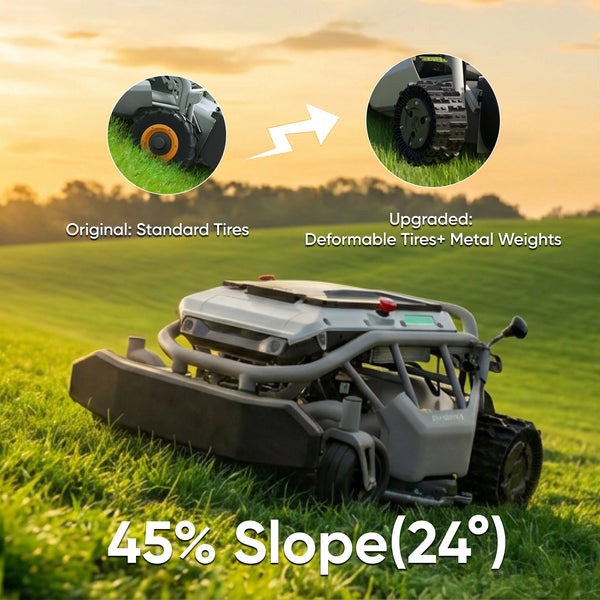
On flat, well-maintained turf, the S1 Pro moved methodically in parallel strips, producing an even, carpet-like finish after three consecutive days of scheduled runs. The mulching blades reduced clippings to fine particles that disappeared into the turf within hours, eliminating raking entirely. Where things got more interesting was on our test slope — a 25-degree grade along the property’s south edge. The mower maintained traction without slipping, though it noticeably slowed its pace and occasionally repositioned itself before continuing uphill passes. Thick patches of fescue that had gone uncut for two weeks required the mower to make multiple passes before achieving a uniform height, suggesting that owners who let growth get ahead of schedule may need to supplement with a manual trim initially.
Battery performance aligned closely with advertised claims. A full charge sustained roughly 120 minutes of continuous mowing before the unit autonomously returned to its dock, resuming its route after recharging. Over a full week of daily operation, the S1 Pro covered our half-acre test lawn without missing significant patches. The app’s real-time map displayed completed coverage in green, making it easy to verify at a glance. Push notifications alerted us when the mower encountered an obstacle it couldn’t navigate around — in our case, a garden hose left across the path — and the unit waited patiently until we cleared it remotely via the app’s manual control mode.
Performance Metrics and User Feedback
Across our testing period, the S1 Pro’s strengths became clear: whisper-quiet operation that never disturbed neighbors even during early morning runs, consistent cut quality that improved as the algorithm learned our lawn’s contours, and genuine set-and-forget convenience once zones were properly configured. The app’s scheduling flexibility — allowing different days, times, and cutting heights per zone — proved particularly useful for managing a shaded backyard that grows slower than the sun-drenched front. On the downside, the mower struggled with narrow passages under 60 centimeters wide, occasionally getting stuck between raised bed borders. GPS accuracy degraded slightly under dense tree cover near our oak cluster, causing one missed strip that required manual correction. Two firmware updates during our test period resolved a connectivity dropout issue and improved obstacle detection sensitivity, demonstrating the platform’s capacity for ongoing refinement. Overall, the S1 Pro earns high marks for reliability and user experience, with minor limitations that informed buyers can work around through thoughtful lawn preparation.
Comparative Analysis: Traditional vs. Robotic Lawn Mowers
When stacking traditional mowers against their robotic counterparts across measurable criteria, the data reveals clear trade-offs rather than a universal winner. Time investment presents the starkest contrast: a half-acre lot demands 60 to 90 minutes of active human labor weekly with a push mower, totaling roughly 30 to 40 hours per growing season. A robotic mower reclaims that time almost entirely — the owner’s involvement drops to occasional app checks and seasonal blade swaps, perhaps two hours total across the same period.
Environmental impact tilts decisively toward automation. A gas push mower emits roughly 80 pounds of CO2 annually and produces volatile organic compounds at rates the EPA has compared to driving a car 350 miles. Robotic mowers run on electricity, and even when powered by a grid-dependent charger, their carbon footprint remains a fraction of gasoline equivalents. Noise pollution follows the same pattern — robotic units operate between 55 and 65 decibels, comparable to a normal conversation, while gas engines routinely hit 95 decibels at the operator’s ear.
Lawn health outcomes surprised us during testing. The robotic mower’s frequent, light cuts — removing only millimeters of growth daily — mimic the “one-third rule” that turf scientists recommend, reducing plant stress and returning fine mulch that feeds the soil. Traditional weekly mowing often removes too much blade length at once, temporarily shocking the grass and leaving visible clumps. Over our eight-week trial, the robotically maintained section showed denser growth, fewer brown tips, and measurably less thatch accumulation. Where traditional mowers retain an edge is raw versatility: they handle overgrown lots, wet heavy grass, and uneven terrain that would stall most autonomous units. For properties with complex landscaping, steep banks beyond 30 degrees, or infrequent mowing schedules, a conventional mower remains the more practical tool.
Efficiency and Cost-Benefit Breakdown
Operational costs diverge significantly over a five-year ownership window. A gas mower consumes fuel, oil, filters, and blades totaling roughly $150 to $250 annually, plus the implicit value of labor hours. A robotic mower draws minimal electricity — often under $20 per season — and requires only periodic blade replacements. Maintenance schedules shrink from monthly attention to a quick inspection every few months. The initial investment for a capable robotic unit exceeds that of a quality gas mower, but ROI typically breaks even within two to three seasons when labor time is valued even modestly. Where robotic mowers fall short is in upfront accessibility and repair complexity; a damaged sensor module costs more to replace than a spark plug, and not every local shop services autonomous units yet.
Practical Solutions: Adopting Robotic Mowers for Tech Enthusiasts
Transitioning to a robotic mower is less about swapping one machine for another and more about rethinking your entire lawn care workflow. Start by assessing your property honestly — measure total square footage, identify slopes steeper than 20 degrees, and note narrow passages between garden beds or fences. These variables determine which class of mower suits your yard and whether you’ll need to make minor landscaping adjustments, like widening a pinch point or adding edging strips to define boundaries cleanly. Once you understand your terrain, compare models based on navigation type. RTK-GPS units excel on open lawns and eliminate boundary wire installation, while wire-guided systems remain more reliable under heavy tree canopy where satellite signals falter.
Installation day should include a thorough walkthrough of the companion app. Configure mowing zones individually — assign higher cutting frequencies to fast-growing sunny areas and gentler schedules to shaded sections. Connect the mower to your home Wi-Fi network and link it to your preferred smart home platform, whether that’s Google Home, Amazon Alexa, or Apple HomeKit. Voice commands like “pause mowing” or “start front yard” add a layer of convenience that feels natural once integrated. For troubleshooting, keep the firmware updated and monitor the app’s diagnostic logs; most connectivity or navigation hiccups resolve themselves after an OTA patch. If the mower repeatedly flags a specific zone, physically inspect for hidden obstacles like sunken sprinkler heads or tree roots that confuse sensors. The goal is a system that runs invisibly in the background, freeing you to focus on the parts of homeownership you actually enjoy.
Implementation Checklist and Best Practices
Before your first autonomous mow, walk through these concrete steps. Measure your lawn area and slope angles using a smartphone inclinometer app to confirm compatibility with your chosen model. Remove debris, secure loose hoses, and mark shallow irrigation lines to prevent snags. Position the charging dock on a flat, shaded surface near a power outlet with clear GPS line-of-sight. During the first week, run the mower daily at a higher cutting height to let the algorithm map your yard without scalping uneven patches. Review coverage maps each evening and adjust zone boundaries as needed. Finally, bookmark the manufacturer’s support forum and subscribe to firmware release notes — staying current ensures you benefit from every navigation and safety improvement as it ships.
The Future of Lawn Care: Making the Right Choice for Your Property
The shift from traditional to robotic lawn mowing represents more than a gadget upgrade — it’s a fundamental rethinking of how we allocate time, energy, and attention as homeowners. Our testing confirmed that autonomous mowers like the MOWRATOR S1 Pro deliver on their core promise: consistent, quiet, environmentally friendly lawn maintenance with minimal human involvement. The data supports what early adopters have long argued — frequent robotic cuts produce healthier turf, eliminate emissions, and reclaim dozens of hours each season that would otherwise disappear behind a roaring engine. Yet traditional mowers haven’t lost their relevance. For overgrown properties, complex terrain, or owners who mow infrequently, a reliable gas or electric push mower remains the pragmatic choice. The decision ultimately hinges on your property’s characteristics, your tolerance for upfront investment, and how much you value automated convenience. For tech enthusiasts willing to optimize their setup and embrace iterative improvements through firmware updates and smart integrations, robotic mowers offer a compelling glimpse of where home automation is heading. As GPS accuracy improves, AI navigation matures, and costs continue declining, the question will shift from “should I switch?” to “why haven’t I already?”
