

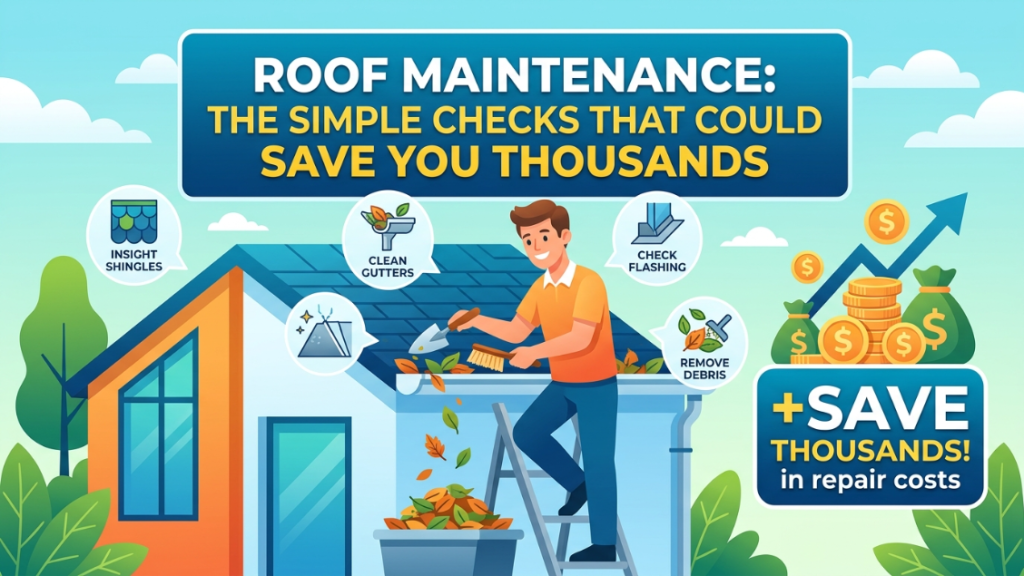
Most people don’t think about their roof until something goes wrong. That’s understandable. It’s up there, out of sight, and as long as there’s no water dripping through the ceiling it tends to stay off the radar. But that’s exactly how a small, fixable problem turns into an expensive one. For homeowners, landlords, and anyone managing a commercial property in London, a bit of regular attention to your roof is genuinely one of the most cost-effective things you can do to protect your building. Any established Roofing Company London property owners have worked with will say the same thing: the jobs that cost the most are almost always the ones that were left too long.
So here’s a practical guide to what you should be checking, and when.
Why Maintenance Matters More Than Most People Realise
There is a fairly consistent path along which roofing problems tend to emerge. This often begins with some relatively minor problem: a loose tile, a hairline crack in the flashing surrounding a chimney, a piece of pointing that is just beginning to deteriorate. The consequence of leaving such a minor issue unattended is that water gains entry. Again, not in the dramatic way in which it floods through the ceiling, but rather through seeping into the roof cavity, soaking into timbers and settling in areas that don’t have adequate drainage.
The result of months and years of this is that significant structural damage takes place. Timbers rot. Insulation becomes completely saturated and ceases to be effective. Ceiling and wall plaster staining, bubbling and eventual failure becomes noticeable inside the house. When the damage becomes apparent, it has already gone beyond the relatively easy stage for repair.
The climate in London does not do any favors either. There is rainfall all through the year, and the effect of rainy winters, pollution from the urban environment, and thermal movement caused by the variations in temperature causes considerable strain on roofs. This makes structures located in areas such as Hackney, Islington, and Greenwich particularly vulnerable because the materials used in those buildings have been subjected to these conditions for many decades now.
This issue becomes even more critical for commercial properties. A roofing problem in a building that is operational could be disruptive and lead to insurance complications. It just makes sense to stay ahead of any problems that may crop up.
What to Check and How Often
It is not necessary to be a roofer to conduct the visual inspections. In fact, most of the following inspections can be conducted from ground level or even within the premises. Any task requiring one to be on the rooftop itself can only be handled by professionals.
After Every Significant Storm
While London doesn’t face any weather catastrophes like the rest of the planet, one can expect strong winds and rain showers, which sometimes can cause some prolonged showers that might prove challenging for proper drainage from the roof. After such weather conditions, it is important to spend some time looking into several factors.
When you look at the roof from the outside, make sure that there are no misplaced roofing materials on the surface of the roof. Make sure that the ridge of the roof hasn’t lost any tiles because of strong wind currents. Check if the gutters have separated from the fascia boards and have started to sag, retaining the water inside. Make your rounds around the roof and check whether anything may have fallen on the roof and caused some blockages.
When inside, examine the roof space. Using a torch and some time within the roof space may help much. Check for light spots from places where it should not enter the roof space. Inspect for damp spots in the timber and the under layer of the felt. It is wise to consider checking for any strange smells within the roof space.
Twice a Year: Spring and Autumn
A thorough inspection of your property twice per year should always be carried out. The best times to do so are spring and autumn, since this would allow you to inspect for any damage caused over winter. It also helps when going through the wettest periods in the best condition possible.
The biggest concern when carrying out this inspection would be the gutters and downpipes. Ensure that the gutters are completely clear as clogged gutters create a backlog of water which causes the buildup and soaking of fascia boards and soffits. Clogged gutters may cause water to flow back towards the party wall of terraced properties causing even more trouble for neighbors than oneself. Many emergency call-outs made to roofing contractors in London turn out to be due to clogged gutters which could have been easily prevented by cleaning.
Flashings should be inspected during this period since these are metal strips usually made of lead used to seal the roof covering at its joints with chimneys, dormers and parapet walls. These are the parts of the roof structure where there is most failure for London properties and should be checked if any lifting, cracking and gaps are visible.
For Flat Roofs: More Regular Attention
However, flat roofs require a little more regular attention, especially at drainage points and any points of junction between the roof and wall. After rain, one should make sure that there is no standing water on the roof; some standing water is acceptable in flat roofs, but any standing water for 24-48 hours post-rainfall should alert you to an issue with the roof drainage system.
According to Dan Lea Roofing, a yearly check-up for your flat roof is recommended, especially for commercial buildings, because the stakes are high. An experienced eye will notice some defects that may not come out to an untrained observer, such as deteriorating membranes, blistering, or splitting.
Small Repairs: Don’t Put Them Off
One of the most common things roofing professionals hear from property owners is that they knew something needed attention but kept putting it off. Its understandable. Life is busy, and a small roof issue doesn’t feel urgent when there’s no immediate sign of it causing problems inside the building.
But small repairs are genuinely manageable in cost and disruption when caught early. Replacing a few slipped tiles, repointing a chimney, resoldering a section of lead flashing: these are relatively quick jobs that don’t require extensive scaffolding or a significant budget. Leave them another winter or two and you’re often looking at a much more involved piece of work.
For landlords managing properties across different London boroughs, factoring routine maintenance into your annual budget is far more predictable and cost-effective than dealing with reactive repairs. A modest annual spend on maintenance across a portfolio protects the value of those assets and avoids the much larger costs that come with neglect. A good Roofing Company London landlords work with will offer maintenance packages or regular inspection schedules that make this easy to manage.
When to Call a Professional
Some things you can monitor yourself. But anything that requires physical access to the roof surface, or where you’ve spotted something that looks more serious than a surface level issue, needs a professional. Working at height is genuinely dangerous without the right equipment and training, and it’s not worth the risk.
If there have been any instances of water infiltration into your building, however small they may appear, seek someone to inspect this problem. Water leakage through your roof might actually originate somewhere else, not exactly where you can see the dripping water inside. This is because the water can seep along the timbers and rafters of your roof before finally dripping through the ceiling.
Dan Lea Roofing does roof inspection throughout London, in both residential and commercial buildings, helping you assess the situation and take any action that you need to take. There’s nothing to be worried about when you call them up for an inspection; after all, it is better to be sure.
If you want to get a property checked before winter sets in, or you’ve been putting off dealing with something you noticed a while back, finding a reliable Roofing Near Me is a straightforward first step. Just make sure you’re talking to someone with real experience of London properties and the honesty to tell you what actually needs doing rather than what generates the biggest job.
