

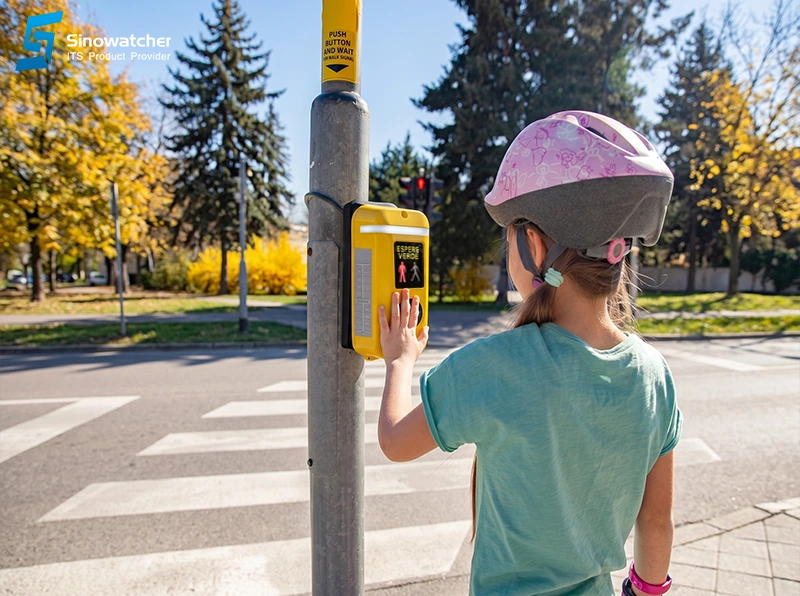
As cities grow more crowded and traffic congestion increases, pedestrian safety has become one of the most critical challenges in urban planning. Traditional zebra crossings and traffic lights are no longer enough to ensure safety in high-traffic environments. This is where it emerges as a modern, technology-driven solution designed to reduce accidents and improve the flow of both vehicles and pedestrians.
A smart pedestrian crossing system uses advanced sensors, artificial intelligence, and real-time communication technologies to detect the presence of pedestrians and dynamically control traffic signals. Unlike conventional crossings that operate on fixed timers, smart systems adapt to actual road conditions. When a pedestrian approaches the crossing, motion sensors, infrared detectors, or camera-based AI systems instantly identify their presence and trigger a signal change, giving them safe passage.
For instance, if a person is waiting at the crossing, the system can extend the green light duration or immediately switch traffic signals to red when safe. This reduces unnecessary waiting time for pedestrians while ensuring vehicles stop in a controlled and timely manner. In high-risk areas such as school zones, hospitals, and busy intersections, this technology significantly lowers the chance of accidents.
Modern smart crossings can be integrated with connected vehicle systems, allowing cars to receive alerts when pedestrians are about to cross. Some advanced versions even communicate directly with autonomous vehicles, enabling automatic braking or speed adjustment. This creates a coordinated ecosystem where both pedestrians and vehicles interact safely through intelligent infrastructure.
Energy efficiency is also a major benefit of smart pedestrian systems. Many installations use solar-powered units, reducing dependency on traditional electricity grids. Combined with LED lighting and low-power sensors, these systems are both environmentally friendly and cost-effective in the long run.
In addition, smart crossings can collect valuable data. They can monitor pedestrian flow, peak traffic hours, and accident-prone zones. Urban planners can use this data to improve road design, optimize traffic signals, and develop safer infrastructure policies. Over time, this leads to smarter cities with reduced congestion and improved public safety.
Despite their advantages, challenges remain in widespread adoption. Installation costs, maintenance requirements, and integration with existing traffic systems can be barriers, especially in developing regions. However, as technology becomes more affordable and cities prioritize smart infrastructure, these systems are expected to become standard in the near future.
In conclusion, the smart pedestrian crossing system represents a major step forward in road safety and urban innovation. By combining automation, artificial intelligence, and real-time responsiveness, it creates a safer environment for pedestrians while improving traffic efficiency. As cities continue to evolve, such intelligent systems will play a vital role in shaping the future of transportation and ensuring safer mobility for everyone.
