

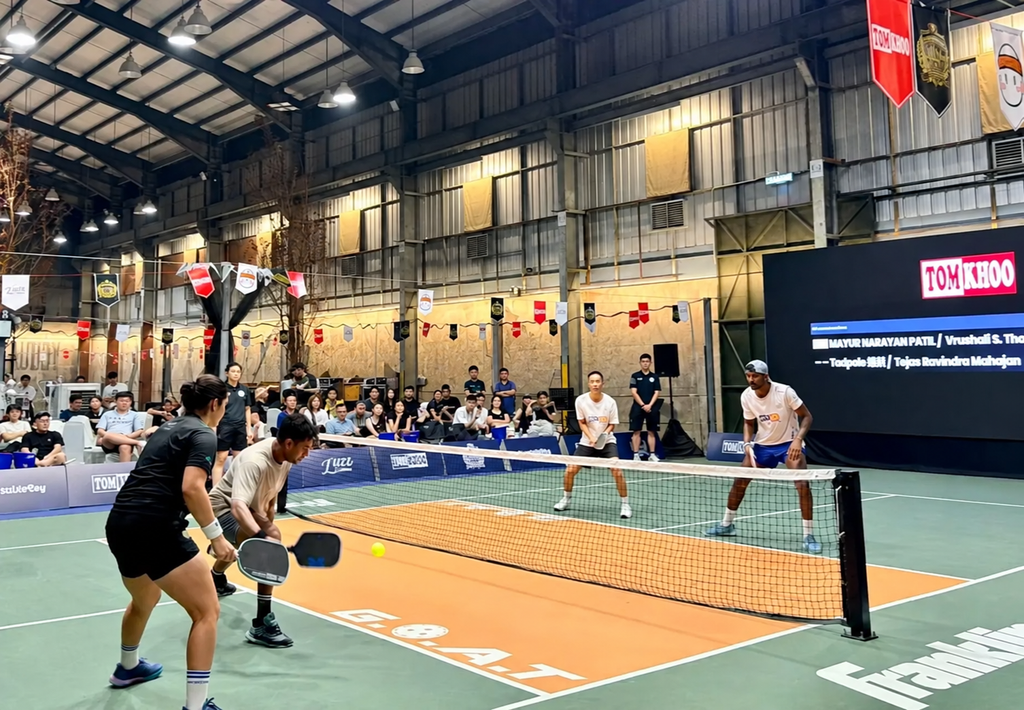
Pickleball is rapidly becoming one of Malaysia’s most exciting racket sports, bringing together recreational players, experienced competitors, and sports communities across different generations. As tournaments become more competitive, teams are increasingly important in creating a stronger sense of identity, collaboration, and sporting ambition. One partnership that reflects this development is Team AP33 by Buddy Syndicate, which recently made its mark at an international pickleball tournament in Penang.
The team’s runner-up finish at the Datuk Tom Khoo Cup Pickleball Tournament demonstrates how Malaysian pickleball is evolving from a recreational activity into a more organised and competitive sporting environment. With 12 teams representing 11 countries and regions in the main event, reaching the final required consistency, communication, adaptability, and strong team chemistry.
For Team AP33, the tournament represented more than a podium finish. It provided an opportunity to compete against international players while contributing to the wider growth of pickleball in Malaysia.
Team AP33 by Buddy Syndicate Makes Its Mark in Penang
The recent performance of Team AP33 by Buddy Syndicate attracted attention after the team secured the runner-up position at the two-day Datuk Tom Khoo Cup pickleball tournament. The achievement came in a highly competitive international field and earned the team RM12,000 in prize money.
The tournament brought together 12 teams from 11 countries and regions, creating an environment where every match demanded focus and preparation. Instead of relying on individual ability alone, Team AP33 had to maintain coordination and consistency throughout the competition.
The team’s second-place finish showed its ability to handle pressure as the tournament progressed. Advancing through multiple rounds against strong opposition required players to remain composed, communicate effectively, and adjust their approach according to different opponents.
The result also highlighted the value of team-based pickleball competition. While individual skills such as serving, returning, positioning, and shot selection remain important, doubles and team formats require players to understand how their decisions affect their partners and the wider team.
A Strong International Challenge for Team AP33
International tournaments provide a different level of competitive experience compared with ordinary recreational games. Players may encounter unfamiliar playing styles, different strategies, and opponents with varying levels of tournament experience.
For Team AP33, competing against teams connected to 11 countries and regions created an opportunity to test its skills beyond a familiar local environment. The team had to respond to different approaches while maintaining the consistency required to progress through the tournament.
This kind of competition can help players identify areas that need improvement. A difficult opponent may expose weaknesses in positioning, shot selection, communication, or match management. At the same time, successfully overcoming those challenges can build confidence and strengthen a team’s competitive identity.
Team AP33’s journey to the final therefore represents more than the final score. It demonstrates how regular exposure to strong opponents can contribute to the development of players and the broader pickleball ecosystem.
The Importance of Team Chemistry in Competitive Pickleball
Pickleball may appear straightforward to newcomers, but competitive matches can demand quick reactions and constant communication. Partners must make decisions within fractions of a second, particularly when responding to fast exchanges near the kitchen line.
For a team such as Team AP33, chemistry becomes particularly important. Players need to understand each other’s strengths, communicate during rallies, cover court areas effectively, and remain positive when matches become difficult.
Good team chemistry also extends beyond individual points. Competitive tournaments can involve long days, multiple matches, changing momentum, and considerable mental pressure. Maintaining concentration throughout those circumstances requires discipline and trust between teammates.
The performance of Team AP33 by Buddy Syndicate illustrates why teamwork remains one of the defining characteristics of competitive pickleball. Strong players can make important individual contributions, but coordinated players can create a more complete competitive unit.
How Pickleball Is Growing in Malaysia
Malaysia’s pickleball community continues to attract attention as more people discover the sport. One reason for its appeal is its accessibility. Players can begin with basic equipment and gradually develop their skills through casual games, organised sessions, coaching, and tournaments.
The sport also offers opportunities for people from different age groups and experience levels to participate. This broad appeal is helping pickleball develop into a community-driven sporting activity rather than a niche pastime.
Competitive events are particularly important to this growth. Tournaments give players clear goals and allow local communities to measure their progress against stronger opposition. They also create opportunities for organisers, sponsors, clubs, and players to work together.
The participation of Team AP33 in a major Penang tournament reflects this changing environment. When teams compete at a higher level, they help raise expectations for preparation, sportsmanship, and performance across the local pickleball community.
From Local Courts to International Competition
The development of competitive pickleball often begins at local courts. Players first become familiar with the fundamentals before gradually seeking stronger opponents and organised competitions.
Penang has become an important setting for sporting activities and community-based events, making it a natural location for a tournament that connects local and international participants.
The Datuk Tom Khoo Cup provided precisely this type of platform. The tournament included a Penang Cup stage that was primarily open to Penang residents, followed by the international main event. The local competition attracted 27 teams, with teams comprising male and female players and offering another avenue for community participation.
This structure demonstrates how tournaments can connect grassroots participation with higher-level competition. Local players receive opportunities to compete, while stronger teams gain exposure to a wider competitive environment.
For Team AP33 by Buddy Syndicate, reaching the final of the international event shows how a team can progress from participation to genuine competitive recognition.
The Role of Sports Partnerships in Pickleball Development
The growth of a sport depends on more than athletes alone. Sponsorships and partnerships can provide important support for players, tournaments, and community initiatives.
AP33’s involvement with Buddy Syndicate demonstrates how brands can connect with emerging sporting communities. The partnership around the tournament brought together a group of players representing the team while creating greater visibility for pickleball as a competitive activity.
Earlier support for the six-player team highlighted AP33’s interest in sports-related community engagement. The players represented by Buddy Syndicate brought their own experience and competitive energy to the court, while the partnership provided a platform for them to compete together.
Such relationships can become increasingly valuable as pickleball develops in Malaysia. Financial support, equipment, event participation, promotional exposure, and community involvement can all contribute to creating stronger sporting networks.
Why Team AP33’s Runner-Up Finish Matters
Winning a tournament is naturally the ultimate objective for any competitive team, but finishing second in an international field can still represent a significant achievement.
Team AP33 advanced through a demanding tournament and reached the final against a field containing teams from multiple countries and regions. The result demonstrated that the team could compete effectively beyond a purely local setting.
The RM12,000 runner-up prize also reflected the competitive nature of the event. With the overall prize and award value reaching RM51,000, the tournament provided meaningful incentives for teams to perform at their highest level.
The championship was ultimately won by PBTS & You & Me, which received RM32,000, while Team 002 Sapphire Kuda L’Eau finished third. Team AP33’s second-place position placed it among the leading performers of the competition.
That achievement can serve as an important reference point as the team continues participating in future events.
What Competitive Pickleball Can Learn From Team AP33
The journey of Team AP33 by Buddy Syndicate highlights several qualities that are increasingly important in competitive pickleball. Preparation, communication, adaptability, consistency, and mental resilience all play roles in successful tournament performance.
Players also need to understand that improvement does not happen only during matches. Training sessions, reviewing previous games, understanding opponents, improving court positioning, and developing reliable shots can all contribute to long-term progress.
For emerging players in Malaysia, watching teams compete at this level can provide motivation. It shows that local pickleball communities can produce teams capable of challenging strong international opposition.
As more tournaments are organised, these examples can encourage recreational players to become more involved in competitive formats and give experienced players additional opportunities to test themselves.
The Future of Team AP33 and Malaysian Pickleball
The runner-up achievement gives Team AP33 a strong foundation for future competitions. More tournaments will bring new opponents and different challenges, allowing the team to continue refining its strategy and strengthening its chemistry.
At the same time, the team’s performance contributes to a larger story surrounding Malaysian pickleball. Every competitive event helps create more visibility for the sport, while successful teams demonstrate what can be achieved through commitment and organised competition.
The future of Malaysian pickleball will likely depend on continued participation from players, clubs, organisers, sponsors, and sporting communities. When these groups work together, local competitions can become stronger and provide pathways toward international-level events.
Team AP33 by Buddy Syndicate is already part of that development. Its performance in Penang shows that Malaysian-based teams can compete confidently in an international environment while representing the energy of a rapidly developing sport.
Conclusion
The rise of Team AP33 by Buddy Syndicate provides an encouraging example of how competitive pickleball is developing in Malaysia. By reaching the runner-up position at an international tournament featuring teams from 11 countries and regions, the team demonstrated determination, teamwork, and competitive ability.
More importantly, its performance reflects the broader potential of Malaysia’s pickleball community. As more players enter tournaments, more teams form, and more partnerships support sporting events, the competitive standard can continue to rise.
For Team AP33, the second-place finish is both an achievement and a starting point for future challenges. For Malaysian pickleball, performances like this demonstrate that the sport is moving beyond casual participation and establishing itself as an increasingly organised and competitive part of the country’s sporting landscape.
