

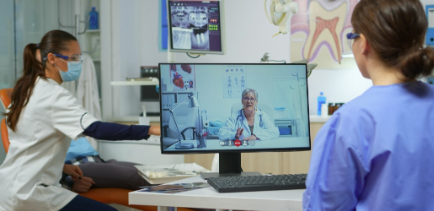
Telehealth has changed how healthcare providers deliver care, allowing patients to connect with doctors without always visiting a medical office. Through video consultations, secure messaging, appointment scheduling, and digital health records, telehealth platforms make it easier for patients and healthcare professionals to stay connected.
For healthcare organizations in the United States, developing a telehealth platform involves more than adding video calls to a website or mobile app. The platform must support patient needs, fit into clinical workflows, protect sensitive information, and connect with existing healthcare systems.
Understanding these requirements before starting a project can help healthcare providers choose the right features, avoid common development problems, and create a reliable experience for patients and medical staff.
What Is a Telehealth Platform?
A telehealth platform is a digital system that allows healthcare providers to deliver certain healthcare services remotely. It may include video visits, appointment booking, patient messaging, electronic forms, prescription workflows, and access to medical information.
Telehealth is a broad term that can include both live consultations and remote health services that do not require patients and providers to communicate at the same time. Telemedicine is often used more specifically for clinical care delivered remotely.
The exact features depend on the healthcare organization, the type of care provided, and the needs of its patients.
For example, a primary care practice may need video consultations and follow-up scheduling, while a behavioral health provider may place greater emphasis on private communication and recurring appointments. A hospital network may need additional features for staff access, patient routing, and integration with existing clinical systems.
Defining the purpose of the platform helps determine which features should be included in the first release.
1. Essential Features of a Telehealth Platform
A useful telehealth platform should make remote care straightforward for patients and manageable for healthcare professionals. The following features are common starting points.
Video Consultations
Video consultations allow patients and clinicians to communicate remotely through a secure connection. Patients can use them for suitable follow-up visits, routine consultations, and other services that do not require an in-person examination.
The video experience should work across supported devices and offer clear audio, stable connections, and simple instructions. A waiting room, appointment reminders, and an option to reconnect after a dropped call can also improve the experience.
Healthcare providers should explain when a remote consultation is appropriate and when a patient needs an in-person assessment or urgent medical care.
Appointment Scheduling and Reminders
Scheduling tools allow patients to view available appointments, book visits, and receive confirmations. Reminders can help reduce missed appointments and give patients time to prepare for their consultations.
The platform should also support cancellations, rescheduling, and different appointment types. For larger practices, scheduling may need to account for clinician availability, time zones, and appointment lengths.
Connecting scheduling with existing office systems can reduce duplicate work for administrative staff.
Patient Profiles and Medical History
Patient profiles can store relevant information such as contact details, medication lists, allergies, and medical history. When properly connected to clinical records, this information helps authorized providers prepare for consultations.
Patients may also need a way to update certain details or complete forms before a visit. The platform should clearly distinguish information supplied by patients from information entered or verified by healthcare professionals.
Access to sensitive records must be limited to authorized users.
Secure Messaging and Follow-Up Care
Secure messaging can help patients ask non-urgent questions, receive care instructions, and follow up after a consultation. It may also help healthcare teams coordinate routine communication.
The platform should explain expected response times and identify situations that require immediate medical attention. It should not suggest that messages are monitored continuously unless the service actually provides that level of coverage.
Prescription and Payment Workflows
Depending on the provider’s needs, a telehealth platform may support prescription-related workflows, billing, payment collection, or insurance information.
Prescription features must account for applicable clinical rules and restrictions. Payment functions should use appropriate payment providers and avoid exposing sensitive financial information.
Not every telehealth service needs all these features at launch. Starting with the most important patient and provider workflows can make the first version easier to test and improve.
2. Security and Privacy in Telehealth Development
Telehealth platforms handle personal and medical information, making security a core part of the development process. Weak access controls or poorly managed data can expose patients and healthcare organizations to serious risks.
In the United States, HIPAA may apply to healthcare providers, health plans, and their business associates, depending on their roles and activities. Organizations should determine which requirements apply to their platform before collecting or sharing protected health information.
Important security measures include:
- Secure sign-in: Use appropriate authentication methods and consider multifactor authentication for sensitive accounts.
- Role-based access: Give patients, clinicians, and administrators access only to the information and functions they need.
- Data encryption: Protect sensitive information during transmission and storage using suitable security measures.
- Audit logs: Record relevant access and system activities to support monitoring and investigations.
- Secure storage and backups: Protect records and establish procedures for recovery after data loss or system failure.
- Regular security testing: Review the platform for weaknesses before launch and as the software changes.
Healthcare organizations should also establish procedures for handling security incidents, managing user accounts, and updating software.
A platform should not be described as HIPAA-compliant simply because it includes encryption or secure messaging. Compliance depends on the full system, the organization’s policies, vendor relationships, risk management, and applicable legal requirements.
3. Integrating Telehealth With Existing Healthcare Systems
Integration is one of the most important parts of telehealth platform development. A standalone app may support video calls, but disconnected systems can force staff to enter the same information multiple times.
Connecting the platform with existing healthcare technology can improve information flow and reduce unnecessary administrative work.
Electronic Health Record Integration
Ehr integration services allows authorized providers to access relevant patient information and record consultation details in the appropriate system.
Depending on the available systems, integration may support appointment information, patient demographics, clinical notes, and follow-up instructions. The platform should use appropriate access permissions and avoid creating duplicate or conflicting records.
HL7 FHIR and Healthcare Data Exchange
HL7 FHIR is a standard that supports the exchange of healthcare information between compatible systems. Depending on the EHR vendor and implementation, FHIR-based interfaces may help telehealth applications exchange selected clinical and administrative data.
Integration planning should include data mapping, permissions, error handling, and testing. Healthcare organizations should confirm which interfaces their existing vendors support instead of assuming every system offers the same capabilities.
Billing and Scheduling Integration
Connecting telehealth with billing and scheduling tools can help staff manage appointments, payments, and administrative records from existing workflows.
For example, an appointment booked through a patient portal may need to appear in the clinic’s scheduling system. After the visit, the platform may need to pass relevant information to the appropriate billing or clinical system.
Planning these connections early can help prevent delays and reduce the need for manual workarounds.
4. Choosing the Right Telehealth Development Approach
Before investing in a new platform, healthcare organizations should identify their main goals and compare the available options.
Some providers may be able to use an existing telehealth product with only a few changes to their workflows. Others may need custom telehealth software solutions because of specialized care models, complex integrations, or requirements that existing products cannot meet.
Consider the following factors:
Patient needs: Determine which devices patients use, whether they need language support, and how easily they can navigate the app.
Clinical workflows: Understand how clinicians schedule visits, review records, document consultations, and arrange follow-up care.
Integration requirements: List the EHR, scheduling, billing, and communication systems the platform must connect with.
Security responsibilities: Identify the applicable privacy requirements, vendor obligations, access rules, and incident response procedures.
Long-term costs: Account for development, hosting, video services, testing, support, maintenance, and future updates.
Growth plans: Consider whether the platform may need to support more clinicians, additional locations, or new types of remote care.
Healthcare organizations comparing telehealth app development services should ask potential development partners how they handle testing, integration, accessibility, security, and ongoing support. Clear project plans and realistic cost estimates make it easier to compare proposals.
Techbit Solutions works in software development, including healthcare technology. Healthcare organizations considering a development partner should review relevant experience, technical capabilities, and the proposed approach to building and maintaining the platform.
5. Improving Accessibility and the Patient Experience
A telehealth platform should be easy to use for people with different levels of digital experience. Complicated sign-up steps, unclear instructions, and difficult navigation can prevent patients from completing appointments.
Keep the main actions visible, use plain language, and provide clear instructions before a visit. Patients should know how to test their microphone and camera, join an appointment, contact support, and reconnect if a call fails.
Accessibility also matters. Consider screen-reader support, readable text, keyboard navigation, captions where appropriate, and clear visual contrast. These measures can help more patients use the service.
Testing with representative patients and healthcare staff can reveal problems that may not be obvious during development. Feedback should be used to improve confusing screens, reduce unnecessary steps, and make common tasks easier.
6. Testing and Maintaining a Telehealth Platform
A telehealth platform needs thorough testing before it is used for patient care. Video quality, appointment workflows, user permissions, integration behavior, and data protection should all be checked.
Testing should include common scenarios, such as a patient joining a consultation late, a clinician rescheduling a visit, an internet connection dropping, or an EHR integration becoming temporarily unavailable.
Healthcare organizations should also prepare for software updates, security reviews, backups, bug fixes, and technical support. A clear maintenance plan helps teams respond when problems arise and keep the platform working as expected.
After launch, monitor useful measures such as appointment completion rates, technical support requests, system availability, and patient feedback. These results can help identify areas for improvement without assuming that technology alone will improve clinical outcomes.
Frequently Asked Questions
1. What features should a telehealth platform include?
A telehealth platform commonly includes video consultations, appointment scheduling, reminders, patient profiles, secure messaging, and access to relevant medical records. Additional features depend on the provider’s clinical services, administrative needs, and existing systems.
2. How much does telehealth platform development cost?
The cost depends on platform complexity, video services, security requirements, EHR integrations, and ongoing support. A focused application generally requires less work than a multi-provider platform with complex workflows and several system connections.
3. How long does it take to develop a telehealth platform?
Development time depends on the number of features, design requirements, integrations, and testing needs. A basic platform may take several months, while a complex system can take longer. Security reviews and vendor approvals may also affect delivery.
4. Do telehealth platforms need to comply with HIPAA?
HIPAA applies to covered entities and business associates when the relevant legal requirements are met. Healthcare organizations should assess their roles, data flows, vendors, and safeguards with qualified compliance professionals before launching a platform.
5. Can a telehealth platform integrate with an existing EHR?
Yes, integration may be possible through vendor-supported APIs and healthcare data standards such as HL7 FHIR. The available functions depend on the EHR system, permissions, interface support, and the organization’s information-sharing requirements.
Conclusion
Telehealth platforms can make remote healthcare more accessible and help providers manage consultations, follow-ups, and patient communication. However, a reliable platform needs more than video calling. It requires thoughtful feature planning, strong security, useful integrations, accessible design, and ongoing maintenance.
Healthcare organizations should begin by identifying the needs of patients and clinical teams, selecting essential features, and confirming how the platform will work with existing systems. With careful planning and thorough testing, telehealth technology can support practical workflows and provide a better digital experience for patients and healthcare professionals.
