

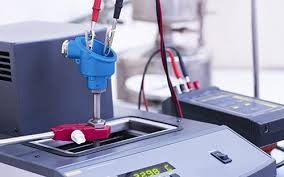
In sensitive industrial processes—ranging from pharmaceutical manufacturing and food processing to material curing and thermal testing—maintaining precise thermal profiles is non-negotiable. Temperature controller calibration is the cornerstone of this precision. The temperature controller, often coupled with thermocouples or resistance temperature detectors (RTDs), acts as the primary feedback and control mechanism. When its accuracy degrades, it directly introduces process variability, which can lead to costly material waste, energy inefficiency, and, critically, non-conformance with product specifications and regulatory standards.
The Criticality of Thermal Control in Regulated Environments
Industries under strict regulatory oversight depend on extremely tight thermal tolerances. In pharmaceutical production, temperature controllers regulate sterilization autoclaves and stability chambers, where even minor temperature deviations can compromise product safety or violate FDA validation requirements. In aerospace composite manufacturing, temperature controllers manage curing ovens to ensure materials achieve the precise material strength required for flight. In every scenario, the controlled parameter (temperature) must be measured and actuated accurately to guarantee the desired physical or chemical outcome.
Sources of Inaccuracy in Temperature Control Loops
A typical temperature control loop has three main components: the sensor (RTD or thermocouple), the controller unit, and the final control element (heater/cooler). Inaccuracy, or drift, can occur at any point:
- Sensor Drift: This is common, especially with thermocouples that age or suffer material contamination, altering their voltage-temperature relationship.
- Signal Conditioning Errors: The controller must accurately measure the low-level signal from the sensor and convert it digitally. Drift in the controller’s internal electronics or reference junctions introduces error.
- Loop Stability Issues: Errors in PID (Proportional-Integral-Derivative) tuning can cause overshoot or oscillation, leading to variability even if the controller is electronically accurate.
The Technical Procedure for Temperature Controller Calibration
Effective temperature controller calibration is an end-to-end verification. It typically involves two phases:
- Controller Input Calibration (Simulation): A high-accuracy, traceable electrical source is used to simulate the sensor’s signal (millivolts for a thermocouple, ohms for an RTD) across the controller’s operating range. The technician verifies that the controller’s display correctly interprets this known input signal.
- Controller Output Verification: The controller’s output (voltage, current, or solid-state relay signal) that drives the heating/cooling element is verified to ensure it modulates correctly based on the temperature deviation.
For the most rigorous compliance, an end-to-end check is performed using a calibrated heat source (e.g., a dry-well block) with a high-accuracy reference thermometer inserted alongside the process sensor, verifying the entire loop from the physical temperature to the control response.
The Impact of PID Tuning on Calibration Results
While calibration verifies the controller’s core input/output accuracy, effective performance depends on correct PID tuning—how the controller responds to error. An accurately calibrated controller is the prerequisite for stable tuning. SIMCO understands that effective temperature controller calibration must account for the dynamics of the entire thermal system, ensuring that the verified accuracy translates directly into minimized process variability and stable control.
Minimizing Process Variability and Maximizing Yield
Reducing temperature variability directly impacts the manufacturer’s bottom line. In curing processes, precise thermal control means less deviation in material properties and fewer out-of-spec products. In energy management, accurate controllers prevent excessive heating or cooling, improving energy efficiency. By maintaining certified calibration, organizations prove due diligence and proactively mitigate the risks associated with non-conforming products.
Calibration Management for Controlled Systems
The necessity of precise and repeatable results mandates a managed approach to calibration scheduling and record-keeping. Utilizing an integrated calibration management system is crucial for regulated industries. Partnering with a comprehensive service provider, such as SIMCO, ensures that all critical temperature control assets are tracked. This system provides automated recall notification, manages the maintenance and repair of the controllers, and centralizes all detailed calibration reports, ensuring audit readiness at all times. This systematic approach is vital for demonstrating continuous regulatory compliance.
