

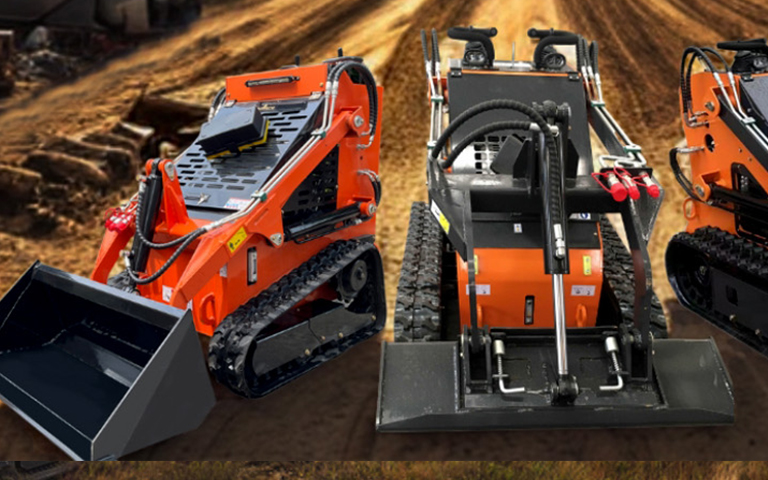
Skid steer loaders are among the most widely used pieces of equipment on American farms and construction sites, primarily because of their versatility. But that versatility depends almost entirely on the quality and compatibility of the attachments being used. A skid steer without the right attachment is a machine waiting for a purpose. For contractors managing tight project timelines and farmers dealing with seasonal workloads, the wrong attachment choice — or a poorly manufactured one — creates downtime that ripples through the entire operation.
Across the US, buyers are increasingly paying closer attention to attachment brand selection, not just machine brand. The reason is straightforward: as labor costs rise and project complexity increases, equipment failures that stem from low-quality attachments are no longer acceptable inefficiencies. They are direct threats to profitability. This guide walks through the key decisions involved in selecting skid steer attachments, with particular attention to what separates workable equipment from genuinely reliable equipment in real field conditions.
Understanding the Wolverine Product Line and Where It Fits
Wolverine is an established name in the skid steer attachment market, recognized for producing work-specific attachments built to perform in demanding environments. The brand is commonly associated with durability and straightforward engineering — characteristics that matter more in field conditions than in product descriptions. For buyers evaluating their options, wolverine skid steer attachments represent a category of equipment designed for professional-grade use rather than occasional residential tasks.
When researching available products and configurations, buyers can review the full wolverine skid steer attachments catalog through resources like wolverine skid steer attachments to understand the current product offering across different attachment types and applications. This kind of category-level review is a useful starting point before narrowing down to a specific tool based on your site or operational requirements.
How Attachment Brands Are Evaluated in Professional Settings
In professional environments, attachment brands are rarely evaluated on aesthetics or promotional claims. Purchasing managers, equipment operators, and fleet supervisors assess based on weld quality, plate thickness, coupler compatibility, and the availability of replacement parts. These factors determine how long an attachment lasts under consistent use and whether it can be repaired on-site or must be sent out for service.
Wolverine’s manufacturing approach tends to prioritize straightforward construction — designs that are simple enough to maintain but robust enough to withstand the kind of repeated stress that high-volume operations generate. This is especially relevant for buyers operating fleets across multiple job sites, where standardization of attachment brands reduces the complexity of parts management and operator training.
The Role of Attachment Type in Operational Planning
Selecting a skid steer attachment is not a standalone purchasing decision. It is part of a broader operational plan that includes understanding what tasks need to be completed, in what volume, over what terrain, and with what frequency. Different attachment types serve fundamentally different functions, and using the wrong tool — even a high-quality one — produces poor results and accelerates wear on both the attachment and the machine.
Auger Attachments and Ground Penetration Challenges
Auger attachments are used to drill into the ground for post installation, foundation work, tree planting, and utility work. The challenge with augers is that ground conditions vary significantly across different US regions. Rocky soil in the Midwest, clay-heavy earth in the Southeast, and compacted caliche in the Southwest all place different demands on the auger bit and the drive motor. An auger attachment that performs well in one condition may struggle or fail prematurely in another.
Buyers should understand that the auger head itself is often sold separately from the drive unit, and the compatibility between these components affects torque output and bit rotation speed. Mismatched components reduce efficiency and put unnecessary strain on the skid steer’s hydraulic system. This is a common source of equipment problems that gets attributed to machine failure when the actual issue is attachment incompatibility.
Bucket and Grapple Configurations for Material Handling
Material handling is one of the most common applications for skid steer attachments on both farms and construction sites. Standard buckets are used for grading, loading, and moving loose material. Grapple buckets add the ability to grip and carry irregular, heavy, or tangled material such as brush, debris, scrap, and logs. Root grapples are designed specifically for clearing land and moving large root balls and stumps that a standard bucket cannot handle safely.
The choice between a solid bucket and a grapple configuration depends on what is being moved and how often. Contractors doing demolition and site clearing benefit more from grapple versatility, while farms managing grain, soil, or feed work more efficiently with a clean-edged bucket that minimizes material spillage. Buying a grapple when a bucket is the right tool adds cost without adding value. Buying a bucket when the job demands a grapple creates safety risk.
Trenching and Excavation Tools
Trenching attachments allow a skid steer to cut narrow channels into the ground for drainage systems, irrigation lines, utility conduits, and fence installation. On farms, trenching is a routine task tied directly to water management and crop system planning. On construction sites, it supports underground infrastructure that must be installed correctly before surface work can proceed.
The quality of a trenching attachment is reflected in the durability of its chain, the sharpness retention of its teeth, and the precision of the trench width it produces. Poorly made trenching attachments lose tooth sharpness quickly, which forces operators to make multiple passes to reach the required depth. This increases wear on the machine, extends project timelines, and raises fuel costs — none of which are recoverable once the job is complete.
Coupler Compatibility and Why It Cannot Be an Afterthought
One of the most practical and frequently overlooked issues in attachment selection is coupler compatibility. Skid steer machines use different coupler systems, and attachments must match the coupler plate on the host machine to connect securely and operate correctly. In the US market, universal quick-attach systems have become the most common standard, but there are still meaningful differences in how attachments engage and lock.
According to the Occupational Safety and Health Administration, improper attachment of equipment to host machinery is a recognized cause of worksite incidents. Beyond safety, a coupler that does not engage fully reduces the precision of attachment operation and can create lateral movement during use, which degrades both the attachment and the machine’s mounting plate over time.
Hydraulic Flow Requirements and Machine Matching
Many modern attachments — augers, trenchers, brush cutters, and cold planers — are hydraulically driven. Each of these tools requires a specific hydraulic flow rate to function as designed. Skid steer loaders are rated for standard flow or high flow, and using a high-flow attachment on a standard-flow machine reduces performance significantly. It can also overheat the hydraulic system under sustained use.
Buyers should confirm the hydraulic output of their specific machine model before purchasing powered attachments. This is a step that is often skipped when purchases are made online or through distributors without direct input from equipment operators. The result is an attachment that technically fits but functionally underperforms, which is a common source of buyer dissatisfaction that has nothing to do with the attachment brand itself.
Cost Considerations and Total Operational Value
Attachment pricing spans a wide range, and the lowest price point is rarely the most economical choice over time. A low-cost attachment that requires replacement after one season, or that causes damage to the skid steer’s hydraulic or structural components, produces a higher total cost than a quality attachment purchased at a higher initial price.
The more useful financial framework is total operational value — a measure of how many productive hours an attachment delivers relative to its purchase price, maintenance cost, and impact on machine longevity. Attachment brands known for consistent manufacturing quality tend to score better on this measure, even when their upfront cost is higher than off-brand alternatives.
Parts Availability and Service Continuity
An attachment that breaks down in the middle of a job is a serious operational problem, particularly during peak construction season or at critical points in the farming calendar. The ability to source replacement parts quickly — cutting edges, wear plates, auger teeth, chain segments — determines how long a machine is out of service when something fails.
Attachment brands with established US distribution networks make parts sourcing faster and more predictable. This is worth factoring into the purchase decision, especially for buyers who depend on consistent daily or weekly equipment availability. Wolverine products, as part of an established brand presence in the North American market, generally carry better parts availability than imported no-name alternatives that lack domestic inventory support.
Selecting Attachments for Farm-Specific Applications
Farm operations present a specific set of attachment demands that differ from construction work in meaningful ways. Agricultural environments require attachments that can handle organic material, varied soil conditions, seasonal transitions, and tasks that range from light maintenance to heavy land clearing. Farms also tend to run smaller fleets and may rely on a single skid steer to handle multiple roles across different seasons.
For this reason, attachment versatility and durability carry particular weight in agricultural purchasing decisions. Common farm-appropriate attachments include pallet forks for handling feed and supply deliveries, root grapples for post-harvest field clearing, augers for fence post installation, and box blades for grading and leveling unpaved surfaces. Each of these tools performs a distinct function, and selecting them based on actual seasonal task requirements — rather than general capability — produces better return on investment over time.
Conclusion: Making Attachment Purchases That Hold Up in the Field
The decisions made when selecting skid steer attachments have direct consequences for how efficiently a farm or construction site operates. Equipment that fails under pressure, requires frequent replacement, or creates compatibility issues with the host machine reduces productivity and increases costs in ways that are difficult to recover. The goal of any attachment purchase should be long-term operational reliability, not just initial cost savings.
Buyers who take the time to understand their specific task requirements, confirm hydraulic and coupler compatibility, and select from brands with established manufacturing quality and parts availability position themselves for fewer interruptions and better equipment longevity. For operations that depend on consistent daily performance, the attachment selection process deserves the same level of care as the decision to purchase the skid steer itself. Getting this right the first time is almost always less expensive than correcting a poor decision mid-season.
