

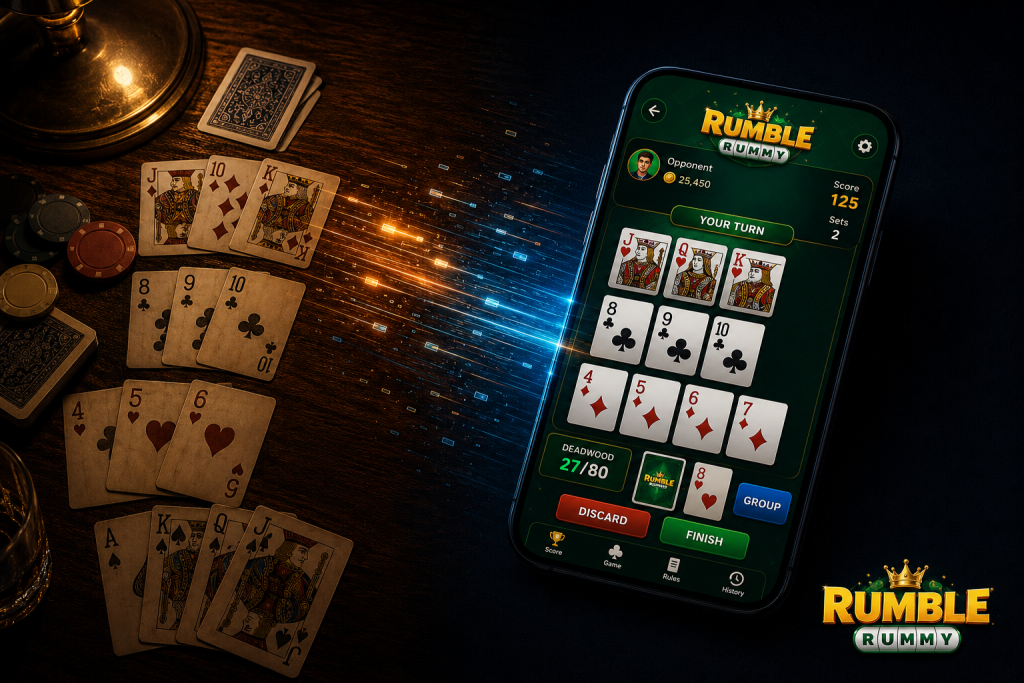
For centuries, the shuffle of a deck and the anticipation of a well-timed sequence have defined the game of rummy. It is a game of memory, probability, and nerve—a staple of family gatherings and friendly rivalries. However, the past decade has witnessed a seismic shift. The tactile pleasure of physical cards has given way to the glowing screens of smartphones, fundamentally altering not just how we play, but why we play.
The evolution from traditional tables to online rummy is not merely about technological convenience. It is a story of accessibility, community, and the democratization of skill-based competition. As smartphones became ubiquitous and internet speeds caught up with consumer demand, the classic card room moved into our pockets. Today, the question is no longer if you can find a game, but when you want to play.
The Origins of Rummy Before the Digital Age
To understand the impact of mobile technology, we must first appreciate the traditions that defined rummy for generations. It was a game rooted in physical presence and social ritual.
A Game Built Around Social Interaction
Long before the internet, rummy was the centerpiece of social connection. It was the reason families gathered around tables during holidays, the catalyst for banter in local clubs, and the foundation of friendly (yet fiercely competitive) rivalries among friends. The game required a physical deck and, more importantly, a physical opponent. The joy was as much in the shared experience—the conversation, the psychological reading of an opponent’s tells—as it was in the act of winning.
The Limitations of Traditional Play
Despite its charm, traditional rummy had inherent friction. Logistics restricted play. You needed a critical mass of physical players to start a game. You were bound to fixed location, such as a specific home or clubhouse. This meant opportunities to play were limited to specific times and social circumstances. If the group wasn’t available, the game didn’t happen. This exclusivity often left casual players with few opportunities to practice and improve their skills against a variety of opponents.
The Shift from Desktop Gaming to Mobile Platforms
The initial digitization of rummy moved it to the desktop, allowing players to compete against others worldwide from their personal computers. While revolutionary, it still tethered the game to a fixed location—the home office. The true transformation began when the game migrated to mobile devices.
Smartphones Changed Player Behavior
The smartphone was the catalyst that turned a stationary hobby into a dynamic lifestyle activity. Three factors were critical here: faster internet connectivity (4G and now 5G) eliminated lag, enabling real-time action; affordable devices put powerful computing in the hands of the masses; and the app ecosystem created a dedicated, optimized environment for gaming, far superior to navigating mobile websites.
Convenience Became the Biggest Innovation
For the modern player, convenience is everything. The mobile shift allowed players to switch from lengthy, scheduled sessions to short, responsive gameplay. A 15-minute break at work, a train commute, or a quiet moment at home became viable opportunities to engage in strategic play. This evolution from dedicated “gaming time” to casual “on-the-go entertainment” drastically expanded the player base and turned rummy into a daily habit rather than a weekly event.
Technology That Reshaped the Online Rummy Experience
The move to mobile was not a simple port of the desktop version. It required a complete re-engineering of the gaming experience to suit the touch interface and the fast-paced lifestyle of the mobile user.
Real-Time Multiplayer Matches
The heart of modern rummy is its robust multiplayer infrastructure. Advanced network architecture ensures a seamless real-time multiplayer experience, allowing players to make split-second decisions without frustrating delays. The immediacy of play replicates the intensity of a live physical game, even when opponents are continents away.
Secure Payment Integration
Handling money is a critical trust issue. Modern platforms have integrated sophisticated payment systems that prioritize security and speed. Encryption and fraud-detection protocols are standard, ensuring that every transaction is handled with the same care one would expect from a financial institution.
Fair Matchmaking Systems
To maintain the integrity of skill-based play, platforms have implemented intelligent matchmaking systems. These algorithms pair players of similar skill levels, ensuring that a veteran does not decimate a novice and a seasoned player is not bored by an amateur. This fosters a competitive environment where skill truly determines the outcome.
Live Tournaments and Competitive Events
Live tournaments have amplified the thrill of competition. These events bring the community together, offering players the chance to test their mettle against a large pool of competitors in a structured environment. This has been a significant driver in legitimizing rummy as a competitive e-sport.
Cross-Device Accessibility
The final piece of the puzzle is cross-device accessibility. A player might start a game on their smartphone during a commute and finish it on their tablet at home. This flexible approach respects the user’s lifestyle, ensuring the game is always within reach regardless of screen size — a natural fit for a market where mobile devices already account for nearly 90% of India’s 591-million-strong gamer base, making the phone the default entry point even when other screens are available.
How Player Expectations Have Evolved
As the technology advanced, the baseline for what constitutes a “good” platform shifted. Modern players are picky and have zero tolerance for friction.
Today’s player expects fast registration (no cumbersome paperwork), smooth gameplay (zero glitches), and transparent terms (no hidden conditions). They demand responsive customer support that can resolve issues instantly and a fair competition environment where the rules are transparent. They look for regular updates that bring new features and improvements, and engaging reward systems that acknowledge their loyalty.
Modern gaming platforms continue to evolve by combining multiple features into a seamless experience rather than simply offering digital versions of traditional card games. It is about creating an ecosystem that respects the player’s time and intelligence.
Why Skill-Based Mobile Gaming Continues to Grow
The growth of skill-based mobile gaming in India is not an isolated phenomenon — it reflects broader shifts in digital culture. For a mobile-first population, the smartphone has become the primary computing device, and that shift alone has reshaped how games are discovered and played. India remains the world’s largest mobile gaming market by downloads, with 8.45 billion installs recorded in FY 2024–25, driven by affordable data, widespread smartphone access, and a young, tech-savvy audience (sensor tower).
This mobile-first pattern holds at scale: mobile devices account for nearly 90% of India’s 591-million-strong gamer base (DemandSage, citing Newzoo ). Rising alongside it is a competitive gaming culture, where e-sports and skill-based formats are increasingly recognized and celebrated — and rummy fits naturally within that culture as a game of strategy and intellect.
Social features such as leaderboards, chat, and community tournaments speak to a different need: the human desire for connection and recognition. Frequent tournaments give players a sense of progression and purpose, turning casual play into something closer to an ongoing pursuit. Analysts expect this momentum to continue, with India’s mobile gaming market valued at $3.5 billion in 2025 and projected to reach $12 billion by 2034 (IMARC Group).
What the Future Holds for Online Rummy
The evolution is far from over. If the last decade was about accessibility, the next will be about personalization and immersive intelligence.
We are on the era of AI-powered matchmaking that learns your playstyle to find the most compatible opponents. We will see personalized player experiences, where the game interface adapts to your preferences. Enhanced anti-cheat systems will use machine learning to detect and neutralize unfair play instantly.
Cloud gaming will reduce strain on device hardware, enabling even more complex game mechanics, while enhanced social features will blur the line between digital and physical interaction. Ultimately, we are moving toward the future of online rummy where players can seamlessly transition between devices, operating systems, and even virtual environments.
Conclusion
The journey of rummy from traditional card tables to sophisticated mobile ecosystems is a testament to the game’s timeless appeal. Its core—the strategic melding of cards and the calculated risk-taking—remains unchanged. What has changed is the accessibility, the speed, and the sheer scale of the competition.
Today’s online rummy platforms reflect years of innovation, combining strategic gameplay with modern mobile technology. As player expectations continue to evolve, platforms such as Rumble Rummy demonstrate how the industry is moving toward more connected, feature-rich, and seamless mobile experiences.
