

A decade ago, most car owners considered regular washing and occasional waxing enough to maintain their vehicle’s appearance.
Today, expectations are very different.
Modern vehicles are exposed to increasingly harsh conditions, from highway stone chips and road debris to UV radiation, industrial fallout, bird droppings and environmental pollutants. At the same time, vehicle prices have increased significantly, making paint preservation more important than ever.
As a result, automotive paint protection has evolved from a niche service into an essential part of vehicle ownership for many enthusiasts and everyday drivers alike.
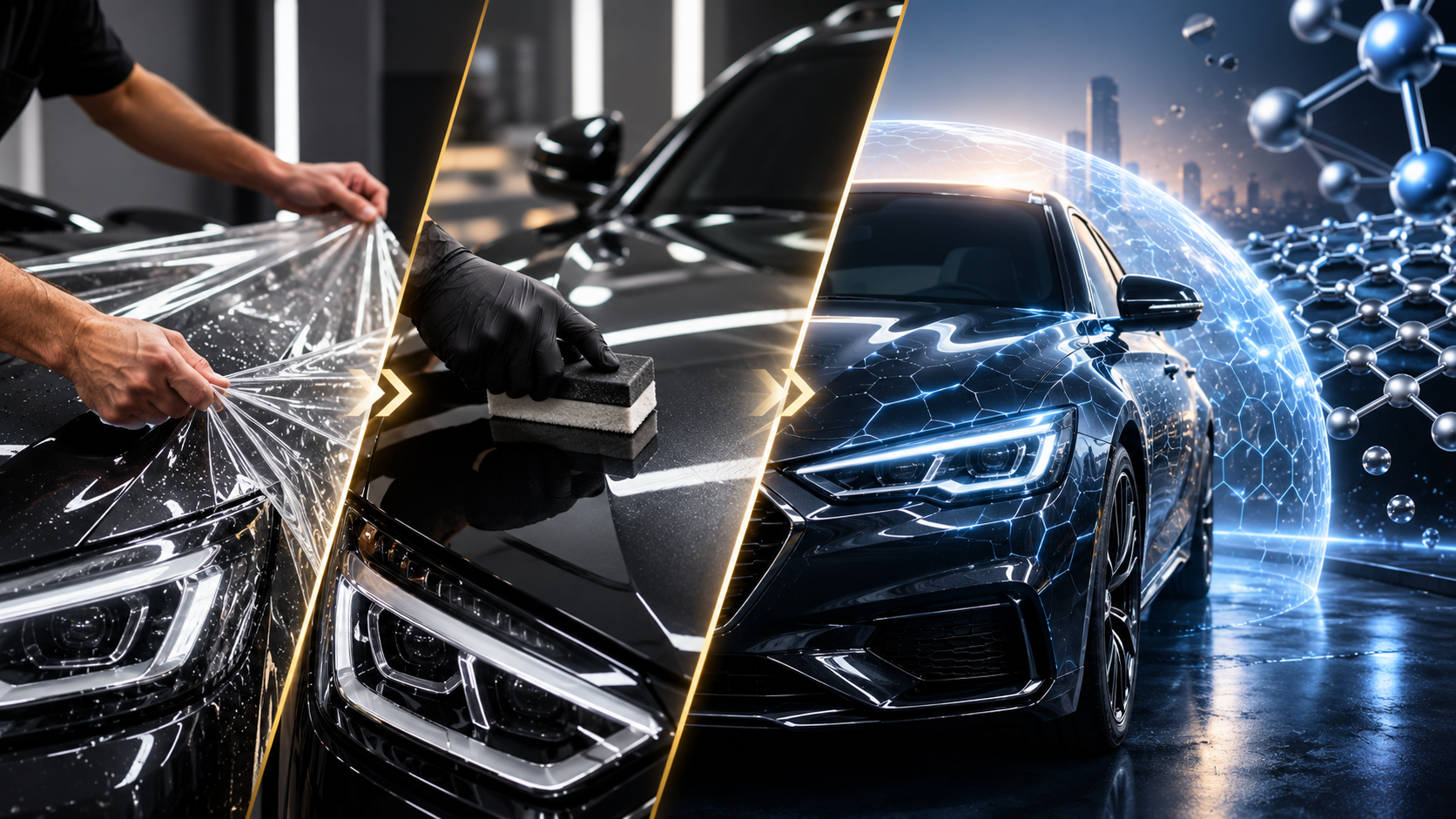
From the rise of Paint Protection Film (PPF) to emerging innovations in ceramic coating with borophene technology, the industry is entering a new era of surface protection.
So where is automotive paint protection headed next?
Let’s take a closer look.
Why Paint Protection Matters More Than Ever
Vehicle ownership has changed considerably over the years.
Cars are no longer viewed simply as transportation tools. For many owners, they represent a significant financial investment that they plan to maintain for five, seven or even ten years.
Unfortunately, paint damage begins accumulating from the moment a vehicle leaves the showroom.
Common threats include:
- Stone chips
- Road debris
- UV exposure
- Bird droppings
- Tree sap
- Hard water stains
- Industrial contamination
- Minor scratches
Even small imperfections can affect appearance, increase maintenance requirements and impact resale value over time.
This growing awareness has led more owners to seek long-term protection solutions rather than waiting until damage becomes visible.
How Paint Protection Film Changed the Industry
Few innovations have transformed automotive paint protection as significantly as paint protection film.
Originally developed for demanding environments where surface protection was critical, PPF eventually became one of the most trusted solutions for preserving vehicle paint.
Unlike traditional protective products that primarily focus on surface enhancement, PPF acts as a physical barrier between the vehicle’s paint and external hazards.
Its popularity stems from its ability to help protect against:
- Stone chips
- Road debris
- Minor scratches
- Insect splatter
- Environmental contaminants
Modern PPF Film technology has also introduced features such as self-healing properties, improved clarity and enhanced durability.
Today, many vehicle owners consider paint protection film the benchmark for preserving factory paint, especially on new vehicles.
The Growing Demand for Better Protection
While paint protection film has become highly effective, the automotive industry is constantly looking ahead.
Vehicle owners continue to ask for protection solutions that offer:
- Longer durability
- Better environmental resistance
- Easier maintenance
- Improved surface performance
- Greater longevity
At the same time, automotive manufacturers are developing increasingly sophisticated paint systems that require advanced protection methods.
This demand for innovation is what drives the search for new materials and technologies.
Just as PPF represented a major leap forward from traditional paint care methods, future technologies may push protection capabilities even further.
This is where borophene enters the conversation.
What Is Borophene Technology?
Borophene is a two-dimensional material made entirely of boron atoms.
Although relatively new compared to many established materials, it has attracted considerable attention from researchers because of its unique structural properties.
Scientists are currently exploring borophene for applications in:
- Electronics
- Energy storage
- Aerospace engineering
- Advanced materials research
- Protective surface technologies
Its appeal comes from characteristics such as:
- Exceptional strength
- Lightweight structure
- Advanced chemical properties
- High material stability
While borophene remains in the research and development stage for many applications, experts believe it has the potential to influence several industries, including automotive surface protection.
How Borophene Could Shape the Future of Paint Protection
Although borophene-based automotive protection solutions are still emerging, industry observers see significant long-term potential.
Future borophene ceramic coating may offer benefits such as:
Greater Surface Durability
One of the primary goals of any protective system is durability.
Borophene’s material properties suggest it could contribute to stronger and more resilient protective layers in future applications.
Enhanced Environmental Resistance
Vehicle paint is constantly exposed to chemicals, pollutants and contaminants.
Advanced borophene ceramic coating may help improve resistance against these environmental challenges.
Longer Protection Cycles
As protection technologies evolve, vehicle owners increasingly expect solutions that remain effective for longer periods.
Borophene may contribute to future products designed to extend protection lifespans.
Easier Maintenance
Future generations of protection systems may focus not only on preservation but also on reducing maintenance effort.
Improved surface characteristics could potentially make cleaning easier while helping vehicles maintain their appearance for longer.
Paint Protection Film vs Future Borophene Ceramic Coating
It is important to understand that these technologies are not necessarily direct competitors.
Paint protection film is a proven and widely adopted solution available today.
Borophene, on the other hand, represents a future-facing innovation that is still being explored.
| Feature | Paint Protection Film | Borophene Ceramic Coating |
| Commercial Availability | Widely Available | Emerging |
| Real-World Validation | Extensive | Developing |
| Physical Barrier Protection | Yes | Under Research |
| Stone Chip Protection | Excellent | Potentially High |
| Industry Adoption | Established | Early Stage |
| Future Growth Potential | High | Very High |
For current vehicle owners, PPF remains one of the most effective options available.
Borophene represents a glimpse into what future protection technologies may eventually become.
What Vehicle Owners Can Expect in the Next Decade
The future of automotive paint protection will likely be driven by advances in material science.
Over the next decade, we may see:
- Smarter protective materials
- More durable protection systems
- Hybrid protection technologies
- Improved self-healing capabilities
- Enhanced resistance to environmental damage
- Longer-lasting protection solutions
Current technologies such as borophene ceramic coating for cars and paint protection film have already raised industry standards significantly.
Future innovations will likely build upon these foundations rather than replace them entirely.
The goal remains simple: better protection with less maintenance.
Why the Industry Is Paying Attention to Borophene
Every major advancement in automotive protection began as an emerging technology.
There was a time when paint protection film itself was considered a specialised solution used by only a small group of vehicle owners.
Today, it is one of the most recognised forms of paint protection worldwide.
Borophene may follow a similar path.
While commercial adoption may still be years away, the material’s unique properties continue to attract attention from researchers and innovators looking to develop the next generation of protective technologies.
Conclusion
Automotive paint protection has come a long way from traditional waxing and polishing.
Paint protection film has transformed how vehicle owners preserve factory paint by introducing a durable physical barrier against everyday damage. As vehicle protection needs continue to evolve, researchers are now exploring advanced materials that may shape the future of surface protection.
Borophene is one of the most promising technologies currently being studied for its potential applications in advanced protective systems.
While paint protection film remains the benchmark for vehicle protection today, borophene offers an exciting glimpse into what the next generation of automotive paint preservation could look like.
The future of paint protection is not just about keeping vehicles shiny; it is about creating smarter, stronger and longer-lasting ways to preserve them for years to come.
