

A friend once described her fitness tracker as “a very expensive way to feel guilty about steps.” She wasn’t wrong. Most wearables tell you what your body did. Almost none of them ask why you’re doing any of it. That gap is exactly where the wellness industry is moving. People don’t just want data anymore, they want direction. A number on a screen doesn’t change a habit. A reminder that reconnects you to a goal at the right moment actually might. Healthcare technology has spent the last decade getting very good at measurement. The next phase is about meaning, turning data into something that actually shifts behaviour day to day.
What Digital Wellness Means Today
Digital wellness used to mean an app that counted your steps and reminded you to drink more water. That definition has expanded significantly.
Today it includes cognitive well-being, sleep quality, stress patterns, and even how connected someone feels to their personal goals. Healthcare innovation has broadened the definition of health beyond physical fitness to include mental focus, emotional balance, and long-term motivation.
This matters because burnout, stress, and a lack of purpose can affect everyday life just as much as poor sleep or inactivity. A wellness platform that overlooks these factors only addresses part of the picture.
How Healthcare Technology Changed Daily Life
Ten years ago, monitoring your health usually meant an annual medical check-up and perhaps a simple pedometer. Today, wearable devices provide continuous insights throughout the day.
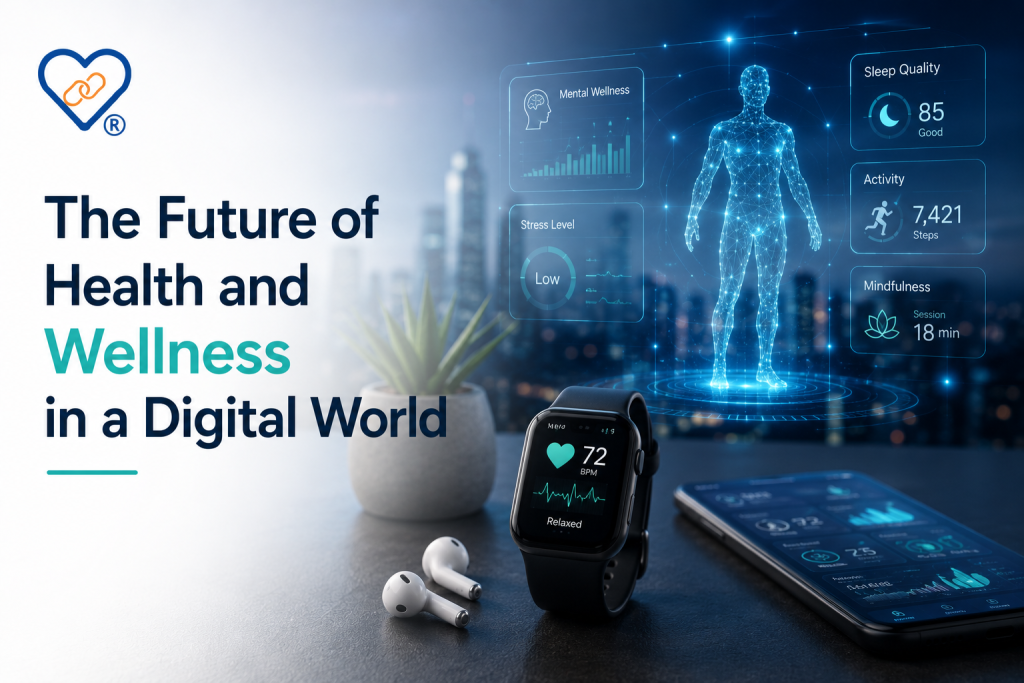
Health monitoring devices can now monitor sleep cycles, resting heart rate, stress signals, and daily activity in real time. This continuous feedback allows people to recognise patterns much sooner than waiting for an annual appointment.
Another important advancement is personalization. Modern healthcare technology increasingly adapts to individual habits and routines instead of treating every user the same. Timely reminders based on personal behaviour are far more effective than generic notifications delivered at fixed times.
Where Health Monitoring Devices Are Headed
The next generation of health monitoring devices will do much more than collect information. They will increasingly respond to changing conditions.
Wearables are beginning to connect physical health data with mental well-being. Instead of simply recording elevated stress levels, future devices will encourage mindfulness exercises, relaxation techniques, or motivational prompts when they’re needed most.
Environmental responsiveness is also becoming part of wearable innovation. Future systems may connect with lighting, sound, or room temperature to create surroundings that better support relaxation and focus based on detected stress levels.
Community is another area experiencing rapid growth. More wellness platforms are recognising that accountability often leads to stronger long-term habits. Rather than leaving users alone with charts and statistics, many devices now encourage shared progress and ongoing support from like-minded communities.
Real-Life Applications
An entrepreneur balancing meetings, deadlines, and constant responsibilities may benefit from reminders that reconnect them with long-term goals during stressful moments.
Students building new study habits often respond better to consistent encouragement than occasional motivation, making wearable reminders useful throughout demanding academic schedules.
People recovering from burnout can use sleep tracking and stress monitoring to recognise unhealthy patterns before they become overwhelming, allowing them to adjust daily routines earlier.
Others simply benefit from accountability. While some people stay motivated through data alone, many achieve better results when supported by a community working toward similar personal goals.
What to Look for in a Wellness Device
Not every wearable offers the same value. Before choosing one, look beyond step counts and basic fitness metrics.
Consider whether the device monitors sleep, stress, and daily activity together instead of focusing on only one measurement. Personalized reminders should adapt to individual routines rather than sending identical notifications to every user.
Community support is another valuable feature because shared accountability often helps people maintain healthier habits over time. Guided onboarding also makes a difference, ensuring users understand both the technology and how to integrate it into daily life.
Finally, choose a platform that continues evolving with new features instead of remaining a static fitness tracker.
Conclusion
The future of wellness is moving beyond simply measuring activity. Modern wearables increasingly combine physical health tracking with mental focus, behavioural insights, and personalized support that encourage meaningful lifestyle changes. As innovation continues, healthcare technology will play an even greater role in helping people build healthier daily habits rather than simply reporting data. Platforms like Dirac Links reflect this evolution by combining wearable technology with motivation, accountability, and long-term personal growth.
