

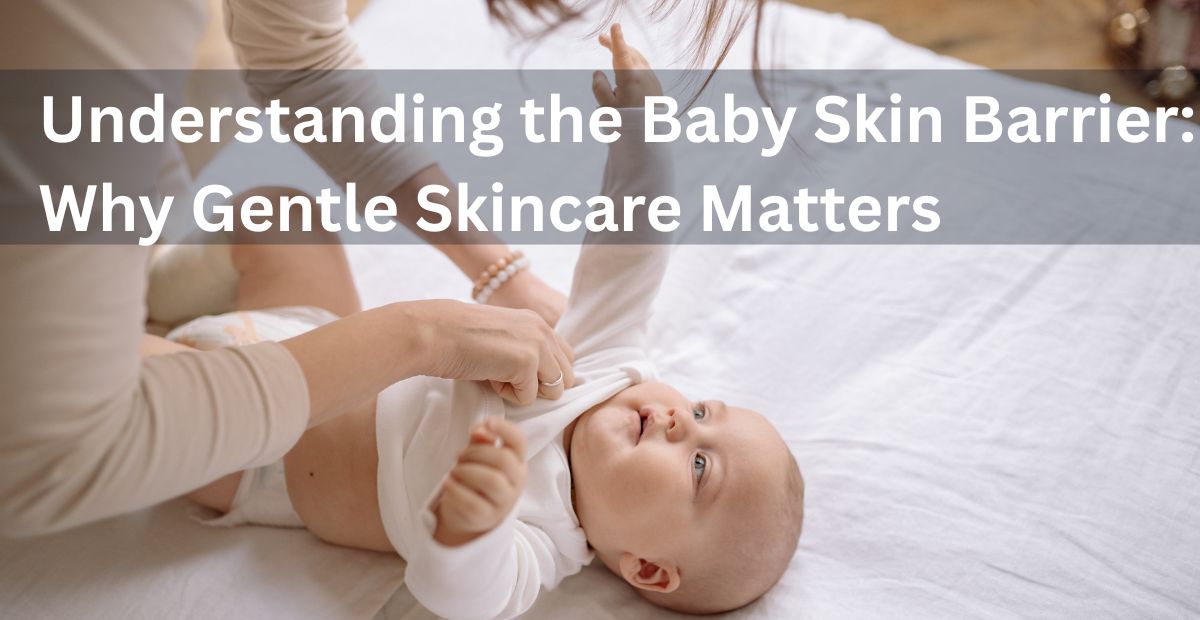
Babies are fascinating! And we are sure new parents will agree. From their heart-melting smiles to their tiny toes – every inch of them can feel like a marvel, and a mystery, at the same time! After all, you learn more about your baby as you go. However, one of the first things you should know more about is their skin. Because the wrong skincare products – whether it’s a moisturising baby cream, bathing bar or anything else – can do more harm than good.
That’s why today’s article will focus on helping you understand how your baby’s skin works so you can choose better, gentle products to take good care of it.
Characteristics Of A Newborn’s Skin
Did you know a newborn’s skin barrier is 30% thinner than that of an adult’s? It is also more acidic with a pH of 5.5. Its fragility comes as no surprise then. The nature of their skin and its barrier also explains why they are more likely to experience TEWL or trans-epidermal water loss, which means their skin is more susceptible to dryness. It is also very soft and sensitive, which increases the likelihood of redness, irritation, allergies etc. Lastly, their skin hasn’t developed the ability to optimally regulate hot and cold temperatures yet. For babies, their skin is a work in progress, and it may take about 6 years for it to mature.
What Is Vernix In Babies?
Now let’s talk about vernix in babies. We understand a lot of parents might be unfamiliar with this term, but it has a role to play that you should be aware of.
Vernix is the white, waxy coating that babies are naturally born with. Call it a protective layer that is primarily made up of proteins, water, and lipids. Its core purpose is to keep your baby’s skin moisturised while acting as a shield against microbes and other germs. It also helps in regulating your baby’s skin temperature. However, this layer of skin is automatically removed after a newborn’s first bath.
Understanding A Baby’s Acid Mantle
The next topic in our baby skin science class is the acid mantle. While babies are born with an acid mantle, it is not fully developed, featuring a slightly more acidic pH of 5.5 till their skin reaches the age of maturity as we mentioned before. In any case, the acidic nature of their skin mantle is actually helpful in protecting its natural function as a protective barrier. It also helps in regulating the structural stability and natural microbiome of their skin while keeping inflammation in check.
However, certain skin conditions such as excess dryness or eczema can disrupt your baby’s skin pH levels, which is what makes using the gentlest products so critical.
Gentle Hydration Is Non-Negotiable For All Babies
Now that you know how fragile your baby’s skin really is, it is important to adjust their skincare routine accordingly. During the early years of your newborn, preserving their skin’s hydration levels should be your top priority. The safest way to do that is to use moisturising baby creams with gentle formulations, such as the AreoVeda Deep Moisturising Baby Cream for example.
Creams that specifically target dryness can be instrumental in keeping issues such as eczema at bay. Ingredients that are particularly effective in combating dryness include Sweet Almond, Hemp Seed and Pomegranate Oils. These three together act as a powerful emollient, coating your baby’s skin in a nourishing layer that prevents moisture loss.
Other gentle ingredients that can help include a combination of three deeply moisturising and rich body butters – Ghee, Mango Butter, and Shea Butter respectively. These three are a great source of essential fatty acids along with skin-friendly vitamins such as Vitamins A and E. Not only do they support the deep hydration of your baby’s skin, but they also protect it against infections and instances of inflammation.
Finally, gentle and effective moisturising baby creams also add ingredients that provide lasting hydration along with protective functions. For instance, elements such as Pentavitin® and Hyaluronic Acid lock moisture in to deliver up to 24 hours of baby soft skin and prevent itchiness. Meanwhile, Saffron Extract soothes and brightens your baby’s skin, providing your little one with all-round comfort.
Conclusion
Taking care of your baby’s skin might not be rocket science but it does require a deeper understanding of your newborn’s skin functions. It reinforces the importance of choosing gentle, allergen-free pH balance products that naturally protect their skin without giving rise to discomfort, allergies or dryness. Hydration is critical and good quality moisturising baby creams can go a long way in protecting your little one’s skin till it matures naturally.
