

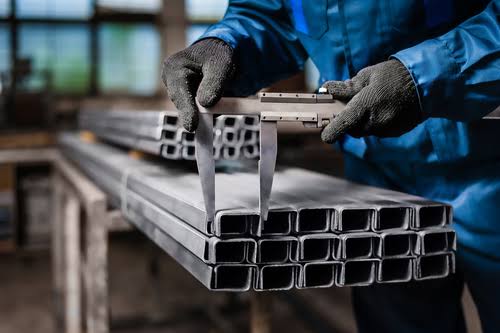
Precision has become one of the defining characteristics of modern manufacturing. Across industries such as construction, engineering, food production, transport, healthcare, and energy, manufacturers rely on carefully prepared materials to produce components that meet strict quality standards. Every stage of the production process, from design through to assembly, depends on raw materials being supplied in the correct dimensions and with consistent quality.
Metal fabrication is a broad industry encompassing cutting, forming, welding, machining, and finishing. Each stage builds upon the accuracy of the previous one, meaning that errors introduced during material preparation can affect every subsequent process. As production methods become increasingly automated, the demand for precisely prepared materials has grown. Manufacturers seek reliable methods of reducing waste, maintaining tolerances, and improving efficiency without compromising product quality.
One common requirement is obtaining stainless sheet cut to size before fabrication begins. Supplying material in the required dimensions helps reduce unnecessary processing on-site while allowing production schedules to remain consistent. This approach supports manufacturers working with both small production runs and large-scale industrial projects.
Why Material Preparation Matters
Preparing sheet metal correctly is about more than simply cutting it into smaller pieces. Accurate preparation ensures that each component matches engineering drawings and production specifications. When materials arrive with the correct dimensions, operators can move directly into fabrication processes such as bending, drilling, welding, or assembly.
Poorly prepared materials may require additional trimming or correction, increasing labour costs and extending production times. Even small inconsistencies can result in misaligned assemblies, reduced structural integrity, or difficulties during installation. For manufacturers producing high volumes of identical components, these inefficiencies can become significant over time.
Precision material preparation also contributes to better quality control. Consistent dimensions simplify inspection procedures because each component can be measured against the same specifications. This consistency supports manufacturers operating under recognised quality management systems where repeatability is essential.
Modern Cutting Technologies
Advances in manufacturing technology have transformed how stainless steel sheets are processed. Traditional mechanical cutting methods continue to play an important role, but computer-controlled systems now offer greater precision, speed, and flexibility.
Laser cutting has become one of the most widely used methods for processing stainless steel. A focused laser beam produces clean edges with minimal material distortion, making it suitable for intricate shapes and detailed designs. Because of its accuracy, laser cutting is commonly used where tight tolerances are required.
Waterjet cutting offers another highly precise solution. Using high-pressure water mixed with abrasive particles, this process cuts through stainless steel without generating heat. The absence of a heat-affected zone helps preserve the material’s properties, making waterjet cutting particularly useful for thicker materials or applications where thermal distortion must be avoided.
Plasma cutting provides an efficient option for thicker sheets where production speed is a priority. Although it may not achieve the same fine detail as laser cutting, it remains an effective process for many industrial applications.
The selection of an appropriate cutting method depends on factors including sheet thickness, required edge finish, production volume, and overall manufacturing objectives.
The Role of Stainless Steel in Industry
Stainless steel continues to be one of the most versatile engineering materials available. Its combination of corrosion resistance, durability, strength, and attractive appearance makes it suitable for a diverse range of industries.
Construction projects frequently use stainless steel for structural components, architectural cladding, balustrades, handrails, roofing elements, and decorative finishes. The material performs well in outdoor environments because it resists corrosion and requires relatively little maintenance throughout its service life.
Within the food and beverage industry, stainless steel plays an essential role due to its hygienic properties. Equipment such as preparation tables, conveyors, storage tanks, mixing vessels, and processing machinery are commonly manufactured from stainless steel because smooth surfaces are easier to clean and help maintain sanitary conditions.
Healthcare facilities similarly depend on stainless steel for hospital furniture, laboratory workstations, surgical instruments, sterilisation equipment, and pharmaceutical manufacturing systems. Its durability and resistance to repeated cleaning procedures make it particularly well suited to demanding medical environments.
The transport sector also relies heavily on stainless steel for vehicle components, exhaust systems, railway infrastructure, marine equipment, and specialist engineering applications where strength and corrosion resistance are both important.
Improving Manufacturing Efficiency
Efficient manufacturing depends upon minimising unnecessary processing wherever possible. Receiving stainless sheet cut to size allows production teams to begin fabrication immediately rather than allocating additional time to preparing raw materials. This helps reduce bottlenecks while improving workflow across manufacturing facilities.
Material supplied in the correct dimensions can also reduce scrap generation. Better nesting strategies during the cutting process help maximise material utilisation, reducing waste and improving overall production efficiency. These benefits become increasingly important when working with higher-value materials where controlling material costs is a significant consideration.
Accurate preparation further supports automation. Modern CNC machinery relies on consistent inputs to produce repeatable results. Components that have already been prepared to precise specifications are easier to process using automated equipment, contributing to improved productivity and more predictable production schedules.
Inventory management also benefits from precision preparation. Rather than maintaining extensive stocks of multiple sheet sizes, manufacturers can organise material orders around project requirements, helping optimise storage space while simplifying stock control.
Selecting the Appropriate Stainless Steel Grade
Different applications require different grades of stainless steel depending on environmental conditions and mechanical requirements. Material selection should consider corrosion resistance, strength, weldability, temperature performance, and intended service conditions.
Austenitic grades, including 304 and 316 stainless steel, are among the most commonly specified. Grade 304 offers excellent corrosion resistance for general applications, while Grade 316 provides enhanced protection in marine environments or where exposure to chemicals is expected.
Ferritic stainless steels are often selected where moderate corrosion resistance and cost efficiency are priorities. Martensitic grades, meanwhile, provide increased hardness and wear resistance, making them suitable for components requiring higher mechanical strength.
Choosing the appropriate material ensures that fabricated products perform reliably throughout their operational life while meeting the technical requirements of their intended application.
Sustainability and Responsible Material Use
Sustainability has become an increasingly important consideration throughout the manufacturing sector. Stainless steel contributes positively because it is highly recyclable and retains its material properties throughout repeated recycling processes.
Precision cutting techniques support sustainability by reducing waste and improving material utilisation. Optimised cutting layouts maximise the usable area of each sheet while minimising offcuts. Any remaining scrap material can typically be recycled, supporting circular manufacturing practices and reducing demand for new raw materials.
Energy-efficient production methods, improved process planning, and responsible material management all contribute to lowering the environmental impact of metal fabrication. As manufacturers continue to adopt more sustainable practices, efficient material preparation remains an important part of achieving these objectives.
Looking Ahead
The future of metal fabrication will continue to be shaped by advances in automation, digital manufacturing, and precision engineering. Computer-aided design, CNC machinery, robotic handling systems, and increasingly sophisticated cutting technologies allow manufacturers to achieve consistently high standards while improving productivity.
Despite these technological developments, the fundamentals remain unchanged. Accurate material preparation, appropriate material selection, and reliable manufacturing processes continue to underpin successful production across numerous industries. By focusing on precision from the earliest stages of fabrication, manufacturers can improve efficiency, reduce waste, maintain product quality, and support dependable long-term performance in a wide variety of applications.
