

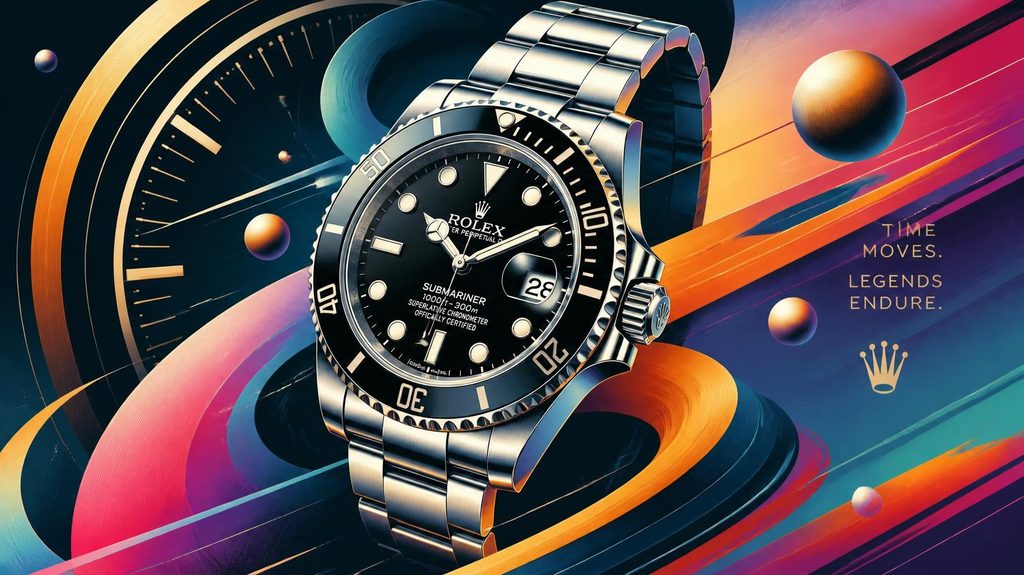
Luxury watches occupy a unique position in the world of personal accessories. They can serve as practical instruments, expressions of personal style, and objects associated with craftsmanship and heritage. Among the names most strongly connected with this tradition is Rolex, a brand whose history has been shaped by technical innovation, recognizable design, and a long-standing emphasis on reliability.
For people entering the world of luxury watches, understanding why certain brands have remained influential for generations can be more useful than simply focusing on price or popularity. Rolex provides an interesting example because its appeal extends beyond individual models. Its identity has been built around engineering, consistency, design language, and a connection with significant moments in exploration, sport, and everyday life.
A Heritage Built Around Innovation
The story of Rolex began in the early twentieth century, when Hans Wilsdorf and Alfred Davis established a company focused on producing watches that combined precision with practicality. At a time when wristwatches were still developing as a mainstream alternative to pocket watches, reliability was an important challenge.
The company became particularly associated with efforts to improve the durability and precision of wristwatches. One major milestone came with the development of highly water-resistant watch cases. The Oyster case, introduced in the 1920s, helped establish the idea that a wristwatch could be protected from environmental conditions while remaining suitable for everyday use.
This emphasis on engineering became a central part of the company’s identity. Rather than treating a watch solely as decorative jewelry, the brand positioned its products as instruments designed to perform consistently under demanding conditions.
The Importance of Mechanical Watchmaking
Mechanical watches operate differently from modern quartz watches. Instead of relying on a battery-powered quartz oscillator, a mechanical movement uses a complex arrangement of components powered by a mainspring.
The energy stored in the spring is gradually released through the movement, while the escapement and balance regulate the release of that energy. Hundreds of individual components can work together to produce the movement of the hands.
This mechanical complexity is one reason enthusiasts appreciate traditional watchmaking. A mechanical watch represents an intricate combination of engineering, miniature manufacturing, assembly, and adjustment.
For collectors, the attraction is therefore not necessarily about having the most technologically advanced timekeeping device. Smartphones and inexpensive quartz watches can provide extremely accurate time. The appeal lies in craftsmanship, mechanical ingenuity, longevity, and the experience of owning an object that has been carefully engineered at a very small scale.
Design That Remains Recognizable
One of the strongest characteristics of Rolex is consistency in design. While individual collections have evolved over decades, many models retain visual elements that make them immediately recognizable.
This approach contrasts with industries where products are frequently redesigned to follow short-term trends. A luxury watch can instead benefit from continuity. A design that remains relevant for decades can become part of a broader cultural identity.
Elements such as distinctive bezels, bracelet designs, dial layouts, and case proportions contribute to this recognition. Small changes may occur from one generation to another, but the overall design language tends to remain familiar.
That consistency can also make certain watches versatile. A well-designed mechanical watch can work with formal clothing, business attire, or casual outfits without appearing completely disconnected from any particular setting.
Why Materials Matter
Materials play an important role in the performance and appearance of a luxury watch. Stainless steel, precious metals, ceramic components, sapphire crystal, and specialized alloys may all serve different purposes.
The choice of material is not simply about appearance. A watch case needs to withstand everyday impacts and exposure to moisture, while the crystal must provide protection for the dial without becoming excessively vulnerable to scratches.
Sapphire crystal, for example, is valued in watchmaking because of its high resistance to scratching. Case materials are similarly selected according to characteristics such as corrosion resistance, hardness, weight, and appearance.
Manufacturing these components to precise tolerances is an important part of high-end watch production. The finished product may look relatively simple from the outside, but that appearance can conceal considerable engineering work.
Professional Watches and Real-World Use
Historically, certain Rolex collections became closely associated with professional activities. Divers, pilots, explorers, sailors, and other professionals helped demonstrate the usefulness of robust watches in demanding environments.
The connection between watches and exploration is particularly interesting. Before digital devices became ubiquitous, a reliable mechanical watch could be an important tool for navigation and timing.
Even though modern technology has replaced mechanical watches for many professional applications, the historical association remains meaningful. Contemporary enthusiasts often appreciate these watches partly because they represent an earlier era when mechanical instruments were essential equipment rather than primarily luxury objects.
That heritage gives some collections a distinctive character. Their designs are influenced by practical requirements, which can make them appealing even to buyers who never intend to use a watch in extreme conditions.
Understanding the Luxury Watch Market
Anyone considering a luxury watch should look beyond brand recognition. Factors such as condition, provenance, service history, model reference, materials, and availability can influence the overall value of a particular watch.
The secondary market can be especially complicated. Two watches that appear similar may have substantially different histories or conditions. Original components, documentation, service records, and reputable sellers can therefore matter significantly.
Buyers should also understand that a luxury watch is not automatically a guaranteed investment. Market prices can rise and fall depending on demand, economic conditions, model availability, and changing collector preferences.
A purchase is generally more satisfying when the buyer appreciates the watch itself rather than relying entirely on expectations of future financial returns.
Buying With Confidence
Research is one of the most useful tools available to prospective buyers. Before purchasing, it is worth learning about the specific model, understanding its specifications, and comparing information from multiple reputable sources.
Independent inspection can also be valuable, particularly when purchasing a pre-owned watch. An experienced watchmaker or qualified specialist may identify issues that are difficult for an inexperienced buyer to notice.
Buyers should be cautious about unusually attractive offers, especially when a seller provides limited information about the watch’s history. Clear documentation, transparent communication, and a verifiable purchasing process can reduce unnecessary risks.
For additional information and watch-related resources, readers can explore fake rolex.
The Role of Maintenance
Mechanical watches require appropriate maintenance to continue performing properly. Although modern mechanical movements are designed for durability, they contain numerous moving components that can eventually require cleaning, lubrication, adjustment, or replacement.
Regular servicing should be performed by qualified professionals familiar with the movement involved. The appropriate service interval can depend on the watch, its age, usage, and manufacturer recommendations.
Owners should also pay attention to water resistance. A watch designed to resist water should not automatically be treated as permanently waterproof. Seals can age, and water resistance can change over time. Testing and maintenance are therefore important for watches exposed to moisture.
Proper storage is equally useful. Extreme temperatures, unnecessary impacts, magnetic fields, and poor storage conditions can potentially affect mechanical performance.
Why Heritage Still Matters
In an era dominated by rapidly changing technology, mechanical watches occupy an unusual place. They are not necessarily the most efficient way to tell time, yet interest in them continues because their appeal is rooted in craftsmanship and history.
Rolex demonstrates how a product can become more than a functional object. Through decades of engineering development, recognizable designs, professional associations, and cultural visibility, the brand has established an identity that extends beyond the mechanism inside the case.
For enthusiasts, the attraction may come from many different directions. One person may appreciate mechanical engineering, another may value design, while someone else may simply enjoy owning an object connected to decades of history.
Making an Informed Choice
Choosing a luxury watch should ultimately be a personal decision. Rather than purchasing solely because a particular model is popular, prospective buyers can consider how the watch fits their lifestyle, wardrobe, interests, and long-term expectations.
Learning about movements, materials, servicing, authenticity, and market conditions can make the process considerably more rewarding. It also helps buyers distinguish genuine craftsmanship from marketing claims.
For those researching models, collecting history, or learning more about luxury watch ownership, fake rolex can serve as another resource to explore.
Final Thoughts
The enduring appeal of Rolex is closely connected to the principles that have shaped traditional luxury watchmaking: precision, durability, craftsmanship, recognizable design, and heritage.
While technology has transformed the way people measure and interact with time, mechanical watches continue to offer something different. They provide a tangible connection to engineering traditions and craftsmanship that have developed over generations.
Whether someone is an experienced collector or simply curious about luxury watches, understanding the history and construction behind these timepieces is an important first step. Ultimately, the most rewarding ownership experience comes from choosing thoughtfully, researching carefully, and appreciating the craftsmanship that makes a mechanical watch more than simply a device for displaying the hour.
