

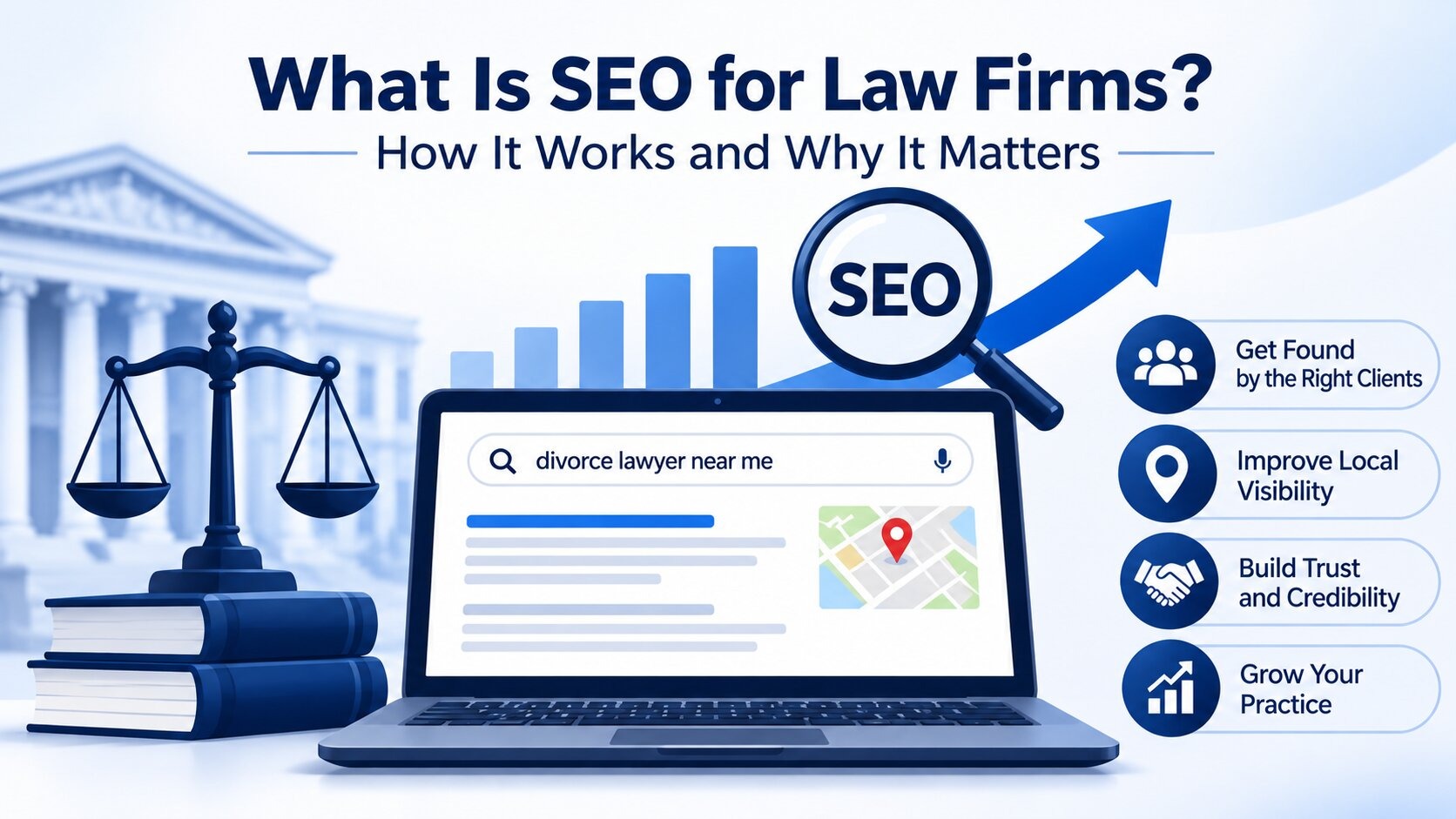
SEO for law firms is the process of improving your website so it shows up when people search for legal help on Google. It helps your firm appear in search results, on maps, and in AI answers. The goal is simple. You want the right clients to find you at the right time. This guide explains how it works and why it matters for attorneys across the United States.
What Is SEO for Law Firms?
SEO stands for search engine optimization. For law firms, it means shaping your website and online presence to match what legal clients search for
A person with a legal problem rarely browses. They search. They type things like “divorce lawyer near me” or “what to do after a car accident.” The firms that show up first often get the call.
Strong SEO puts your firm in front of those people. It works through your content, your site setup, your local listings, and your reputation. Unlike ads, you do not pay for every click. The traffic you earn can keep growing over time.
Why SEO Matters for Law Firms
There are a few solid reasons why SEO matters for law firms.
People start with search. A lot of potential clients never ask a friend for a referral. They type a question into Google and pick from what appears. If you’re not there, you don’t exist to them.
The leads are warmer. Someone searching “divorce attorney Dallas” is ready to talk. Compare that to a billboard, which reaches everyone and convinces almost no one.
It also costs less over time. Click costs for legal keywords are some of the highest anywhere. Personal injury terms can run past $100 a click in competitive cities. Strong organic rankings cut your dependence on those ads.
Finally, it builds trust. Ranking on page one tells people you’re established. Reviews and clear attorney bios finish the job.
How Search Engines Judge Law Firm Websites
Google treats legal content as a “Your Money or Your Life” topic. Bad advice can hurt people, so the bar is higher. This is where EEAT comes in. It stands for experience, expertise, authoritativeness, and trust.
In plain terms, Google wants proof that a real, qualified lawyer stands behind your pages. Put attorney names on your content. List bar admissions and the states where you practice. Show your office address and phone number. Describe past work honestly. And never promise results, because state bar rules usually forbid it.
A page written or reviewed by a practicing attorney reads differently. Visitors feel it, and so does Google.
Building a Law Firm SEO Strategy
A good law firm SEO strategy is less mysterious than agencies make it sound. It rests on a few pillars.
Start with your practice area pages. Each major service deserves its own page. A single “Our Services” page can’t compete with a focused page on DUI defense or estate planning. Answer the main question in the first two sentences, then go deeper.
Keyword research comes next. Look for the words clients actually use, not legal jargon. People search “can my landlord kick me out,” not “residential tenancy termination.”
Then there’s technical health. Your site should load fast, work well on a phone, and use HTTPS. Many law firm sites fail here. They look polished but crawl along on mobile.
Content ties it together. Blog posts, guides, and FAQs let you answer real questions and show your expertise. Keep them accurate and update them. A post about state law that’s three years old can do more harm than good.
Last, build links. Mentions from legal directories, bar associations, local news, and respected blogs tell Google you’re legitimate. Quality beats quantity every time.
 Local SEO for Law Firms
Most clients hire a lawyer nearby, so local SEO for law firms often delivers the fastest wins. It’s what puts you in the map results at the top of the page.
Your Google Business Profile is the center of it. Claim it. Pick the right categories. Add photos, hours, and your services. Post updates now and then.
Reviews matter a great deal. Ask satisfied clients for honest feedback and reply to every one, good or bad. Never offer anything in exchange for a review, and keep client details private in your replies.
Keep your name, address, and phone number identical across every directory. Small differences confuse Google. Also build location pages if you serve several cities. Each one needs real, useful content, not the same text with a new city name dropped in.
What Law Firm SEO Services Include
Many firms bring in law firm SEO services because the work takes time and skill. A solid package usually covers a site audit, keyword research, content creation, technical fixes, local SEO, link building, and monthly reporting.
When you compare providers, ask a few direct questions. Do they understand legal advertising rules? Will they show you real reports? Do they have experience with law firms specifically? Be careful with anyone who guarantees a number one ranking. Nobody controls Google.
Patience helps too. Most firms see early movement in three to six months. Competitive practice areas can take longer.
About PageOne Lawyers
PageOne Lawyers is a legal SEO agency that helps law firms across the United States get found online. The team focuses on local SEO, Google Business Profile optimization, location pages, citations, and link building for attorneys. The goal is simple. Bring in more qualified clients without wasting budget on guesswork.
FAQs
1. How long does SEO take for a law firm?
Most firms notice early progress within three to six months. Bigger gains often take closer to a year, especially in crowded markets like personal injury.
2. Is SEO better than paid ads for lawyers?
They do different jobs. Ads bring quick traffic but stop when the budget ends. SEO takes longer but keeps paying off. Many firms use both, then shift more budget to SEO as rankings grow.
3. Do small law firms need SEO?
Yes. Solo attorneys and small practices often gain the most, because local search lets them compete without a huge budget.
4. Can I do SEO myself?
You can handle the basics, like claiming your Google Business Profile and asking for reviews. Technical fixes, content planning, and link building are harder. Many busy attorneys find that hiring help makes more sense than losing billable hours.
5. Does SEO follow state bar rules?
It has to. Every page, review reply, and ad claim should meet your state bar’s advertising rules. That’s why working with someone who knows legal marketing matters.
