

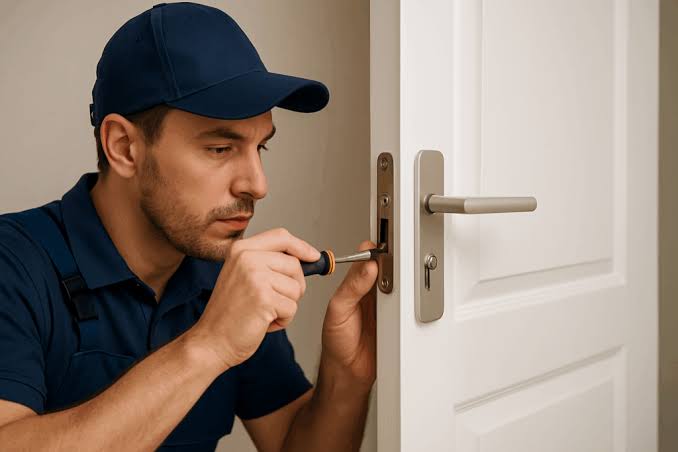
Nobody opens a business in Charlotte thinking about keys. You think about the lease, the buildout, the first hire, the first sale. Then eighteen months in, a manager quits without returning her key, you realize the cleaning crew has a copy too, and you cannot remember who else does. Nothing has gone wrong yet. That is exactly the moment most owners finally think about their locks, and it is later than it should be
The math has changed in 2026. Charlotte keeps adding storefronts, clinics, and warehouse space, staff turnover stays high in retail and food service, and hybrid schedules mean more people entering buildings at odd hours with less oversight. A working relationship with a locksmith Charlotte businesses can call before something breaks is cheaper, in every sense, than the version of that call that happens at 6 a.m. in front of a door that will not open.
Why Staff Turnover Quietly Breaks Key Control
Key control sounds like corporate jargon until you try to answer one question: how many people can open your door right now? In most small businesses the honest answer is a guess. Keys go out to employees, then to the person covering weekends, then to a contractor for a two-week job, and almost none of them come back. Ordinary keys can be copied at any kiosk, so even collected keys prove little.
The fix is not paranoia; it is a habit. Every departure, friendly or not, should trigger a decision: rekey the affected doors or consciously accept the risk. Rekeying keeps your existing hardware and changes only the internal pins, so it costs far less than owners expect. Businesses that fold it into their offboarding checklist spend a little regularly. Businesses that do not tend to spend a lot all at once, usually after inventory goes missing with no sign of forced entry.
One Key Or Many: Rethinking The Master Key Pyramid
Once a business has more than two or three doors, the keyring itself becomes the problem. The classic answer is a master key system: the owner’s key opens everything, a manager’s key opens most things, and a staff key opens only the front door and the break room. When done well, it reduces the ring to one key per person and makes it obvious which key is missing when one is lost.
Done casually, it backfires. A lost master is a lost building, so the structure should follow real responsibilities, not job titles. The stockroom, the server closet, and the office holding personnel files deserve their own level. A locksmith who asks about your floor plan and staffing before quoting a master system is doing the job properly; one who quotes without asking is selling you hardware, not security.
Where Storefront Doors Actually Fail During A Break-In
Most commercial break-ins in any city are not sophisticated. They are a pry bar in the gap between an aluminum-and-glass door and its frame, worked for less than a minute at the latch. The lock cylinder is rarely the weak point; the latch and the gap are. That is why a latch guard, a properly fitted mortise lock with a hook bolt, and tight door alignment stop more burglaries than an expensive cylinder ever will.
The weak points worth walking past on your own building this week:
- The latch and the gap: aluminum storefront doors flex, and a visible gap at the latch is an invitation; a latch guard plate closes it for very little money.
- The rear and side doors: they usually carry the cheapest hardware, face the least-watched side of the property, and are the most common point of forced entry.
- The hinges: exposed hinge pins on an out-swinging door can be pulled unless the hinges have security studs or set screws.
- The glass: a deadbolt means little if a thumb-turn sits within arm’s reach of a glass panel; laminated glass or repositioned hardware fixes the mismatch.
Field checks keep finding the same pattern: back doors get the cheap hardware and the worst maintenance, yet they face the alley where nobody is watching. If you upgrade one thing this year, upgrade the rear entrance: a solid deadbolt or exit-device trim, hinge-side protection, and lighting. Burglars pick the door you think about least.
Codes, Fobs, And Audit Trails: When To Retire Metal Keys
At a certain headcount, usually around ten regular keyholders, metal keys stop making sense as the primary credential. Keypads, fobs, and app-based access let you add or remove people in seconds, give cleaners a code that only works on Tuesday evenings, and keep a log of who opened which door and when. The audit trail alone settles disputes that used to be unwinnable arguments.
Electronic access is not all-or-nothing, and it is not a reason to neglect the door itself. A common, sensible setup pairs an electronic credential on the main staff entrance with mechanical high-security locks on critical interior doors. An experienced commercial locksmith Charlotte NC provider can stage the transition so you upgrade the doors that matter first and keep a mechanical override for the day the power or the network fails, because eventually one of them will.
Here is how the main approaches compare in day-to-day management:
| Access Method | Adding Or Removing A Person | Record Of Who Entered | If A Key Or Code Leaks |
| Standard metal keys | Cut a copy; removal requires rekeying the door | None | Rekey every affected lock |
| Master key system | Issue the right level key; removal still means rekeying | None | Lost master forces a building-wide rekey |
| Keypad codes | Add or delete a code in minutes | Basic, if codes are individual | Delete the code; hardware untouched |
| Fobs or app credentials | Issue or revoke instantly from a dashboard | Full time-stamped log | Revoke the credential; nothing physical changes |
The table explains why growing businesses drift toward electronic credentials on main doors while keeping proven mechanical hardware where simplicity and pry resistance matter most.
The True Price Of A Business Lockout
A home lockout costs an evening. A business lockout costs the morning’s revenue, three employees standing in the parking lot on the clock, and the delivery that arrived while nobody could open the receiving door. The lock is rarely the expensive part; the downtime is. Owners who have been through one usually make two changes afterward: they establish a relationship with a locksmith before they need one, and they fix the small symptoms- sticky cylinders, sagging doors, keys that need jiggling- that reliably precede a failure.
When you do compare providers for planned work, pricing varies for reasons worth understanding rather than fearing. The factors that legitimately move a commercial quote include:
- Number of doors and whether they are keyed alike, keyed differently, or mastered
- Hardware class: standard cylinders, Grade 1 commercial locks, exit devices, or electronic access
- Condition of doors and frames, since alignment work adds labor
- Rekey versus full replacement on each opening
- Scheduled daytime service versus an after-hours emergency call
A trustworthy technician explains which of these applies to your building before work starts. A vague number that grows on the invoice is the classic mark of the bait-and-switch operators every metro deals with.
Exit Devices, Fire Code, And What Your Insurer Expects
Commercial doors answer to rules that homes never face. Exits have to let people out in an emergency without a key or special knowledge, which is why panic bars exist and why double-cylinder deadbolts on an exit door can put you on the wrong side of fire code. Locking a door harder is not always legal, and an experienced commercial technician will flag a compliance problem before creating one.
Insurers care too. Some policies specify lock grades or require documented key control for claims involving theft without forced entry, and an adjuster’s first question after a mystery loss is often who had keys. Keeping a simple, current list of keyholders and service dates costs nothing and can be the difference between a paid and a denied claim.
A Twenty-Minute Security Review Worth Doing This Month
You do not need a consultant to find most of your building’s weak spots. Walk the property once, slowly, with fresh eyes and a notepad, ideally at closing time when the building is how a burglar would meet it. What to check:
- Count the keyholders: write down every person and company that can currently open the building, then decide whether each one still should.
- Close every door and look at it: gaps at the latch, doors that need a shoulder to shut, and latches that do not fully extend are all findings.
- Test the panic hardware: every marked exit should open with one motion, no key, no code, no force.
- Check the lighting at the rear: stand at the back door after dark and ask whether you could work on that lock unseen for five minutes.
- Try your spare keys: copies degrade, and a spare that barely turns today is the broken-key call of next winter.
Twenty minutes usually produces a short, cheap fix list, tighten a strike plate, cut fresh spares, rekey one door, and a much clearer conversation whenever you do bring a professional in.
Vetting The Person You Hand Your Keys To
Whoever rekeys your building could, in principle, open it later. That is reason enough to choose carefully. A sensible screening process for any Charlotte business looks like this:
- Ask for the North Carolina locksmith license number and verify it with the state licensing board.
- Confirm liability insurance before any work on doors, frames, or glass storefronts.
- Expect the technician to verify that you control the property before making keys; a professional who checks your authority is protecting you, not doubting you.
- Read recent reviews from other local businesses rather than generic five-star noise.
- Get the estimate and scope in writing before work begins, including what happens if a lock turns out to need replacement rather than repair.
Prefer providers who explain options, including the cheaper one, before quoting. The technician who talks you out of an unnecessary replacement on the first visit is the one worth keeping on file for the next five years.
For owners comparing local options, KeyTech Locksmith is one Charlotte provider that handles commercial rekeying, master key systems, storefront hardware, access control, and emergency lockouts, in addition to its residential work.
FAQs
How Often Should A Business Rekey Its Locks?
There is no fixed calendar. Rekey whenever a keyholder leaves on bad terms, whenever a key is lost, and after any break-in attempt. Businesses with steady turnover often rekey main doors once a year as routine hygiene.
Is A Master Key System Safe For A Small Business?
Yes, when it is designed around real responsibilities and the master keys are strictly controlled. Sensitive rooms should sit on their own level, and a lost master should be treated as an immediate rekey event, not an inconvenience.
Are Keypads And Fobs Better Than Keys?
They are better at managing people: instant deletion, scheduled access, and an entry log. They are not better at physically resisting a pry bar, so the door, frame, and latch hardware still decide how strong the opening really is.
Can A Locksmith Open My Business Without Damaging The Door?
Almost always. Professionals work non-destructively first with picking and bypass tools. Drilling is a last resort for damaged or high-security cylinders, and you should be told before it happens, not after.
What Should I Do First If My Budget Only Covers One Upgrade?
Fix the rear door. Upgrade its lock and latch protection, correct the alignment, and add light. It is the most commonly attacked opening and usually the cheapest meaningful improvement a Charlotte business can make.
Does One Locksmith Handle Both Mechanical Locks And Electronic Access?
Increasingly, yes. Modern commercial locksmiths work across cylinders, exit devices, keypads, and credential systems, which matters because the two sides have to work together on the same doors. Ask directly, since a provider limited to one side tends to recommend only what it can install.
