

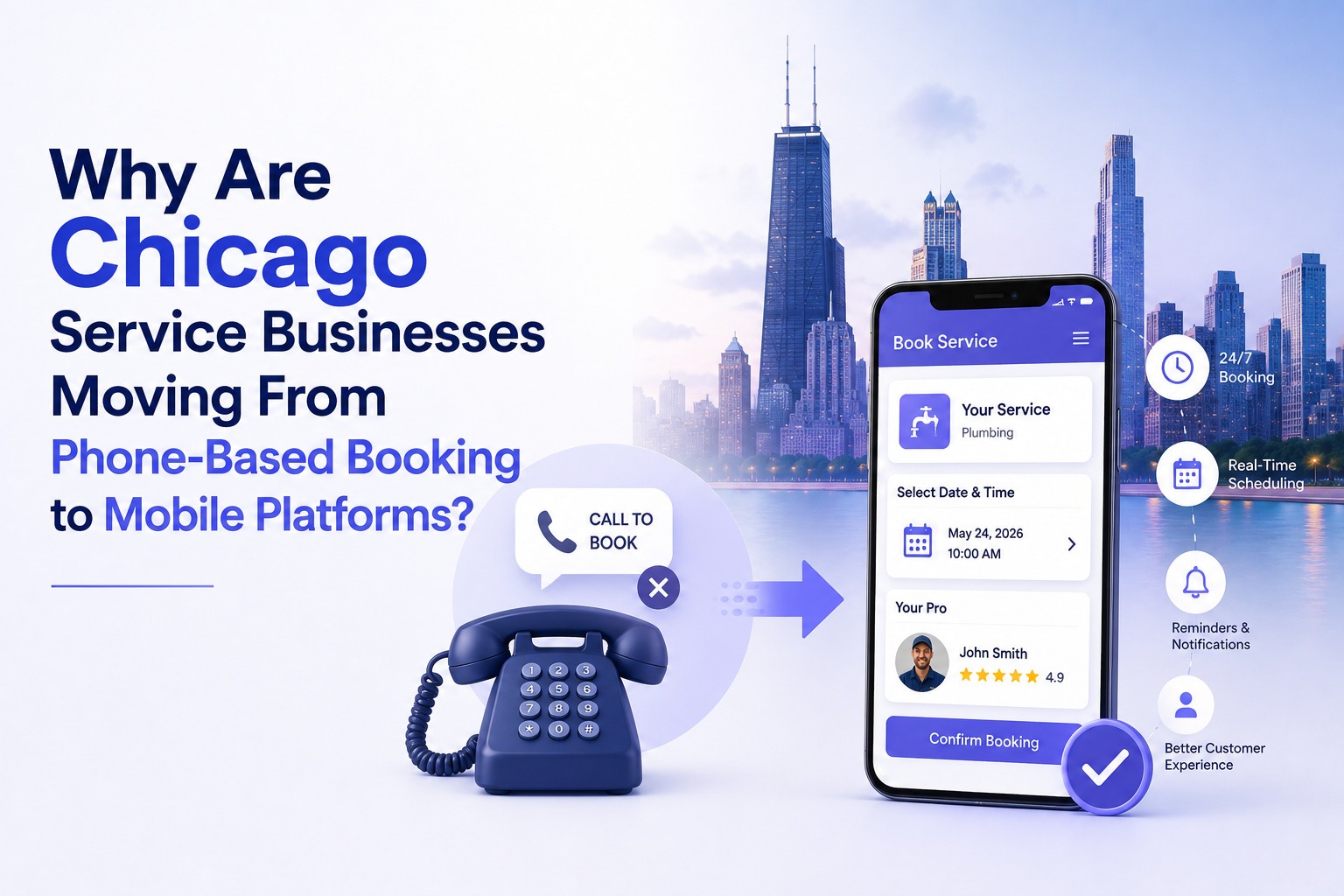
Customer expectations have changed dramatically over the past few years. Instead of calling businesses during working hours, people now prefer booking services instantly through their smartphones at any time of the day.
For service businesses in Chicago, relying solely on phone-based bookings often leads to missed opportunities, scheduling conflicts, and slower response times. Mobile platforms address these challenges by offering faster bookings, real-time updates, and a more convenient customer experience.
As digital adoption continues to grow, businesses that embrace mobile technology are better positioned to improve operational efficiency and customer satisfaction.
In this blog, we’ll explore why Chicago service businesses are replacing phone-based booking with mobile platforms and the benefits this shift brings.
Why Phone-Based Booking No Longer Meets Customer Expectations?
Phone calls were once the primary way customers booked local services. However, today’s consumers expect faster, more convenient ways to schedule appointments. As customer preferences continue to evolve, businesses that depend solely on manual phone bookings risk losing customers to competitors offering seamless digital experiences.
A] Customers Prefer Instant Booking
Modern customers value speed and convenience. Instead of waiting for business hours or remaining on hold, they expect to book appointments within seconds using their smartphones. Instant booking provides greater flexibility, improves the customer experience, and increases the likelihood of completed reservations.
B] Missed Calls Result in Lost Business
Every unanswered phone call represents a potential lost customer. Busy staff members often struggle to answer calls while serving existing clients, leading prospective customers to choose competing businesses with faster booking options. Mobile platforms eliminate this dependency by allowing bookings at any time.
C] Manual Scheduling Leads to Errors
Managing appointments over the phone increases the likelihood of double bookings, incorrect customer information, and scheduling conflicts. Manual processes also consume valuable staff time that could be better spent delivering services. Digital scheduling significantly improves booking accuracy while reducing administrative work.
D] Limited Availability Hurts Customer Experience
Phone-based booking restricts customers to business operating hours. If customers cannot reach the business after hours or during busy periods, they often postpone their booking or seek alternative providers. Mobile booking platforms remain available around the clock, ensuring businesses never miss potential appointments.
E] Lack of Booking Transparency
Customers increasingly expect instant confirmations, appointment reminders, and service updates. Traditional phone bookings provide limited visibility into appointment status, often requiring additional follow-up calls. Mobile platforms keep customers informed throughout the booking journey, creating a smoother and more transparent experience.
How Mobile Platforms Are Transforming Chicago Service Businesses?
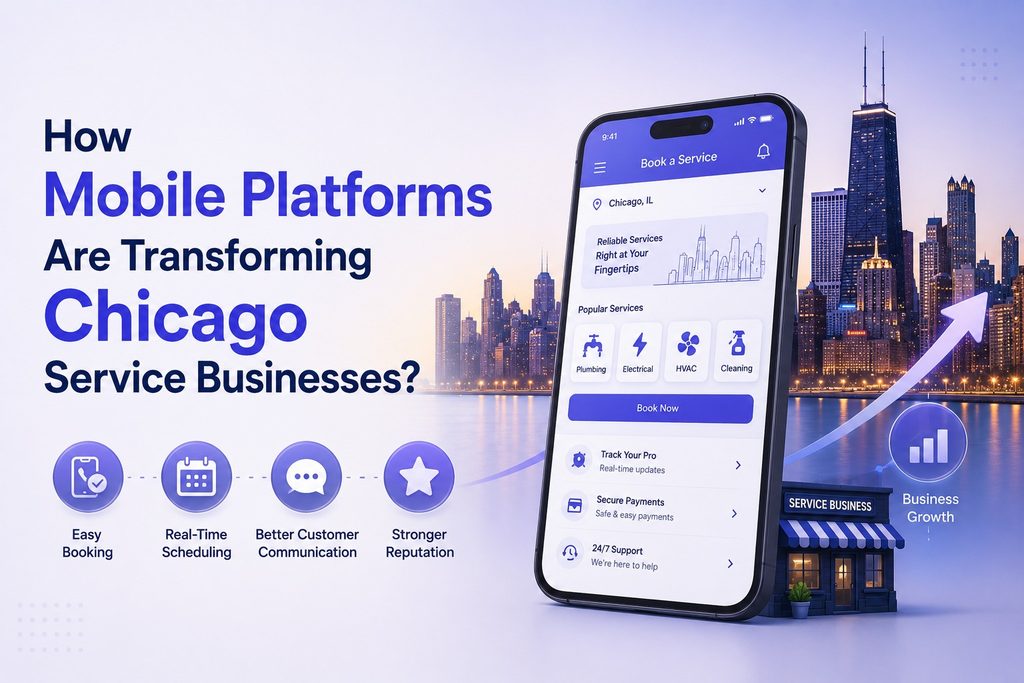
Mobile technology has fundamentally changed how local service businesses attract customers, manage appointments, and deliver services. By working with a trusted mobile app development company in Chicago, businesses can replace manual booking processes with digital experiences that improve efficiency, increase customer satisfaction, and support long-term growth.
1. 24/7 Self-Service Booking
Mobile apps enable customers to schedule services whenever it is convenient for them without waiting for business hours. Self-service booking reduces the workload on customer support teams while allowing businesses to capture appointments even outside regular operating hours.
2. Real-Time Scheduling and Availability
Real-time calendars synchronize technician availability, customer appointments, and scheduling updates automatically. This functionality is especially valuable for businesses offering handyman app development services, where coordinating multiple field professionals efficiently helps reduce scheduling conflicts and improve service delivery.
3. Secure Payments and Digital Invoicing
Customers can complete payments securely through integrated payment gateways before or after service delivery. Digital invoices, payment confirmations, and transaction histories simplify financial management while providing customers with a faster and more convenient payment experience.
4. Automated Notifications and Status Updates
Push notifications, SMS alerts, and email reminders keep customers informed about appointment confirmations, technician arrivals, schedule changes, and completed services. Automated communication reduces missed appointments while improving customer satisfaction and operational efficiency.
5. Improved Customer Engagement
Mobile platforms create ongoing engagement beyond individual bookings. Businesses can share personalized offers, loyalty rewards, maintenance reminders, and seasonal promotions directly through the app, encouraging repeat business and strengthening long-term customer relationships.
Why Mobile Platforms Are the Future of Local Service Businesses?
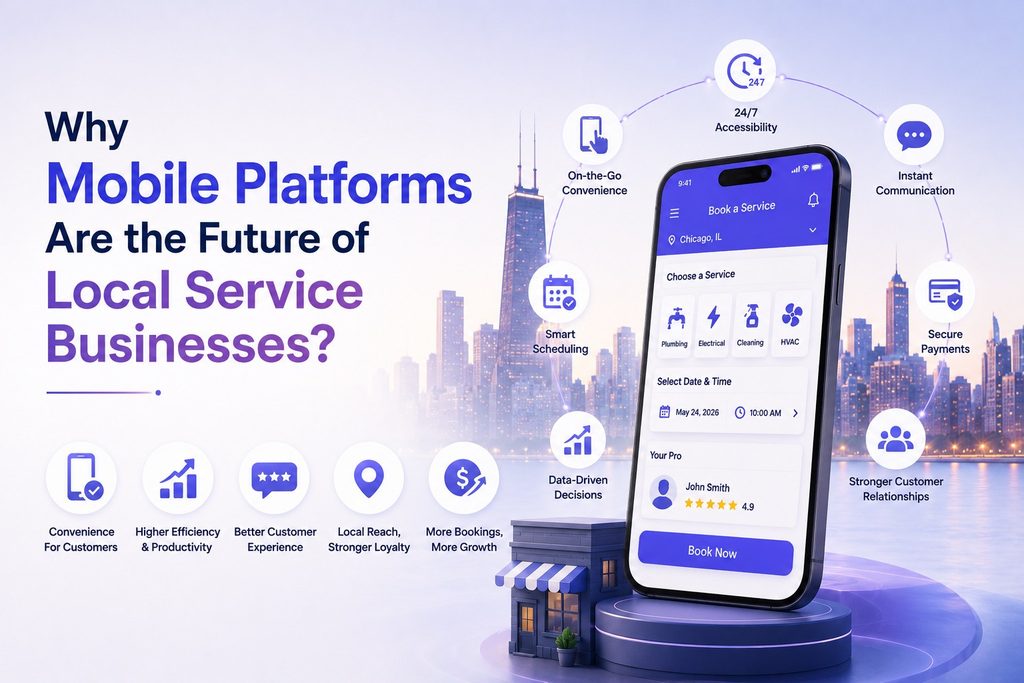
As customer expectations continue to evolve, mobile platforms are becoming essential for businesses that want to remain competitive. Beyond simplifying bookings, they improve operational efficiency, strengthen customer relationships, and provide valuable business insights that support sustainable growth.
A] Increased Operational Efficiency
Mobile platforms automate appointment scheduling, customer communication, payment collection, and service tracking. Reducing manual administrative work allows employees to focus on delivering quality services while improving overall business productivity.
B] Better Customer Retention
Convenient booking experiences, timely notifications, and personalized communication encourage customers to return for future services. Businesses that consistently deliver seamless digital experiences are more likely to build lasting customer loyalty.
C] Improved Staff Productivity
Field teams and office staff can access schedules, customer information, and job updates from a single platform. This reduces coordination delays, minimizes paperwork, and enables employees to complete more service requests efficiently.
D] Data-Driven Business Decisions
Mobile platforms collect valuable data on customer preferences, booking trends, technician performance, and service demand. These insights help businesses optimize staffing, improve marketing strategies, and make informed operational decisions.
E] Easier Business Expansion
As businesses grow, mobile platforms make it easier to manage multiple service areas, larger teams, and increasing customer demand. Standardized digital processes support expansion without significantly increasing administrative complexity.
F] Stronger Customer Communication
Integrated messaging, push notifications, and service updates keep customers informed throughout the booking process. Clear communication reduces missed appointments, improves transparency, and creates a more reliable customer experience.
G] Increased Revenue Opportunities
Mobile platforms allow businesses to promote additional services, seasonal offers, loyalty programs, and referral incentives directly within the app. These personalized promotions encourage repeat bookings and increase the average customer lifetime value.
H] Competitive Advantage in the Chicago Market
Businesses that offer fast, mobile-first booking experiences stand out in an increasingly competitive local market. Providing convenience, transparency, and reliable service through a dedicated mobile platform helps attract new customers while strengthening the brand’s reputation among existing ones.
Conclusion
The shift from phone-based booking to mobile platforms reflects changing customer expectations and the growing need for operational efficiency.
By offering instant scheduling, real-time updates, secure payments, and personalized customer experiences, mobile platforms help Chicago service businesses improve productivity while delivering greater convenience.
As competition continues to increase, businesses that embrace mobile technology will be better equipped to attract new customers, retain existing ones, and build a scalable foundation for long-term success.
