

Almost every enterprise AI story starts the same way. One team, one use case, one model behind one API key. It ships, it works, and it gets noticed. Six months later there are five teams, four providers, a dozen applications, and a set of problems that have nothing to do with prompts or model quality and everything to do with plumbing: nobody can say what the AI spend is, security can’t inventory what’s calling which model, and every team has reinvented the same retry and logging code slightly differently.
That transition — from one clever feature to AI as shared infrastructure — is where most organizations discover they need an AI gateway. Not because it’s fashionable, but because the direct-to-provider pattern that worked for one team actively breaks down when many teams share model access. This piece makes the architectural case: what an AI gateway is, the specific problems it solves, and why the decision is really about when, not whether.
What an AI gateway actually is
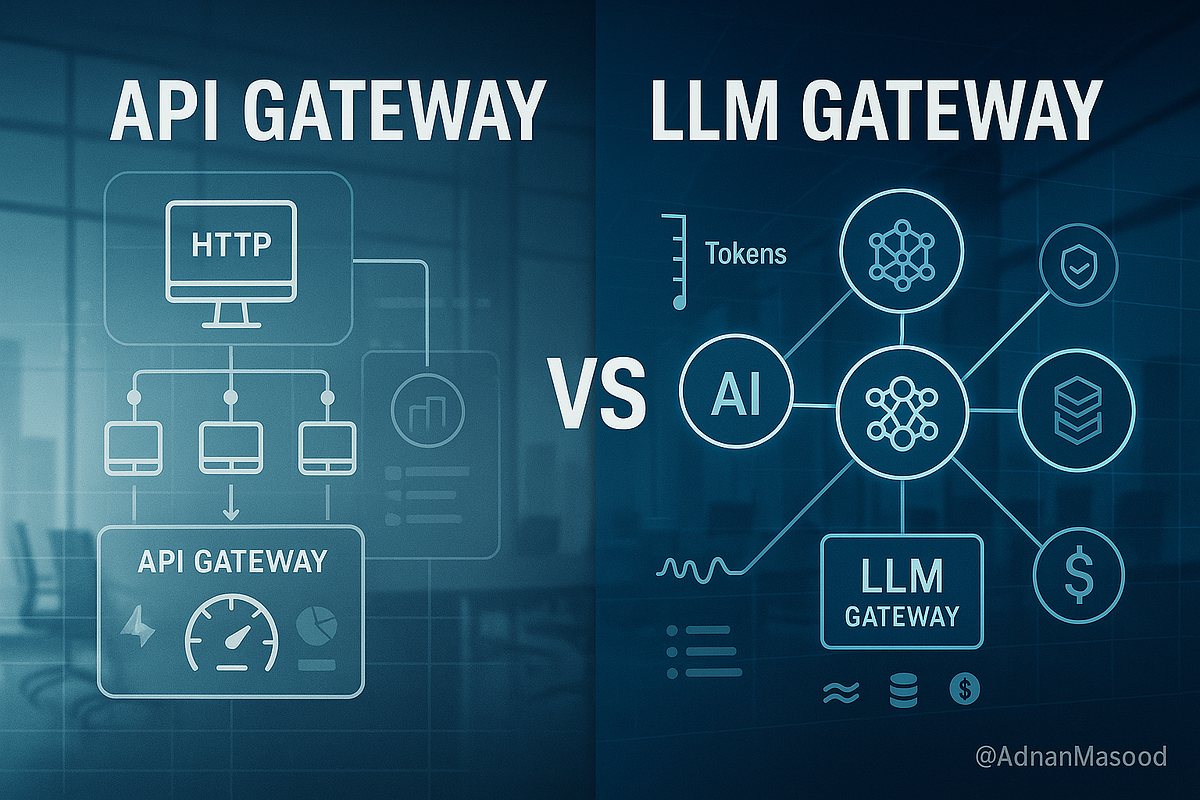
An AI gateway is a proxy layer that sits between your applications and your model providers. Applications call the gateway using one consistent interface; the gateway handles authentication, routing, policy enforcement, and observability, and then talks to the underlying providers on the application’s behalf. Conceptually it plays the same role for model traffic that an API gateway plays for microservices: a single, governed front door.
The key word is single. Instead of every application holding provider keys, implementing its own fallback logic, and logging in its own format, there is one place where cross-cutting concerns live. That consolidation is what turns a scattering of AI features into a platform other teams can build on safely.
The problems that appear as you scale past one team
The case for a gateway is easiest to see through the specific problems it addresses — each of which is tolerable for one team and painful for ten.
A unified interface across providers
Different providers have different SDKs, schemas, and quirks. When each application integrates directly, adopting a new provider or model means code changes in every service that wants it. A gateway exposes one consistent, standardized interface across many providers, so applications write against one schema and gain access to new models through configuration rather than code. The integration cost of trying a new model drops from a project to a setting.
Resilience without per-app engineering
Providers have outages, enforce rate limits, and vary in latency. Handling that well means load balancing, retries, and fallbacks — logic you do not want re-implemented, inconsistently, in every service. Centralizing it at the gateway means one well-tested implementation protects every application, and failing over during an incident is a routing change rather than a scramble across codebases.
Governance and access control
When applications hold provider keys directly, access is unattributed and unscoped: anyone with the key can call anything, and logs can’t tell you who did what. A gateway authenticates callers with your own identities, enforces role-based access to models, and keeps provider credentials in one place instead of scattered across notebooks and CI secrets. Access becomes a policy you set centrally rather than a pile of secrets you hope are rotated.
Cost visibility and control
Perhaps the most common trigger for adopting a gateway is the finance conversation. Without a central control point, you get one large provider bill and no way to attribute it. A gateway attributes spend to users, teams, and applications, and lets you attach budgets and rate limits to those same identities — so a buggy job or a runaway agent hits a ceiling instead of the whole organization’s budget. “Why did the bill double?” becomes answerable.
Observability
Debugging a bad LLM response is hard when the request left no trace. A gateway records requests, latencies, token usage, and errors in one place. TrueFoundry’s gateway, for instance, emits OpenTelemetry-compliant metrics, traces, and request logs, so LLM traffic shows up in the same observability discipline you already apply to the rest of your systems rather than as an opaque black box.
Safety and guardrails
Concerns like PII redaction, prompt-injection defense, and content moderation shouldn’t be re-implemented by each team, and shouldn’t depend on every developer remembering to add them. A gateway lets these run as centralized policies applied to traffic, so a control written once protects every application that routes through it.
Why “build it per app” loses
A reasonable objection is that each of these is solvable in application code. That’s true for one application. The problem is that these are cross-cutting concerns: routing, auth, cost tracking, logging, and safety are needed by every AI feature, and implementing them per-app produces N slightly different, separately maintained versions of the same logic. Every new team re-solves solved problems, inconsistently, and every fix has to be applied in many places.
Cross-cutting concerns belong in shared infrastructure. That’s the same reason organizations centralize authentication, API gateways, and logging rather than rebuilding them in every service. Model traffic is no different — it just arrived more recently, so the pattern is still being learned.
The real question is timing
For an engineering leader, the decision isn’t philosophical; it’s about sequencing. Adopt a gateway too early, before you have any AI traffic, and you’re building infrastructure for a problem you don’t have yet. Adopt it too late — after ten teams have each embedded provider keys and written their own routing — and you’re paying down a migration debt instead of preventing it.
A few signals indicate you’ve reached the tipping point: more than one team is calling models, you’re using or planning to use more than one provider, finance has started asking what AI costs and who’s spending it, or security has started asking what’s calling which model and with what data. When two or more of those are true, the direct-to-provider pattern has stopped serving you, and a gateway stops being optional.
The good news is that adopting one is not a big-bang migration. You can route existing traffic through the gateway behind stable logical model names first — gaining unified logging and access control immediately — and layer on routing, budgets, and guardrails incrementally as needs sharpen.
The takeaway
The direct-to-provider integration that launches your first AI feature is not the architecture that supports your tenth. As usage spreads across teams and providers, the hard problems shift from prompts and models to interface consistency, resilience, access control, cost attribution, observability, and safety — and every one of those is a cross-cutting concern that belongs in shared infrastructure rather than duplicated in every application. An AI gateway is where those concerns live. The organizations that recognize the tipping point early adopt one before the migration debt piles up; the ones that don’t tend to build the same gateway anyway, just more painfully, after the first surprise bill or security review forces the issue.
