


Cloud migration projects rarely fail overnight.
Most problems begin quietly — a rushed planning phase, unclear ownership, underestimated workloads, or assumptions that Azure will somehow “manage itself” once everything is moved. By the time the migration issues become visible, businesses are already dealing with downtime, performance instability, security gaps, or cloud bills far higher than expected.
An experienced Azure expert helps businesses avoid these hidden risks by building secure, scalable, and properly governed cloud environments from the beginning.
| Business Challenge | How an Azure Expert Helps |
| Rising Azure Costs | Optimizes cloud resources and removes unnecessary spending |
| Security Gaps | Configures identity protection, monitoring, and access controls |
| Slow Applications | Diagnoses performance bottlenecks and improves workloads |
| Compliance Issues | Aligns Azure environments with HIPAA, GDPR, and NIST requirements |
| Poor Cloud Governance | Establishes policies, monitoring, and operational standards |
| Complex Migrations | Creates structured migration roadmaps with minimal downtime |
Azure is one of the most powerful enterprise cloud platforms available today. But successful Azure adoption requires more than simply moving servers and files into the cloud. It requires strategy, governance, architecture planning, and long-term operational expertise.
The businesses that succeed with Azure are not necessarily the ones with the biggest budgets. They are the ones that avoid the common mistakes most organizations make during migration.
Here are the biggest reasons Azure migration projects fail — and what experienced businesses do differently.
Mistake 1 — Treating Azure Migration Like a Simple Data Transfer
One of the most common misconceptions is that Azure migration is just about moving workloads from one location to another.
It is not.
A successful Azure migration involves evaluating application dependencies, redesigning infrastructure where necessary, planning identity management, configuring security policies, validating compliance requirements, and optimizing workloads for cloud performance.
Businesses that skip proper discovery often migrate unnecessary systems, duplicate outdated environments, or move applications into Azure without optimizing them for cloud infrastructure.
The result is predictable: higher costs, slower performance, and an environment that becomes harder to manage over time.
Professional Azure experts and azure cloud services teams begin with a complete assessment before migration starts. They identify what should be migrated, what should be modernized, and what should be retired completely. That upfront planning prevents expensive problems later.
Mistake 2 — Underestimating Azure Cost Management
Many businesses assume cloud infrastructure will automatically reduce IT costs.
Sometimes it does.
But organizations that migrate without governance frequently discover the opposite. Cloud costs become unpredictable because resources are left running continuously, storage grows unchecked, and workloads are overprovisioned “just to be safe.”
Azure provides powerful cost management tools, but tools alone are not enough. Teams need clear policies around resource deployment, scaling, tagging, monitoring, and lifecycle management.
Without governance, Azure spending slowly becomes difficult to control.
This is why experienced Azure professionals focus heavily on cost optimization during migration planning. Proper sizing, reserved instances, automated shutdown schedules, and workload monitoring dramatically reduce unnecessary spending before it becomes a long-term issue.
Mistake 3 — Ignoring Security Until After Migration
Security cannot be added as an afterthought.
Unfortunately, many businesses focus heavily on getting workloads online quickly and delay security configuration until later. That “later” often never arrives.
Azure environments contain multiple layers that must be configured correctly: identity management, access control, network segmentation, endpoint protection, logging, monitoring, and threat detection.
A single misconfigured permission can expose sensitive business data.
Businesses working with an experienced Azure expert approach migration differently. Security architecture is built into the migration process itself — not patched together afterward.
At SimpleSharePoint, security assessments are integrated into every Azure engagement because cloud vulnerabilities are rarely isolated problems. Weaknesses in one layer almost always create risk somewhere else.
Mistake 4 — Migrating Everything Without Prioritization
Not every workload belongs in Azure immediately.
Many organizations make the mistake of attempting full-scale migration projects without evaluating which systems are actually suitable for cloud deployment first.
Critical workloads with complex dependencies may require phased migration strategies. Legacy applications sometimes need modernization before migration. Certain workloads may perform better in hybrid environments instead of fully cloud-native deployments.
Smart businesses prioritize migration based on business value, technical readiness, and operational impact.
This phased approach reduces risk, simplifies troubleshooting, and allows teams to build internal confidence before expanding migration efforts further.
Mistake 5 — Failing to Prepare Internal Teams
Azure changes how infrastructure is managed.
Traditional on-premise operational habits do not always translate effectively into cloud environments. Internal IT teams often need time to adapt to Azure governance models, automation practices, identity management systems, and monitoring tools.
Businesses that fail to invest in process changes and operational readiness frequently struggle after migration is complete.
The problem is not technical capability.
It is that Azure requires different workflows, different visibility practices, and different operational disciplines.
Experienced migration partners help organizations establish documentation standards, governance frameworks, escalation procedures, and long-term operational strategies that internal teams can realistically maintain.
Mistake 6 — Assuming Compliance Automatically Transfers to Azure
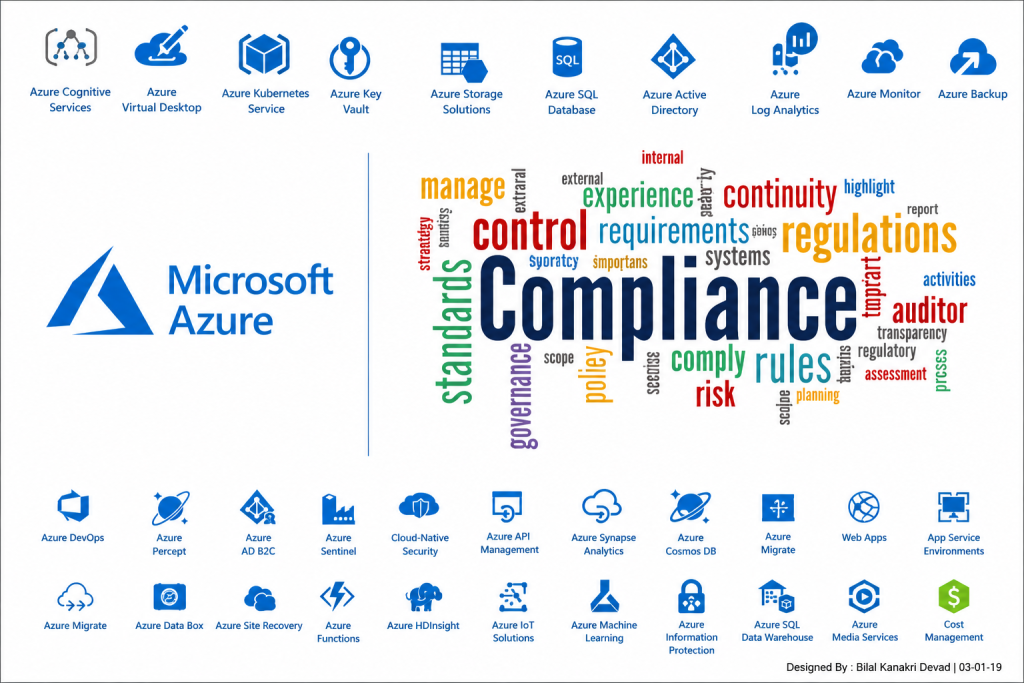
Many industries operate under strict compliance requirements — HIPAA, GDPR, PCI DSS, ISO 27001, NIST, and others.
A dangerous misconception is that simply using Azure automatically guarantees compliance.
It does not.
Azure provides compliant infrastructure capabilities, but businesses remain responsible for how services are configured, how data is protected, how access is managed, and how audit logs are maintained.
Organizations that migrate without validating compliance configurations expose themselves to regulatory risk.
A professional Azure assessment ensures policies, retention settings, monitoring systems, and security controls align with industry requirements before compliance issues become operational or legal problems.
Mistake 7 — Choosing the Wrong Azure Architecture Early
Architecture decisions made during migration often determine how manageable the environment will be for years afterward.
Poor regional planning, inconsistent naming conventions, weak governance structures, and improperly designed network configurations create operational complexity that becomes expensive to fix later.
Businesses sometimes realize too late that their Azure environment was designed for short-term deployment speed instead of long-term scalability.
This is where experienced advisory support delivers enormous value.
The right Azure architecture supports performance, security, scalability, and operational simplicity from the beginning — reducing future rework and unnecessary spending.
What Successful Azure Migration Actually Looks Like
Successful Azure migration projects are rarely rushed.
They begin with discovery, planning, and risk assessment.
Experienced Azure specialists evaluate existing infrastructure, identify dependencies, prioritize workloads, establish governance policies, configure security controls, and define realistic migration phases.
Every decision is aligned with long-term business objectives — not just immediate technical goals.
At SimpleSharePoint, Azure engagements focus on more than simply moving workloads into the cloud. The goal is building environments that are secure, scalable, cost-efficient, and operationally sustainable.
That includes:
- Azure infrastructure planning and deployment
- Cost optimization and resource governance
- Security hardening and identity management
- Compliance auditing and policy configuration
- Hybrid cloud and multi-cloud support
- Performance monitoring and operational optimization
- Migration strategy and long-term support
The difference between a stable Azure environment and a chaotic one is rarely the platform itself.
It is almost always the quality of planning behind it.
Why Businesses Bring in Azure Experts
Many organizations already have strong internal IT teams.
The issue is not capability.
Azure migration requires highly specialized expertise across networking, identity systems, infrastructure architecture, compliance, security, and operational governance.
An experienced Azure expert and consultant brings practical knowledge gained from solving real migration problems across multiple environments and industries.
That perspective helps businesses avoid mistakes that internal teams may only encounter once.
The cost of expert guidance during migration is almost always lower than the cost of correcting architectural, security, or compliance mistakes later.
Conclusion — Azure Success Depends on More Than Technology
Azure is not difficult because the technology is unreliable.
Azure becomes difficult when businesses approach migration without the planning, governance, and expertise required to manage modern cloud infrastructure properly.
Most failed migrations are not caused by a single catastrophic mistake. They are caused by dozens of smaller decisions that gradually create instability, unnecessary spending, and operational risk.
Businesses that succeed with Azure take a different approach.
They plan carefully. They prioritize security early. They establish governance before scaling. And they bring in experienced professionals before manageable problems become expensive ones.
SimpleSharePoint has helped organizations across industries design, migrate, secure, and optimize Azure environments built for long-term success — not short-term fixes.
If your business is preparing for Azure migration, the smartest investment is getting the foundation right from the beginning.
Frequently Asked Questions
Q1. What is the biggest mistake businesses make during Azure migration?
The most common mistake is migrating workloads without proper planning, governance, and security assessment. This usually leads to higher costs and operational complexity later.
Q2. How long does a typical Azure migration take?
Small migrations may take a few weeks, while enterprise-scale environments can take several months depending on workload complexity and compliance requirements.
Q3. Can Azure migration reduce operational costs?
Yes — when environments are properly optimized. Poorly managed Azure deployments often increase costs instead of reducing them.
Q4. Do businesses still need internal IT teams after moving to Azure?
Absolutely. Azure changes operational responsibilities, but internal IT teams remain essential for governance, business alignment, and ongoing management.
Q5. Why should businesses work with an Azure expert?
Azure specialists help prevent architecture mistakes, security gaps, compliance failures, and unnecessary spending during and after migration.
Q6. Is Azure suitable for regulated industries?
Yes. Azure supports compliance across healthcare, finance, legal, and government sectors when environments are configured correctly.
Q7. What does an Azure migration assessment include?
A proper assessment reviews infrastructure, workloads, dependencies, security posture, compliance requirements, cost optimization opportunities, and migration readiness.
