

Beneath the floorboards of millions of British homes runs a quiet legacy of the past. In properties built before the 1970s, and in particular those constructed during the Victorian and Edwardian periods, lead supply pipes are still carrying drinking water from the mains into the kitchen tap. For decades this was considered unremarkable. As medical understanding of low-level lead exposure has grown, however, the case for replacing these pipes has become difficult to dismiss.
For homeowners who have never given much thought to where their water comes from before it pours into the kettle, the topic can feel abstract. Yet estimates suggest that between four and eight million UK properties are still connected to lead pipework somewhere along the supply chain. Most owners have no idea, and many will be surprised to learn that responsibility for replacing the pipe inside the boundary of the property sits with them rather than the water utility.
The Scale of the Issue Across the UK
Lead piping was the standard choice for residential plumbing for well over a century. It was easy to bend around obstacles, resistant to corrosion in most ground conditions, and inexpensive to manufacture. By the time the public health implications became widely accepted, the material had already been installed in tens of millions of homes across Britain. Although new lead service pipes were banned in 1969 and lead solder for drinking water systems was outlawed in 1986, the existing infrastructure was largely left in place.
Cities such as London, Glasgow, Manchester, Birmingham and Liverpool, with their dense stocks of pre-war terraces and tenements, are among the worst affected. Even in newer developments, the section of supply pipe running between the boundary stop tap and the home can be lead, particularly where a more recent property has been built on a plot that retained the original supply connection.
Why Lead in Drinking Water Matters
Lead is a cumulative toxin. There is no level of exposure that is considered entirely safe, and the World Health Organization and the NHS both recommend reducing intake wherever practical. Pregnant women and young children are most at risk, because lead can interfere with neurological development. In adults, sustained low-level exposure has been linked to raised blood pressure and reduced kidney function over time.
The amount of lead that leaches into water from an old pipe varies considerably. Soft, slightly acidic water dissolves more lead than hard water, which forms a protective scale on the inside of the pipe. Water that has stood overnight in a lead service line will typically contain higher concentrations than water that has been running for several minutes. None of this makes a daily glass of tap water dangerous in the immediate sense, but the long-term picture is one that public health authorities increasingly want to close out.
How to Tell Whether You Have Lead Pipes
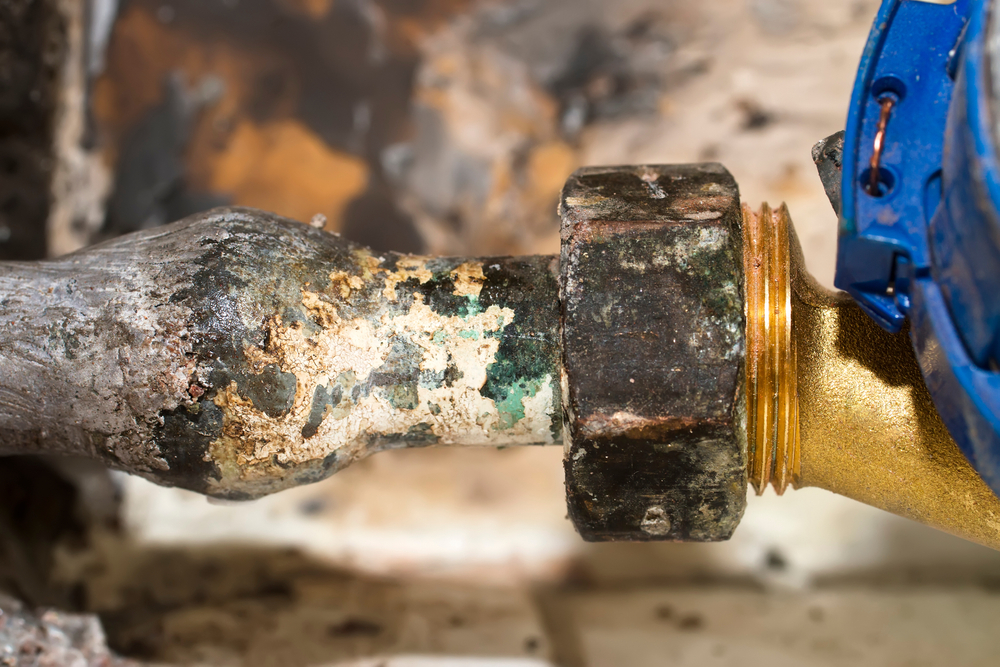
There is a quick and surprisingly reliable check that any homeowner can carry out. Trace the supply pipe from where it enters the property, often near the kitchen sink or in an under-stairs cupboard, back to the internal stop tap. A lead pipe will be a dull, slate-grey colour, soft enough to gently mark with a coin, and will usually have rounded, swollen joints rather than threaded fittings. Modern pipework, by contrast, is typically blue plastic (MDPE) or copper with clean soldered joints.
Where uncertainty remains, water companies will usually carry out a free first-draw water test to establish whether lead levels at the tap exceed the regulatory limit. The result provides a useful baseline regardless of what is eventually decided about replacement.
What the Replacement Process Actually Looks Like
Modern lead pipe replacement is far less disruptive than most homeowners imagine. Rather than excavating the entire route from the boundary into the house, specialists typically use trenchless techniques that pull a new MDPE pipe through the existing line, or mole a fresh route beneath the lawn or driveway. In most cases the work can be completed in a single day, with only two small access pits dug at either end. Internal pipework, where lead is also present, is generally replaced with copper or plastic during the same visit.
Many water companies offer financial assistance toward the cost of replacing the section of supply pipe that lies on the homeowner’s side of the boundary, particularly where the company is already replacing the public-side pipe in the same street. It is always worth asking before commissioning the work privately, as the contribution can be meaningful.
Worth Doing, and Worth Doing Properly
Lead pipe replacement is one of the few home improvements that delivers a measurable benefit to long-term health rather than simply cosmetic gain. It also reassures buyers during the conveyancing process and removes a question mark from a property’s history. For homes likely to remain in the family for years to come, or for those preparing to sell, it is increasingly seen as a sensible piece of forward planning rather than an emergency repair.
Whether the motivation is health, property value or peace of mind, the case for addressing old lead infrastructure is becoming harder to put off. The work is no longer the upheaval it once was, and the modern alternatives will outlast the building itself.
