

Thousands of Indian students successfully crack the NEET exams every year, only to find that they don’t have access to a government medical seat back home.
This leads many to research studying MBBS abroad. Russia has become one such destination for Indian medical aspirants. Before you make the move, though, you’ve got a handy guide covering all the essentials about study MBBS in Russia, from academics to admissions to language requirements, plus your post-graduation career options.
Why Study MBBS in Russia?
There’s no doubt that Russia has produced some exceptional graduates in medicine through its long tradition of training medics, but what does this mean for the way these courses are run? To give an indication, you’ve picked out some typical characteristics:
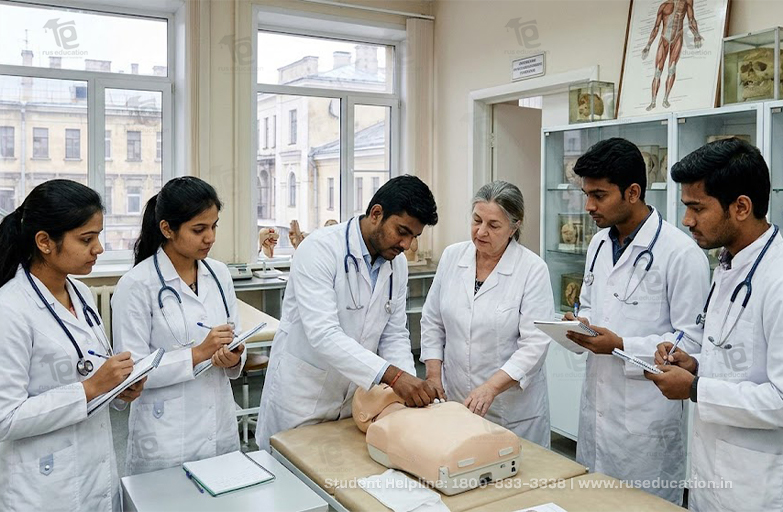
The courses typically begin by introducing students to key elements within the basic sciences such as anatomy and physiology before moving onto clinical specialties as their studies progress. A large component of study will involve working within laboratory settings alongside clinical placements at various points during the programme.
It provides an invaluable insight into another country’s approach to healthcare systems while simultaneously allowing students to gain a wider perspective on Study Medicine in Russia.
Is MBBS in Russia Suitable for Indian Medical Students?
Yes, it’s possible provided that you satisfy the required criteria. First of all, let me tell you about the basic requirements from an Indian perspective. An Indian student has to complete his class 12 along with physics, chemistry, biology, and English. They should qualify the NEET exam, and their scorecard should reflect good marks in science subjects as per the university’s maximum score.
Also, they need to check what the current requirements are as demanded by the National Medical Commission (NMC). It is suggested to students that they should carry out necessary checks regarding the foreign institute, Course Duration, Medium of Instruction, Curriculum, clinical training, internship, etc.
In case any particular Programme does not fulfill such conditions, one might encounter issues related to registration in India later on. Thus, it is strongly advised to go through NMC Guidelines before paying any Fee.
Medium of Instruction and Learning
Most Russian medical universities provide English-medium programmes for International Students. But not all medical programs in Russia are offered in English as well. It varies from University to University & at times from Course to Course also.
If you want to register in India, then according to NMC’s Foreign Medical Graduates Licentiate (FMGL), “The Foreign medical qualification must be taught in English.” So, check the language of your exact programme in writing before taking admission.
You’ll still need some Russian words to shop and get around the city, and once you start clinical rotations, for talking with patients & hospital staff also.
MBBS Admission in Russia: Eligibility and Process
This section explains the key requirements and step-by-step admissions process for Indian students planning to study MBBS in Russia:
Basic Eligibility
- Class 12 Qualified with Physics, Chemistry, Biology, and English.
- A valid NEET score qualification
- Any extra requirements set by the university, such as minimum marks, an entrance test, or an interview.
Admissions Process
- Shortlist Universities: Look at a few institutions instead of picking the first one you hear about.
- Check Eligibility: Confirm you meet both the university’s and NMC’s criteria.
- Verify the Programme: Check the course duration, language & curriculum.
- Prepared Documents: Usually your passport, mark sheet, NEET scorecard, photographs & medical certificates.
- Apply: Submit your application and wait for the admission letter.
- Complete Formalities: Pay fees as instructed, apply for the student visa, and plan your travel.
Current Russian admission information lists a NEET certificate among the documents. Indian citizens need it when applying to medical programme at relevant institutions. Keep a copy of it ready.
What is Student Life Like During MBBS in Russia?
You will spend the majority of your time studying here. There will be lectures, practical & labs. Exams could prove to be challenging at times.
Most Universities in India have hostel facilities available along with various Sports Facilities & Clubs for students.
One of the biggest adjustment factors for most students is winter and adapting to a new culture. Please pack appropriate Winter Clothes & keep an open mind for the initial few months.
How to Choose the Right Medical University in Russia?
Don’t choose on ranking or fees alone. Use this checklist:
- Course duration: Does it meet the NMC’s minimum requirement?
- Medium of instruction: Is the whole programme in English?
- Curriculum: Does it cover the subjects the NMC expects?
- Clinical training: How much hospital exposure will you get?
- Internship arrangement: Is the internship done at the same institution?
- Infrastructure: Labs, libraries, hostels, and affiliated hospitals
- Student support: Help for international students with housing, language, and paperwork
- NMC requirements: Does the programme meet the latest regulations?
- Licensing pathway: Will the degree let you register in India or in another country you want to work in?
The NMC advises students not to rely only on advertisements or university claims. Check the details yourself, talk to current students, and use official sources. Guidance platforms such as RUS Education can help you compare options, but always confirm the key facts on your own.
What Happens After Clearing MBBS from Abroad
After completing MBBS in Russia, students can research opportunities such as medical practice and licensing exams, postgraduate studies, or further career options in India and other countries.
Returning to India
For practicing in India, Indian and OCI candidates who hold a foreign undergraduate medical qualification will need to sit the Foreign Medical Graduate Examination (FMGE) or whichever examination serves as its replacement and then apply for registration via the relevant State Medical Council once they have passed this and met all other registration/Internship requirements.
Higher Studies or Working Abroad
Some graduates go on to postgraduate study or specialization, in India or abroad. If you want to work in another country, you’ll need to follow that country’s licensing process, which often includes its own exams, language tests, and paperwork. Look into these early so your plans stay realistic.
Advantages and Considerations of MBBS in Russia
This section highlights the key advantages of studying MBBS in Russia while covering important factors students should consider before making their decision.
Advantages
- International exposure: you live and study in a country with its own culture and healthcare setting.
- Medical education opportunities: structured programme with clinical training built into the course.
- Practical learning: laboratory work and hospital rotations give early contact with real cases.
- Multicultural environment: classmates from many countries make teamwork a practical skill.
Considerations
- Language: Russian language helps with patient care, even on English-medium programmes.
- Climate: long, cold winters take time to adjust to.
- Distance from India: travel is long and costly, and homesickness is common.
- Academic adjustment: teaching style, exam formats & pace may feel different at first.
- Licensing requirements: FMGE, CRMI & registration must all be completed after graduation.
To Summarize
You have seen some excellent outcomes where students choose to pursue their dream of becoming a Doctor by studying MBBS in Russia. But this choice will ultimately depend on the course & university you choose.
So before heading out, always validate important factors such as the duration of the course, mode of teaching, internships & other NMC requirements relevant to your admission year.
If you’re contemplating studying MBBS abroad, it’s vital that you remain tuned into what NMC advises – these updates happen frequently.
FAQs
Is MBBS in Russia a good option for Indian students?
It can be, if you choose a recognised university with a programme that meets current NMC requirements.
Is NEET required for MBBS in Russia?
Yes. Indian students need to qualify NEET to study medicine abroad and to be eligible for practice in India later.
Is MBBS in Russia taught in English?
Some programmes are. The language depends on the university, so confirm it before admission.
Can I practice medicine in India after MBBS in Russia?
Yes. You’ll need to pass the FMGE (or its replacement) and complete State Medical Council registration and any applicable internship requirements.
