

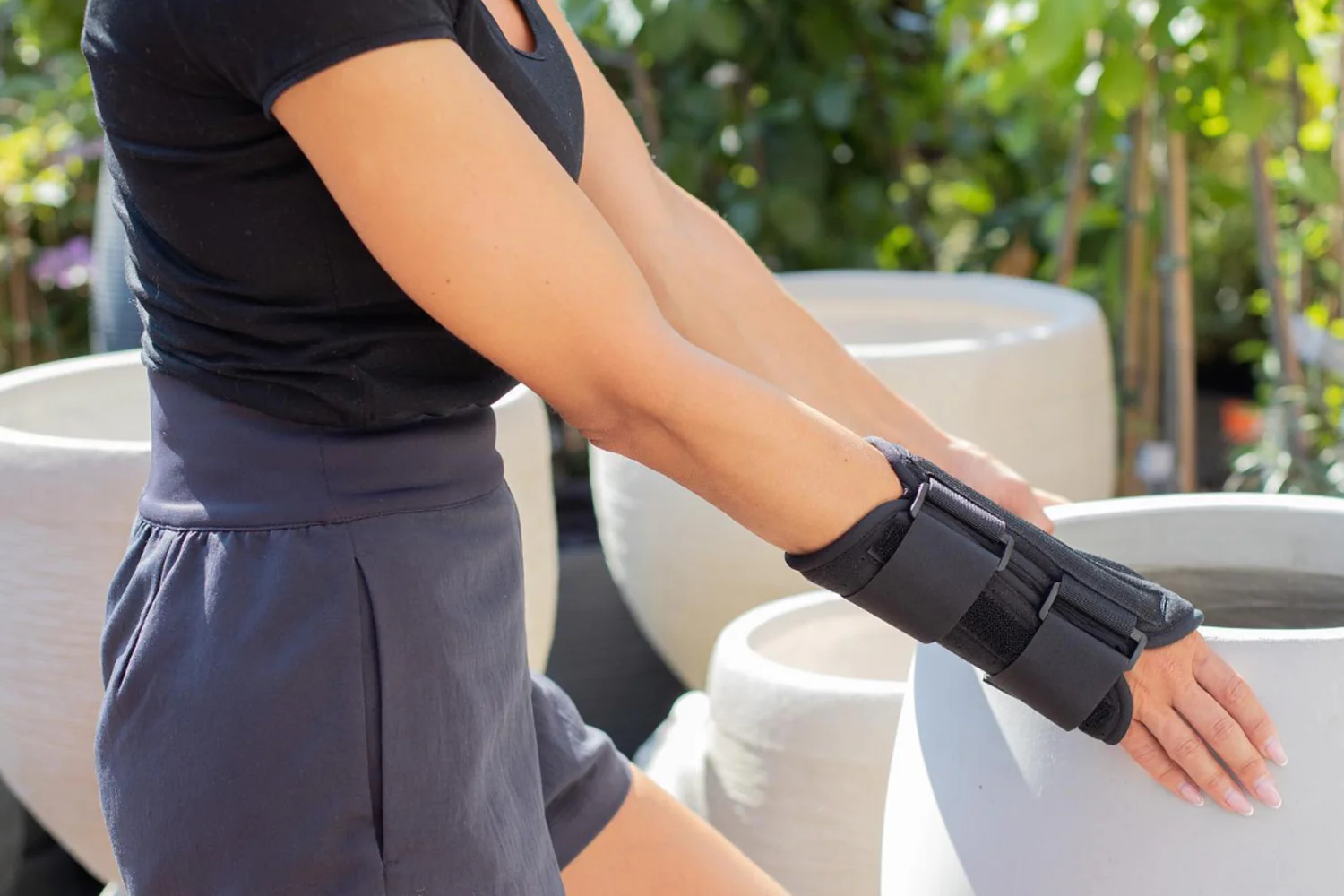
Wrist and forearm pain can make you slower than you think, whether it’s from working long hours, working out hard, or getting hurt unexpectedly. That’s when a wrist forearm brace can be a life- saving support.
In this blog post, we’ll talk about the most important parts of a wrist forearm support brace, how it can help with pain, and the best ways to clean and care for it so that it lasts a long time. We’ll also answer questions that people often have about how long things last, how flexible they are, and how to tell when something is worn out.
Let’s get started!
What is a brace for the wrist and forearm?
A wrist and forearm brace is an orthopedic device that helps keep the wrist joint and forearm muscles stable. It goes up the forearm instead of just the wrist, which makes it more effective at keeping the wrist still and spreading pressure evenly. This makes it especially helpful for dealing with pain, avoiding more injuries, and speeding up recovery.
People often use a forearm brace for wrist pain to treat conditions like:
- Strains and sprains in the wrist
- Injuries to tendons and ligaments
- Syndrome of the carpal tunnel
- Injuries from doing the same thing over and over again
- Recovery after surgery or a broken bone
Anyone who is in pain or has trouble moving around can use a wrist forearm brace for injury to get structured support without losing the ability to do everyday tasks.
Key Features of a Wrist Forearm Support Brace
- Removable anatomically shaped splinting ensures rigid immobilization: It limits excessive wrist and forearm mobility to support healing.
- Easy to wear and remove with Velcro system: An easy-to-use Velcro closure system allows quick application and removal while ensuring a secure, adjustable fit.
- Reverse buckle mechanism for controlled tightening and better immobilization: The reverse buckle mechanism enables precise tightening, ensuring uniform compression and improved stability throughout wear.
- Long length of the brace ensures enhanced stabilization: The extended length offers proper coverage over the forearm, improving stabilization and reducing stress on the wrist joint.
- The brace adjoins the palmar area to enhance free finger movement: The brace design supports the wrist while allowing unrestricted finger movement for comfortable daily use.
How often should you clean a wrist forearm brace?
One common and important question is, “How often should I clean my wrist and forearm brace?”
If you wear your brace daily, it should be cleaned after every two to three days. Once a week is enough to clean it if you use it occasionally. Sweat, dirt, and skin oils can build up quickly, which can cause skin irritation, smells and lower the performance of the material.
Cleaning your wrist support on a regular basis keeps it clean and makes sure it continues to provide good compression and comfort.
How to Clean a Wrist and Forearm Brace the Right Way
To clean your brace properly:
- Hand wash with mild detergent and in water below 30°C without wringing.
- Dry in shade on a flat surface.
- Do not dry-clean.
- Do not iron.
- Do not bleach.
- Do not use fabric softener.
- Gently press out extra water (don’t twist or wring).
- Don’t machine wash. Follow the manufacturer’s instructions.
Can the brace material be damaged by heat or sunlight?
Yes, the brace material can be harmed by heat or sunlight.
Direct sunlight or high heat can weaken elastic fibers, make the fabric less strong when compressed, and change its shape. Putting your wrist forearm brace close to heaters, radiators, or dryers can make it last a lot less time.
Always let the brace dry in the air indoors or in a shaded, well-ventilated area. Don’t ever use an iron or tumble dryer.
How to Keep the Brace’s Shape and Elasticity
For long-term performance, it is important to keep things flexible. This is how to keep your wrist and forearm support brace in great shape:
- Don’t stretch the straps too much when you put them on or take them off.
- Make sure the Velcro is closed before you wash it.
- Keep the brace flat or gently rolled up.
- Do not fold tightly or put heavy things on top of it.
Taking care of your wrist support will help it keep its compression and structure over time.
What signs show that support is wearing out?
Braces will wear out eventually, even with good care. If you see any of these signs, your wrist forearm brace for injury may not be working anymore:
- Less stretchiness or looseness
- Edges that are frayed or fabric that is getting thinner
- Straps with Velcro losing grip
- Brace slipping while in use
- Less support or compression
It’s time to get a new brace if you see these signs. A worn-out forearm brace for wrist pain can make support less effective and slow down healing. In such cases, you can consider switching to a Leeford Ortho Wrist Forearm Splint. This splint for men and women provides stable support and better compression. Also, it helps maintain proper wrist alignment, making it ideal for wrist strain, tendonitis, or recovery after injury.
When is it time to get a new wrist and forearm brace?
A wrist and forearm brace usually lasts 3 to 6 months if you use it regularly. Athletes or people who wear them every day may need to replace them sooner. If you notice new pain or slipping during activity, it’s a sign your brace is no longer doing its job. If you change your brace on time, you’ll get consistent support and the best healing.
Conclusion
A wrist forearm brace is more than just an accessory; it’s a must-have for preventing, recovering from, and relieving pain. You can make your brace last longer and work better by choosing the right one, cleaning it often, and taking care of it properly. Leeford Ortho Wrist Forearm Splint is a premium-quality support that ensures enhanced stabilization. If you are experiencing wrist or forearm pain that is hard to handle, a proper evaluation from a medical practitioner is always advised.
