

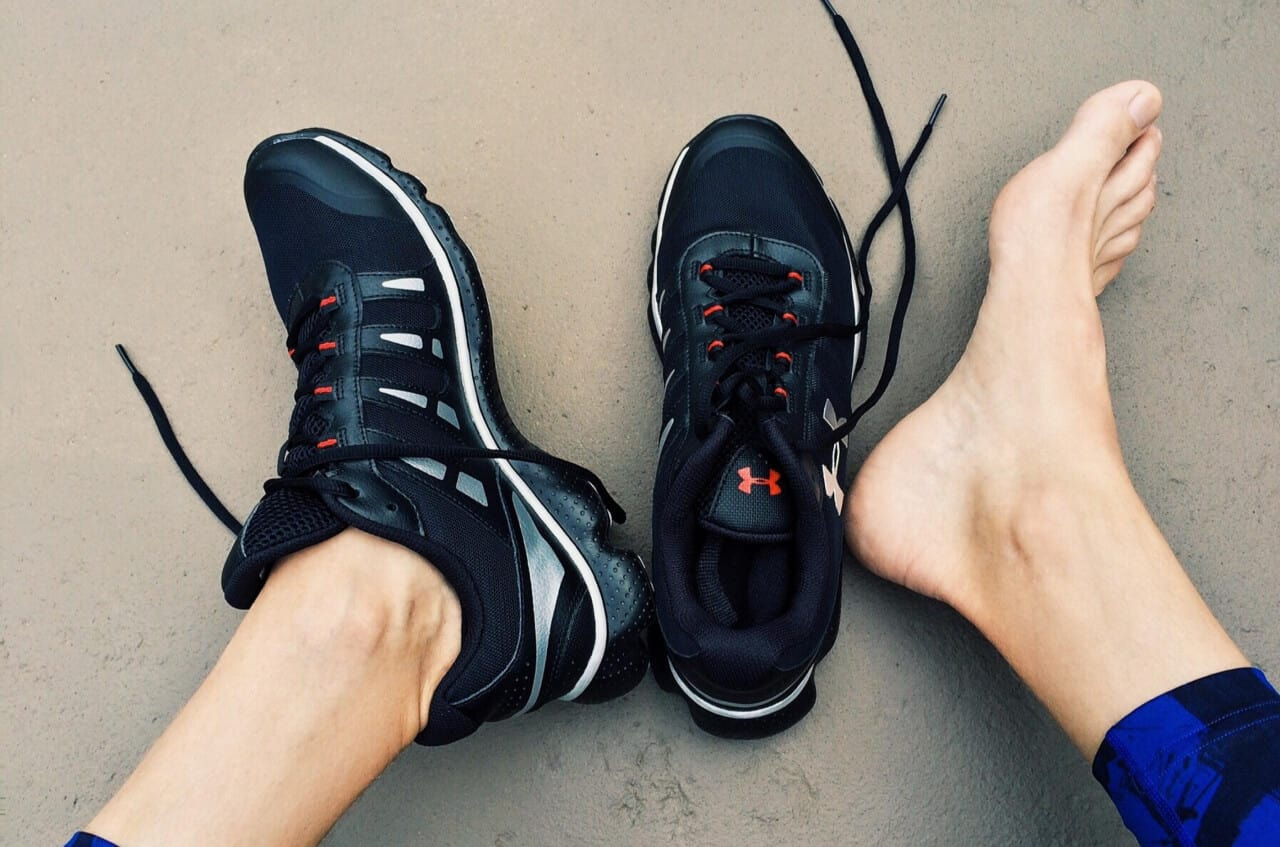
You take your shoes off after a long day and notice a red mark beside your little toe. Maybe the sides of your feet ache, or your toes feel unusually relieved once they’re out of the shoes. It’s easy to blame a busy day, especially when the shoes have been in your wardrobe for years.
But shoes can be the wrong width even when they’re the correct length.
Most people know their shoe size without thinking much about it. Far fewer know their actual foot width. That oversight matters because a shoe that’s slightly too narrow can create repeated pressure on the skin, joints, and nerves without feeling unbearable when first tried on.
The clues often appear long before someone realizes their footwear is the problem. Here are seven worth paying attention to.
1. Your Feet Have Red Marks After You Remove Your Shoes
Take a look at your feet shortly after removing your everyday shoes. A faint impression from a sock isn’t unusual. A distinct red patch over the big-toe joint or along the outside of the little toe is more revealing.
Those are common places for a narrow shoe to press against the foot.
The American Academy of Orthopaedic Surgeons advises choosing footwear that follows the natural shape of the foot. When the shoe’s forefoot is narrower than the foot itself, the sides can experience repeated rubbing or compression.
The problem may be worse in shoes with stiff uppers or reinforced panels that sit directly over prominent joints.
If the same patches appear every evening, compare the width of your bare foot with the shape of the shoe. The shoe may be pinching an area that needs more room.
Redness that persists, breaks in the skin, or unexplained inflammation deserves medical attention, particularly for anyone with diabetes or poor circulation.
2. Your Toes Feel Squeezed Together
Here’s a simple test. While wearing your shoes, try moving your toes independently.
Can you spread them a little? Does your little toe seem trapped against the next one? Is your big toe being pushed sideways?
A cramped feeling across the front of the shoe often indicates that the toe box is too narrow or sharply tapered.
The toe box is the portion of the shoe surrounding your toes. Its width and shape matter independently of the shoe’s overall size.
A shoe can have enough length beyond your longest toe while still forcing the toes inward.
Guidance from Guy’s and St Thomas’ NHS Foundation Trust recommends a rounded or square-shaped front for people whose toes are being squeezed. The trust also notes that wide fittings need an appropriately shaped toe box to provide useful space.
This distinction matters when shopping. A shoe labelled wide may still narrow aggressively near the tip.
Pay attention to where the pressure occurs rather than relying entirely on the width description printed on the box.
3. You Keep Developing Corns or Calluses in the Same Places
Ever noticed a patch of hard skin on your foot that seems to return no matter how often you deal with it? Your skin may be thickening to protect an area that gets rubbed or pressed every day.
Calluses generally cover broader patches, while corns tend to be smaller and more concentrated. You’ll often find corns on toe joints or between toes that keep pressing against each other inside a shoe.
The American Podiatric Medical Association identifies persistent friction and pressure as major contributors to both conditions.
A small corn on the outside of your little toe, for instance, may appear because the shoe presses against that joint whenever you walk.
Sometimes people deal with the hardened skin but never investigate what’s causing it.
They file the area down, apply a cushion, or use a corn treatment. A few weeks later, the problem returns.
If your shoes continue pressing against the same spot, the irritation may continue too.
A better-fitting toe box can help remove the source of pressure. Painful or recurring corns and calluses should be assessed by a podiatrist. People with diabetes or reduced circulation should avoid attempting to cut them away or using medicated corn removers without professional advice.
4. Your Feet Feel Numb or Tingly While Wearing Shoes
You get halfway through your usual walk when a couple of toes start feeling strange. There’s a faint pins-and-needles sensation that wasn’t there when you left home. You stop for a moment, loosen your shoes, and hope it’ll settle.
Tight footwear can sometimes contribute to nerve compression, particularly around the forefoot.
One condition associated with irritation of a nerve between the metatarsal bones is Morton’s neuroma. Morton’s neuroma often affects the nerve running between the third and fourth toes. The discomfort can show up in different ways. For some, it is a hot or prickly feeling. For others, it can seem like there is a lump or tiny object under the foot. Shoes that crowd the toes may aggravate it, especially after spending time on your feet.
But shoe width isn’t always responsible for tingling. Diabetes-related nerve damage, problems affecting nerves elsewhere in the body, and certain circulatory conditions can also cause unusual sensations in the feet.
What makes footwear worth investigating is a pattern: the symptoms repeatedly appear in particular shoes and ease when they’re removed.
Don’t keep wearing shoes that regularly make your toes numb. If the tingling keeps returning despite changing footwear, or you notice it while barefoot, have a clinician investigate. There’s little value in buying several new pairs while an underlying problem goes unchecked.
5. Your Feet Ache Along the Sides by the End of the Day
Some footwear problems aren’t obvious during a quick fitting.
You might walk around the shop for five minutes without noticing anything wrong. Several hours later, however, the outer edges of your feet feel tender.
The difference often comes down to time spent under pressure.
Feet can also become slightly swollen during prolonged activity. A shoe that barely accommodates your forefoot in the morning may feel noticeably tighter after a full working day.
Consider where the soreness occurs.
Pain around the little-toe joint, pressure beside a bunion, or discomfort across the broadest section of the forefoot may suggest that the shoe isn’t providing enough lateral space.
Not all forefoot pain is a width problem. Arthritis, tendon injuries, and conditions affecting the metatarsal bones can cause discomfort as well.
Still, when the soreness disappears in roomier footwear, it’s worth having your feet measured before buying another pair of the same design.
6. You Keep Buying Longer Shoes Just to Get More Room
This is an especially common mistake.
Your usual size fits from heel to toe, but the sides feel tight. You move up half a size. The pressure improves, yet the shoe now feels loose around the heel.
So you tighten the laces until the back stays in place.
The real issue may have been width all along.
In US men’s shoe sizing, D generally represents a standard width, while 2E and 4E indicate progressively wider fittings. Exact internal dimensions vary between manufacturers.
Someone who needs more space across the ball of the foot may find that wide fit shoes in their correct length work better than an unnecessarily long standard-width pair.
The American Academy of Orthopaedic Surgeons specifically advises shoppers to explore wider models or different brands when a shoe is too narrow, rather than automatically increasing its length.
Why does the distinction matter?
A shoe that’s too long can allow the foot to slide forward. Its natural bending point may also sit ahead of the ball of your foot, making walking feel awkward.
Proper width gives the forefoot room without leaving unnecessary space elsewhere.
7. The Sides of Your Shoes Bulge or Wear Out Early
Sometimes your shoes reveal the problem before you notice it yourself.
Place an older pair on a table and look down at the uppers.
Does the material stretch outward around the little-toe joint? Is there a pronounced bulge beside the big toe? Have you repeatedly worn holes near the sides of the forefoot?
Those marks can suggest that the shoe has been struggling to accommodate your foot’s shape.
Of course, footwear materials wear differently. Flexible mesh can lose its shape, and poor stitching may fail regardless of fit.
But repeated damage in the same location across several pairs is worth investigating.
Another useful check is to remove the insole, if it’s removable, and stand on it. If the edges of your forefoot extend beyond the insole, the shoe may lack sufficient width. Bear in mind that insole shapes vary, so this isn’t a substitute for measuring your feet.
The goal isn’t to force your foot into the outline of a particular shoe. It’s to find footwear shaped appropriately for the foot you already have.
How to Choose Shoes That Actually Fit Your Width
Once you’ve recognized the warning signs, don’t assume you need to abandon every style you enjoy wearing.
Start by measuring both feet while standing. Weight-bearing measurements are useful because feet naturally spread when you stand.
Length matters, but so do forefoot width, instep height, and the shape of the toe box.
The American Academy of Orthopaedic Surgeons recommends leaving approximately 3/8 to 1/2 inch, roughly 10 to 13 millimeters, beyond the longest toe. The heel should also remain reasonably secure during walking.
Try footwear later in the day when your feet may be slightly larger from activity.
For men accustomed to standard D-width shoes, trying 2E or 4E may be worthwhile if the forefoot consistently feels squeezed. For women, width labels follow different conventions, so checking the manufacturer’s sizing guidance is important.
An adjustable fastening can help secure the midfoot without compressing the toes.
Materials deserve attention, too. A soft upper may accommodate prominent joints more comfortably than rigid panels, although a flexible material cannot compensate for a badly undersized shoe.
Above all, walk in the shoes before deciding. Check whether your heel lifts, your toes rub, or pressure develops along the sides.
If you’re considering wide fit shoes, compare several shapes rather than assuming every wide-labelled model offers the same amount of room.
Can Wearing Narrow Shoes Cause Long-Term Foot Problems?
Narrow shoes don’t automatically cause permanent damage, but repeated compression can aggravate existing foot conditions and contribute to friction-related skin problems.
The American Academy of Orthopaedic Surgeons associates tight footwear with problems such as corns, calluses, and irritation around bunions and hammertoes.
Foot shape also influences the outcome. Someone with naturally broad forefeet or prominent toe joints may experience problems in shoes another person finds perfectly comfortable.
Persistent foot pain shouldn’t be treated as an ordinary price of wearing shoes.
And there’s no need to wait until a favorite pair becomes unbearable before considering a different fit.
A Better Fit Begins With Noticing the Small Things
Most people don’t spend much time thinking about shoe width until their feet start complaining.
A little redness after work, toes that feel crowded, or a familiar pair wearing out in an unusual place might seem insignificant on its own. Taken together, those details can tell you quite a lot about how your shoes fit.
The next time you shop, pay as much attention to the space around your toes and forefoot as you do to the length.
Your feet shouldn’t have to spend the day adapting to shoes that were never the right shape.
FAQs About Narrow Shoes
How do I know if my shoes are too narrow?
Look for pressure along the sides of your feet, crowded toes, repeated redness, or discomfort that improves after removing the shoes. Measuring your foot width can help confirm the problem.
Can narrow shoes cause numbness in the toes?
They can. If a shoe presses tightly across the forefoot, you might notice tingling or a temporary loss of feeling in certain toes. Should that sensation continue after you’ve taken the shoes off, don’t assume the footwear is the only culprit.
Are tight shoes responsible for corns and calluses?
Quite possibly, particularly if the hard skin appears exactly where a shoe rubs. A corn on the little toe, for example, might keep returning because the toe is pressed against the upper every day. Giving that area more room could help.
Should I buy a bigger size if my shoes feel tight?
Not necessarily. If there’s already enough room beyond your longest toe, try a wider fitting in the same length before moving up a size.
What’s the difference between regular and wide shoe widths?
The distinction is mostly about how much space your foot has across the sides. A wide shoe generally offers more forefoot room than the standard version, although two brands using the same width label can feel surprisingly different.
Can shoes be too narrow even if my toes don’t touch the front?
Absolutely. Length and width are different measurements. Your toes might have plenty of forward space while the shoe squeezes them from the sides.
Will narrow shoes eventually stretch?
Some materials soften with wear, but there’s no guarantee they’ll stretch enough. Shoes that cause significant pressure from the beginning are better replaced with an appropriate fit.
Are wide shoes suitable for people with bunions?
Often, yes. The important thing is where that extra room sits. If the shoe still presses against the bony bump beside the big toe, a wide label won’t help much. Try a shape that clears the joint without leaving the heel loose.
When should I see a podiatrist about tight shoes?
If the same pain, numbness, or skin irritation keeps coming back after you’ve changed shoes, get it checked. A toe that’s becoming increasingly crooked also warrants attention. For someone with diabetes, a new foot wound or unexplained redness is a reason to seek care promptly rather than waiting to see whether it settles.
