

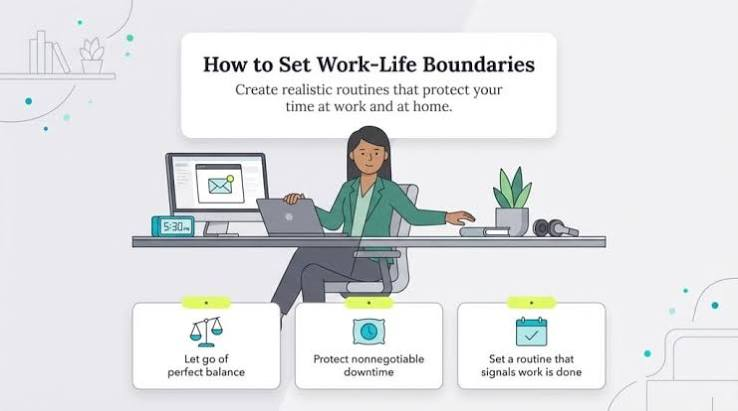
While the concept of work-life balance is easy enough to grasp, it’s not always as easy to put into action. With modern life frequently pushing for productivity and results, achieving this balance can become challenging. For many busy individuals, balancing work and personal time means a constant struggle to fit several priorities into a single day. Often, work duties take over most of the day, leaving little time for leisure or relaxation.
This might be the reality many of us face daily, but this way of living comes with unhealthy consequences, including fatigue, chronic stress, and, eventually, burnout. Setting clear boundaries can help individuals maintain a balance between work and personal time, allowing them to live richer and more fulfilling lives without sacrificing everyday productivity. In this article, we’ll discuss practical ways to establish these boundaries and maintain them amid everyday demands.
Establish Clear Working Hours
A boundary becomes easier to stick to when you know exactly where it begins and ends. Start by defining your working hours based on your job requirements and current employment arrangement. Then, choose a realistic finishing time rather than planning to stop only when everything has been completed. Since new tasks can always appear, an open-ended workday makes it difficult to protect time for yourself.
If you work on an irregular schedule, establish boundaries around each shift. Freelancers can similarly define availability windows for clients, allowing for agreed deadlines. Make sure to provide room for rest breaks within your working time as well. Once you have a workable schedule, use it to identify when additional work would extend beyond your normal availability and require a separate discussion.
Give Personal Time a Place in Your Schedule
Including time for recreation and rest in your schedule helps prevent work from taking over those periods. Make sure to reserve a manageable part of your week for something that matters outside your job. That could mean spending time with someone close to you or dedicating a few hours to a favorite hobby. For example, you might have a special dinner with family on an evening after work. Or, if you enjoy online casino gaming, you could devote some time on the weekend toward learning about Super Ace gameplay. Keep the commitment realistic so that protecting it doesn’t become another source of pressure.
Likewise, remember that rest doesn’t need a formal appointment to count. A free evening can still be time you’ve chosen to keep for yourself. When an optional work request arrives, you can explain that you’re unavailable without providing a detailed account of your plans.
Communicate Your Availability and Limits
Setting a personal limit on work is helpful, but people around you also need to understand your availability. Discuss your working hours with your supervisor and clarify expectations for responding outside them. Ask whether an evening message requires immediate action or can wait until your next workday. Establishing these boundaries prevents someone else’s preferred time for assigning tasks or communicating from automatically becoming your response deadline.
Keep these conversations specific and professional. For example, you could say, “I’m available until 5 p.m. and can respond to routine requests the following morning.” If after-hours coverage is part of your role, agree on what qualifies as urgent and who should contact you. Clear expectations give both sides a shared reference point and reduce the need to negotiate your availability whenever a message arrives.
Set Personal Rules for After-Hours Work Communication
Once expectations are clear, adjust your own habits to support them. Disable nonessential work notifications outside your agreed hours, and close work applications when you finish. If you use one phone for both work and personal activities, consider scheduled notification settings or create a separate work profile where available. These small changes reduce the prompts that can turn a brief glance at your phone into another work session.
When you feel the urge to open your inbox, pause and consider whether you are fulfilling an agreed responsibility or responding automatically. If you have on-call duties, keep the designated urgent channel accessible during your coverage period while limiting routine alerts. The aim is to follow the availability arrangement you’ve established rather than monitoring every work channel just because it’s possible.
Create a Clear End-of-Work Routine
A brief closing routine can make stopping feel less abrupt, particularly when unfinished tasks keep pulling your attention back to work. Write down where you stopped and the next action you need to take. Also, note any deadline that requires attention during your next working period. Then, close your work applications and put your materials away.
If you work from home, add a physical cue that marks the transition. You might leave your designated workspace or store your laptop in another room if the same space serves several purposes. Follow that with a simple personal activity, such as changing clothes or taking a short walk. Treat the routine as a repeatable signal that work has ended, while allowing yourself time to mentally settle into the rest of your day.
The demands of modern living can make balancing work and personal time feel impossible. But with the right approach, you can protect time for yourself while still meeting everyday expectations. Setting clear boundaries around your working hours, how you spend free time, and your availability for work-related communication allows you to turn work-life balance from a familiar concept into a sustainable reality.
