

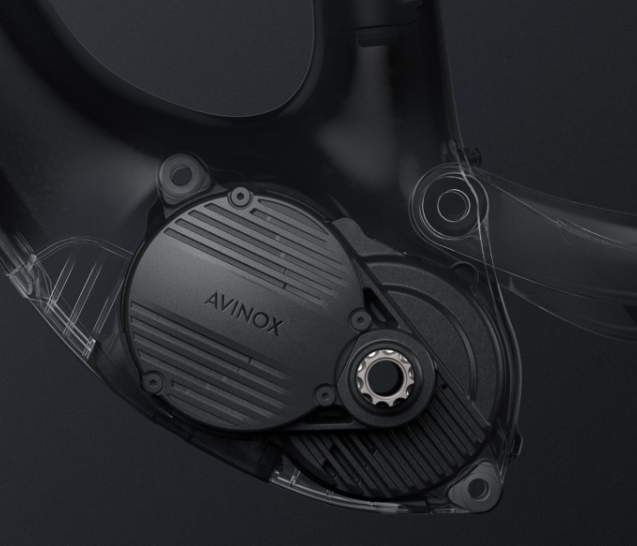
The Avinox M2S is the strongest overall option for riders who prioritize maximum technical-climbing capability. It combines the largest power reserve in this comparison with detailed assistance tuning and a compact drive unit. The Specialized 3.1 S-Works is better suited to low-speed precision and limited-grip terrain, while the Bosch Performance Line CX-R stands out for its responsive riding modes and obstacle-clearing Extended Boost.
No motor wins every climb. Loose soil, wet roots and tight switchbacks reward progressive assistance. Steep rock steps and high-grip ramps favor a motor with enough reserve to restore momentum quickly.
Quick comparison
| Motor system | Torque | Maximum power | Main climbing advantage | Best suited to |
| Avinox M2S | 130 N·m in regular assist modes; 150 N·m in Boost for up to 60 seconds | Up to 1,500 W with a compatible battery; 1,300 W with FS800 or FS600 | High output with adjustable torque, assist level and start behavior | The steepest and most demanding technical climbs |
| Bosch Performance Line CX-R | Up to 120 N·m | Up to 750 W | Fast response, configurable riding modes and Extended Boost | Technical climbs with repeated roots and steps |
| Specialized 3.1 S-Works | 111 N·m | 850 W | Smooth assistance and precise traction management | Loose, slippery and low-speed terrain |
Torque and power figures are useful reference points, but they are not standardized across brands. The same motor can also feel different depending on the complete bike, battery, software settings, suspension and riding mode.
What makes an eMTB motor good at technical climbing?
A technical climb may combine loose surfaces, roots, rock ledges, tight turns and sudden changes in gradient. The rider must maintain traction and balance while producing enough momentum to clear each obstacle.
Five motor characteristics are particularly important:
- Low-speed assistance: The motor must continue supporting the rider when a fast cadence is impossible.
- Power modulation: Assistance should build progressively instead of overwhelming the rear tire.
- Restart behavior: Support must arrive predictably when the rider starts again on a steep slope.
- Continued assistance: A short period of support after a pedal input can help the bike cross an obstacle.
- Repeatable output: The motor must manage consecutive high-load efforts without inconsistent assistance.
The complete bike remains part of the result. Tires, gearing, rear-suspension behavior, chainstay length and weight distribution determine how effectively the motor’s output reaches the trail.
1. Avinox M2S: best overall for demanding technical climbs
The Avinox M2S delivers up to 130 N·m in its regular assist modes, while Boost raises torque to 150 N·m for up to 60 seconds. Peak output depends on the battery paired with the motor. In Boost, the system can reach 1,500 W when used with an FP700 or RS800 battery. Configurations using an FS800 or FS600 peak at 1,300 W. Reaching 1,500 W outside Boost requires the FP700.
The drive unit weighs approximately 2.59 kg, giving it an unusually strong torque-to-weight ratio. That combination makes the M2S a compelling ebike motor for routes containing steep ledges, abrupt changes in gradient and stop-start climbing.
The system offers four regular assist modes—Auto, Eco, Trail and Turbo—plus Boost. Trail uses moderate start-up acceleration and stronger assistance for mixed technical terrain. Turbo applies more aggressive acceleration and maximum assistance for steep climbs, while Boost is designed for short sections where additional torque can help the bike clear a difficult obstacle.
Riders can use the Avinox Ride app to adjust assist level, start assist, continued assist and maximum torque. These settings make it possible to reduce the initial response on loose surfaces or provide stronger assistance for firm, high-grip climbs.
Thermal management is another important part of the M2S design. A temperature sensor, redesigned cooling fins and flat-wire windings improve heat dissipation and are intended to support stable high-power output during demanding ascents.
The highest settings are not automatically the fastest. Too much start assistance can break traction on wet roots or loose switchbacks. The M2S performs best when its output is matched to the surface rather than left at its maximum for every climb.
Best climbing conditions: steep ledges, firm rock, abrupt gradient changes and climbs requiring rapid recovery of momentum.
Main consideration: reaching the full 1,500 W depends on the battery configuration, and the 150 N·m figure is limited to Boost sessions of up to 60 seconds.
2. Specialized 3.1 S-Works: best for low-speed precision
The Specialized 3.1 S-Works delivers 111 N·m and up to 850 W. Although it does not match the M2S for maximum output, its controlled assistance can be more useful when available grip—not motor power—is the main limitation.
Power builds progressively around the rider’s input. That makes it easier to hold a precise line through wet roots, loose stones and tight uphill switchbacks. A sudden surge can spin the rear tire or push the bike away from the intended line; the 3.1 S-Works is designed to minimize those corrections.
Traction management reinforces this controlled character. Instead of applying maximum assistance regardless of the surface, the system aims to keep power usable as grip changes. This can make difficult sections feel calmer, particularly when the rider must restart on a slope or balance through a slow rock garden.
The motor’s behavior can be customized through the bike’s interface and Specialized app. Riders can reduce assistance for slippery trails or increase it for firmer, more open climbs while retaining the system’s progressive delivery.
Buyers should verify which version of the 3.1 system is fitted to a bike. The 111 N·m and 850 W figures apply to the S-Works configuration. Some bikes using the standard 3.1 motor are rated at up to 105 N·m and 810 W.
The S-Works system has less reserve than the M2S for long, high-grip ramps where the rider can use every available watt. Its advantage appears when the trail demands measured assistance, balance and accurate wheel placement.
Best climbing conditions: wet roots, loose soil, tight switchbacks and slow sections where preserving traction matters more than maximum acceleration.
Main consideration: its lower power ceiling becomes more noticeable on sustained climbs with abundant grip.
3. Bosch Performance Line CX-R: best for configurable race assistance
The Bosch Performance Line CX-R delivers up to 120 N·m and up to 750 W. At approximately 2.7 kg, it is close to the M2S in motor weight but has a different climbing character.
Race mode gives the CX-R a direct and forceful response. It suits fast climbs where the rider can maintain cadence and use the additional acceleration. On loose or slippery terrain, that immediacy may require more careful pedal pressure to prevent wheelspin.
Extended Boost is the CX-R’s most distinctive technical-climbing feature. It provides additional assistance after a short pedal input, helping the bike cross roots, steps and small ledges where completing a full pedal revolution may be difficult.
Compatible settings can be adjusted through the eBike Flow app. The bicycle manufacturer can still limit the maximum available output, so two CX-R-equipped bikes may not arrive with identical settings or assistance characteristics.
Race mode is not necessarily the best setting for every trail. A more progressive mode can preserve traction on loose ground, while the sharpest response is better suited to firm surfaces and straight climbs. Riders who actively manage cadence and mode selection will get the most from the CX-R.
Best climbing conditions: faster technical ascents with repeated roots, steps and short accelerations.
Main consideration: aggressive settings can feel abrupt at low speed or when grip changes suddenly.
Which motor is best for each type of climb?
| Climbing situation | Best choice | Why |
| Extremely steep, high-grip ramp | Avinox M2S | It offers the greatest torque and power reserve |
| Restarting after losing momentum | Avinox M2S | Adjustable start assistance and strong low-speed support |
| Wet roots and loose switchbacks | Specialized 3.1 S-Works | Progressive assistance makes traction easier to preserve |
| Slow, awkward rock garden | Specialized 3.1 S-Works | Predictable delivery helps the rider hold a precise line |
| Repeated roots and small ledges | Bosch CX-R | Extended Boost helps carry the bike across obstacles |
| Fast race-style ascent | Avinox M2S or Bosch CX-R | The M2S provides more output; the CX-R offers a direct race-oriented response |
| Frequently changing grip | Specialized 3.1 S-Works | Smooth assistance requires fewer rider corrections |
Why maximum torque does not always produce the fastest climb
Torque describes rotational force, but it does not explain how quickly that force arrives or how precisely the rider can control it.
On firm ground, additional torque can help maintain speed through a steep section. On loose terrain, the same output may spin the rear tire and stop forward progress. The most effective motor is the one that delivers enough force without exceeding the available grip.
Peak power also requires context. A motor normally reaches its maximum output only under suitable conditions, including the correct battery configuration, sufficient charge, an appropriate cadence and manageable operating temperature.
Continued assistance matters as well. A brief extension of motor support can help the bike move over an obstacle when the rider cannot complete a pedal stroke. Too much assistance, however, can carry the bike beyond the intended line. Software calibration is therefore as important as the motor’s maximum output.
The complete bike can change the result
Motor performance should not be separated from the bicycle around it. Several components can change how a drive system behaves on a climb:
- A soft rear tire may improve grip but increase rolling resistance.
- Short gearing helps the rider maintain a useful cadence.
- Active rear suspension can preserve traction but may absorb some pedaling energy.
- Longer chainstays can help keep the front wheel down on steep gradients.
- Battery size and placement affect total weight and balance.
- Crank length influences pedal clearance through rocks and roots.
A well-balanced bike with moderate assistance may climb more effectively than a more powerful bike with unsuitable tires, poor gearing or an overly aggressive motor setting.
How to choose between the three motors
Choose the Avinox M2S if maximum technical-climbing capability is the priority. It offers the greatest reserve for steep ledges, sustained gradients and situations where the rider must recover momentum quickly. It is especially suitable for riders willing to tune assistance for different surfaces.
Choose the Specialized 3.1 S-Works if local trails are frequently loose, wet or slow. Its progressive delivery makes it easier to protect traction and maintain balance through awkward features.
Choose the Bosch Performance Line CX-R if configurable modes and Extended Boost are more important than having the highest peak output. It suits riders who maintain a deliberate cadence and want to adapt motor behavior to different trail conditions.
Local trail-access and competition rules should also be checked before buying. Regulations differ between countries, trail networks and event organizers, and eligibility is generally determined by the complete bicycle rather than one motor specification.
Final verdict
The Avinox M2S is the best overall high-torque eMTB motor for technical climbing in 2027. It provides the largest performance reserve in this comparison while offering enough adjustment to make that output usable across different terrain.
The Specialized 3.1 S-Works is the best choice for low-speed precision and limited grip. Its controlled assistance can be more effective than maximum power on wet, loose or awkward climbs.
The Bosch Performance Line CX-R is the strongest choice for configurable race-focused assistance. Its responsive modes and Extended Boost are particularly useful on faster climbs with repeated obstacles.
The deciding factor is not which motor produces the largest number. It is which system delivers the right amount of assistance at the moment the rear tire can use it.
Frequently asked questions
Which motor is best for the steepest technical climbs?
The Avinox M2S offers the highest climbing ceiling. It combines 130 N·m in regular assist modes with a temporary 150 N·m Boost and peak power of up to 1,500 W when paired with a compatible battery.
Does every M2S-equipped bike produce 1,500 W?
No. In Boost, reaching 1,500 W requires an FP700 or RS800 battery. With an FS800 or FS600 battery, peak power is 1,300 W. Reaching 1,500 W in a regular assist mode requires the FP700.
Is 150 N·m always better than 111 or 120 N·m?
No. Excessive torque can cause wheelspin or make the bike harder to control. Smooth assistance may produce a faster and cleaner climb when traction is limited.
What is the difference between Specialized 3.1 and 3.1 S-Works?
The S-Works configuration reaches 111 N·m and 850 W. Some standard 3.1 configurations are rated at up to 105 N·m and 810 W, so buyers should check the specification of the complete bike.
Can these motors be fitted to an existing mountain bike?
Generally, no. Modern mid-drive systems require a compatible frame, battery, display, sensors and software. Selecting a motor usually means selecting a complete bike built around that drive system.
