

When comparing camera drones, megapixels and video resolution usually attract the most attention. A product page may advertise 50MP photos, 4K slow motion or even 6K video, making it tempting to assume that the biggest number automatically produces the best image.
In practice, two less obvious factors often matter just as much: sensor size and gimbal design.
The sensor determines how much visual information the camera can capture, particularly when light becomes difficult. The gimbal determines how steadily that camera can hold its composition while the aircraft is moving through the air. Understanding both makes it much easier to choose a drone for landscape, travel or more serious filmmaking.
Why sensor size matters
A camera sensor collects the light used to create an image. In general, a larger sensor has more physical area available to gather light.
That can make a noticeable difference around sunrise and sunset, beneath heavy cloud or in scenes containing both bright sky and dark ground. A larger sensor can provide more room to preserve highlight and shadow information and can help maintain cleaner results as available light falls.
This is particularly relevant in Australia, where a drone may need to handle very bright skies, reflective water and deep shadows within the same landscape.
Sensor size should not be confused with megapixels. A camera with more pixels does not automatically have better low-light performance or greater dynamic range. Resolution tells you how much detail the final file can contain; sensor size helps determine the quality of the information being recorded in the first place.
When choosing a drone with camera, it therefore makes more sense to compare sensor format, lens and recording capabilities together rather than ranking models purely by megapixel count.
More megapixels are useful — but mainly for cropping
High-resolution still photography does have a clear advantage: flexibility.
If a subject occupies only part of a wide aerial photograph, a higher-resolution file gives you more room to crop afterwards. This can be useful for landscapes, architecture and commercial images where several compositions may need to be created from one frame.
But megapixels alone do not tell you how a camera will perform at sunset, how natural its colours will look or how much detail remains in bright clouds.
For video, the still-photo megapixel count is even less important. What matters more is the actual video resolution, frame rate, colour mode and how well the camera remains stabilised in flight.
What does the gimbal actually change?
A drone is never perfectly still.
Wind pushes the aircraft, the motors continually make corrections and the body tilts when accelerating, braking or changing direction. If the camera moved exactly with the aircraft, even a high-quality sensor could produce distracting footage.
A mechanical three-axis gimbal compensates for movement across tilt, roll and pan, allowing the camera to remain much steadier while the drone itself changes attitude.
This directly affects perceived image quality. Stable footage preserves fine detail more effectively, produces cleaner camera movements and makes aerial shots easier to watch.
But gimbal design also affects composition.
A gimbal with greater freedom of movement can point further upwards, rotate further around the roll axis or capture vertical content more naturally. That gives the operator more creative options without relying on aggressive cropping later.
DJI Mini 5 Pro: a large sensor in a compact platform
The DJI Mini 5 Pro shows why sensor size has become increasingly important even in lightweight drones.
It uses a 1-inch CMOS sensor with 50MP effective resolution, paired with a 24mm-equivalent f/1.8 lens. It records 4K video up to 60fps in normal recording and supports 4K/120fps slow motion.
The 1-inch sensor is particularly significant because it gives the Mini series considerably more imaging capability without moving into a much larger aircraft class. DJI positions the Mini 5 Pro as a lightweight model with a 1-inch camera, nightscape omnidirectional obstacle sensing and a highly flexible gimbal.
Its gimbal can achieve up to 225° of roll rotation, expanding the range of compositions beyond standard level aerial footage. The camera can also perform true vertical shooting, which is useful when material is intended for mobile-first platforms rather than being cropped from a horizontal frame.
For travellers and creators who want to keep the aircraft compact, this balance between sensor size and gimbal freedom is often more useful than simply chasing the highest possible resolution.
DJI Air 3S: when focal length becomes part of image quality
Moving up to the DJI Air 3S changes the equation because the aircraft has two cameras.
The primary camera uses a 1-inch 50MP CMOS sensor with a 24mm-equivalent perspective, while the second camera uses a 1/1.3-inch 48MP sensor with a 70mm-equivalent medium tele lens. Both are designed around the same aerial workflow rather than forcing the user to create every composition with a single wide-angle camera.
The 70mm camera is important because image quality is not just about sharpness.
A longer focal length changes perspective. It can visually compress distant landscape elements, isolate a building against its surroundings or create more deliberate compositions without requiring the drone to fly unnecessarily close to the subject.
The primary camera also offers up to 14 stops of video dynamic range in DJI’s specified Auto-mode conditions, which can be useful in landscapes containing bright skies and darker terrain. Both cameras support 4K/60fps HDR recording, while 4K/120fps is available for slow-motion work.
For creators who regularly want both wide establishing shots and more compressed detail shots, the Air 3S provides a larger creative step than simply increasing megapixels.
DJI Mavic 4 Pro: when the gimbal becomes a creative tool
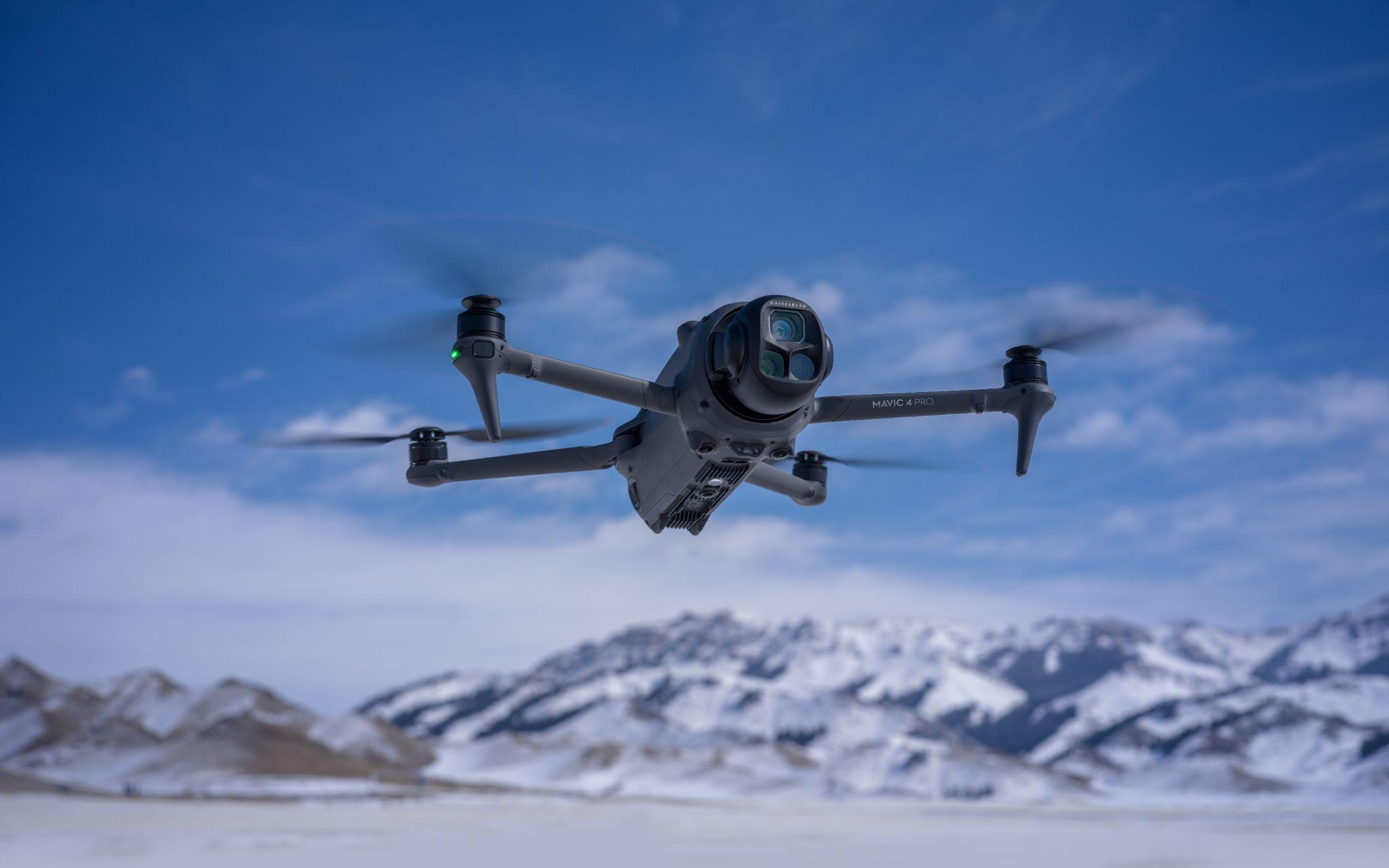
At the higher end, DJI Mavic 4 Pro combines a larger main sensor, three focal lengths and a much more flexible gimbal system.
Its main Hasselblad camera uses a 4/3 CMOS sensor with 100MP effective resolution and a 28mm-equivalent lens. It is joined by a 70mm-equivalent medium tele camera with a 1/1.3-inch 48MP sensor and a 168mm-equivalent tele camera using a 1/1.5-inch 50MP sensor.
The advantage is not simply the 100MP headline.
A 4/3 main sensor gives the system more imaging potential for demanding landscape and commercial work, while the three focal lengths let the operator change visual perspective without depending heavily on digital zoom.
The Infinity Gimbal is equally important. DJI specifies a mechanical roll range extending to 450°, with a controllable roll range up to 400°, while the camera can tilt upwards to 70°.
That extra movement makes it possible to create rotating shots, upward-looking compositions and camera moves that would be difficult with a conventional aerial gimbal.
For professional work, this freedom can affect the final image as much as the sensor itself because it changes what can actually be captured during the flight.
Which matters more: sensor or gimbal?
Neither should be considered in isolation.
A larger sensor is valuable when image quality, dynamic range and difficult lighting are priorities. A more capable gimbal becomes important when camera movement, vertical compositions or unconventional angles are central to the project.
For a compact travel setup, Mini 5 Pro offers an unusually strong combination of a 1-inch sensor and flexible gimbal in a lightweight aircraft.
For creators who want different perspectives without moving into a flagship platform, Air 3S adds the practical advantage of separate 24mm and 70mm-equivalent cameras.
For demanding filmmaking and photography, Mavic 4 Pro combines the largest main sensor of the three with multiple focal lengths and the most flexible gimbal design.
The best camera drone is therefore not necessarily the one with the highest megapixel count. Sensor size determines the quality of the image you can capture, while gimbal design determines how effectively you can turn that image quality into a stable and deliberate composition. Choosing the right balance between the two is what makes the biggest difference once the drone is actually in the air.
