

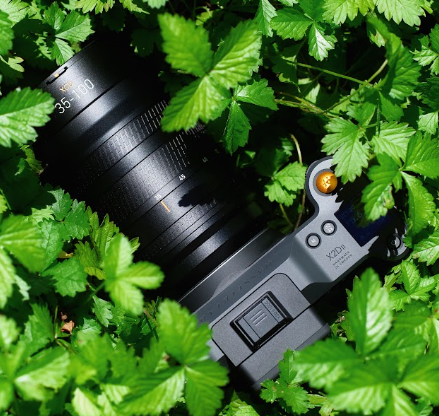
Choosing a professional medium format camera system starts with the work you need to deliver. An advertising photographer may need detailed product images that hold up through retouching and multiple campaign layouts. A fine art photographer may prioritize large exhibition prints, subtle tonal relationships, or a camera that supports a particular creative process.
Both can benefit from high-resolution capture, but their priorities are not identical. The right system must connect image quality with lenses, lighting, handling, software, and final output.
Begin with your recurring assignments and long-term projects. A system earns its value when it solves a practical problem in the way you create and deliver photographs.
What Should Advertising and Fine Art Photographers Prioritize?
Advertising photography typically involves an agreed brief, production deadlines, and specific deliverables. Fine art photography often gives the photographer more freedom over interpretation, working pace, and presentation. These differences should shape the equipment decision.
| Selection factor | Advertising photography | Fine art photography |
| Resolution | Product detail, retouching, and multiple campaign crops | Print size, viewing distance, and the role of detail in the image |
| Color | Consistency across products, campaign images, and delivery formats | A coherent visual approach across a series and its prints |
| Focusing | Reliable results at the pace required by the assignment | Precision suited to the subject and working method |
| Camera handling | Efficient movement between setups and client requirements | A comfortable process for sustained creative work |
| Software | Connected capture, client review, and predictable file delivery | Editing flexibility and continuity across long-term projects |
| System support | Backup equipment and minimal production downtime | Serviceability and long-term access to essential components |
These are starting points rather than rigid categories. A commercial still-life shoot can be slow and deliberate, while an artist photographing people may need to react quickly.
How Much Resolution Does the Final Image Require?
The useful amount of resolution depends on the final output and how much of the original frame survives editing.
For example, a 24 × 32-inch print at 300 pixels per inch requires 7,200 × 9,600 pixels, or approximately 69 megapixels. This is a calculation for one output specification, not a universal requirement for exhibition prints. Print process, viewing distance, and subject matter all influence the appropriate pixel density.
Resolution for Advertising Deliverables
An advertising image may need to work as a horizontal website banner, a vertical retail display, and a square social asset. High-resolution capture provides flexibility, but the composition must also accommodate those layouts.
Before shooting, establish:
- The largest required output.
- The expected aspect ratios.
- Space needed for headlines, logos, and product copy.
- Whether close-up details require separate photographs.
- How much cropping the creative team expects.
Cropping can consume resolution quickly. Retaining half the original width and half the original height leaves only one-quarter of the pixels. A high pixel count helps, but it does not replace planning for the actual campaign.
Resolution for Fine Art Prints
For fine art, ask how detail contributes to the work. A dense landscape intended for close inspection may benefit from substantial resolution. An image built around movement, atmosphere, or abstraction may place less emphasis on fine detail.
Evaluate files at the intended print size. Differences visible only at extreme screen magnification may have little effect on the finished artwork.
Choose Lenses Around Your Subjects and Working Distances
A medium format system is only useful if its lenses support the images you need to make. When comparing professional medium format camera systems, start with the focal lengths, working distances, and close-focus capabilities your assignments require. Use those needs to narrow your choice of camera body.
For advertising still life, minimum focusing distance and magnification are important, but so is the space between the lens and the subject. That space determines where you can place lights, reflectors, flags, and backgrounds.
For commercial portraits, consider framing distance, autofocus behavior, and the apertures you commonly use. A lens that suits a controlled studio portrait may be less convenient for a location campaign involving movement.
Fine art photographers should connect lens choice to their visual approach. A landscape series may depend on consistent edge detail, while environmental portraits may call for a particular relationship between subject and surroundings.
| Typical work | Lens characteristics to evaluate |
| Small products and tabletop advertising | Magnification, working distance, and close-range image quality |
| Commercial portraits | Framing distance, focus reliability, and rendering at working apertures |
| Interiors and architectural commissions | Wide-angle coverage, distortion, and perspective-control options |
| Landscape-based fine art | Detail across the frame, flare behavior, and field portability |
| Abstract and material studies | Close-focus performance and control over depth of field |
If adapted lenses are part of the plan, verify their functions individually. A lens that physically mounts may not retain autofocus, electronic aperture control, or every shutter option.
Evaluate Color According to the Purpose of the Image
Advertising and fine art both require control over color, but “correct” color can mean different things.
Advertising: Consistency and Approval
For product photography, the challenge is often repeatability. Related products should remain visually consistent across separate sessions, and approved colors should survive the transition from capture to delivery.
Build the workflow around controlled lighting, appropriate reference targets, a calibrated display, and agreed output requirements. Review difficult subjects such as saturated packaging, textiles, metallic finishes, and skin tones before committing to a system.
A camera’s default rendering can be appealing without meeting a particular reproduction requirement. Test the files through the same processing and approval steps used on paid assignments.
Fine Art: A Consistent Visual Language
Fine art allows interpretive color, but consistency still matters. Images made months apart may need to sit together in a book or exhibition.
Evaluate how readily the files support your intended treatment. Can you preserve delicate transitions, maintain separation in dark areas, and apply a coherent palette without unwanted artifacts?
If the assignment involves reproducing existing artwork, treat it as a separate task. Faithful reproduction and expressive interpretation have different goals.
Match the Camera Design to Your Working Method
The choice between an integrated camera and a modular digital-back system should follow your process rather than assumptions about which looks more professional.
An integrated body may suit photographers who move frequently between eye-level portraits, low viewpoints, and location setups. Viewfinder design, grip comfort, control placement, and focusing behavior become important during a full working day.
A modular system may be useful when a project requires compatible technical-camera movements or builds on an existing camera setup. It also introduces compatibility questions involving the body, back, lens, shutter, and connections.
For advertising, evaluate how quickly you can reframe, check focus, and repeat a setup. For fine art, consider whether the design supports sustained observation and the way you prefer to compose.
Neither approach is inherently better for either discipline. The important question is whether it helps you work accurately and consistently.
For Advertising, Test the Entire Studio Workflow
A camera that produces excellent files can still become a production bottleneck if capture and review are slow or unreliable.
Before buying, test the intended camera with your actual computer, software, cables, lighting, and storage arrangement. RAW-file support and tethered capture are separate capabilities; an application that opens the files may not support every connected-camera function you need.
Run a small assignment from start to finish:
- Photograph a representative product or portrait setup.
- Capture a sequence at your normal working pace.
- Review focus and framing on the client-facing display.
- Apply a typical color adjustment and retouch.
- Export the requested formats and confirm backup copies.
Lighting compatibility deserves equal attention. Verify the flash, trigger, lens shutter, and camera combination at the settings you expect to use. A nominal synchronization specification alone does not establish how the complete setup will perform.
For compositing and repeatable product work, also check how easily you can lock framing and maintain consistency between exposures.
For Fine Art, Evaluate the System in the Field and in Print
A fine art camera must support both the making of the image and its eventual presentation.
If a project involves long walks, repeated visits, or difficult locations, evaluate the complete kit weight rather than the camera body alone. Lenses, batteries, a tripod, and protective equipment determine what you will actually carry.
Consider the working pace as well. Some projects benefit from a deliberate setup; others depend on responding quickly to changing light or a subject’s expression. A system that interrupts your process can be a poor fit even when its files are technically impressive.
Then make physical test prints. Paper surface, ink, size, and display lighting influence the result in ways a monitor cannot fully reproduce.
Use several representative images: one with dense texture, another with smooth tonal transitions, and another with the shadow or highlight relationships central to your work. Judge whether the system helps those images communicate at their intended size.
Balance Image Quality With the Cost of a Complete System
The purchase price should include the equipment and workflow needed to produce finished work.
| Budget category | Why it matters |
| Essential lenses | Determines which subjects and working distances the system can handle |
| Batteries and storage media | Supports uninterrupted shooting |
| Tethering and support equipment | Helps maintain a dependable studio setup |
| Computer and file storage | Affects editing speed, backup, and archiving |
| Service and backup equipment | Reduces disruption when equipment needs attention |
| Printing and proofing | Reveals whether capture quality meets the intended output |
Advertising photographers should consider rental access and the cost of rescheduling a production. Fine art photographers should balance equipment spending against printing, framing, travel, and the time required to complete a series.
A focused kit that supports recurring work can be more valuable than an expensive body paired with gaps in lenses, software, or support.
How to Make the Final Decision
Before comparing specifications, write a short brief for your own equipment purchase.
For advertising, identify the assignments you expect to shoot most often, the delivery formats, the required pace, and the people involved in image approval.
For fine art, define the project’s subjects, working conditions, intended presentation, and the role that detail and tonal rendering play in the finished work.
Then test the complete system against those requirements. Rent the intended body and lenses where possible. Deliver a sample advertising file through your normal workflow, or produce a representative fine art print.
The strongest reason to choose a system is evidence that it helps you produce the work you need, at a pace and cost you can sustain.
Frequently Asked Questions
Is Medium Format Necessary for Advertising Photography?
No. Many advertising assignments can be completed successfully with other formats. Medium format is worth considering when its resolution, lens options, and working characteristics address specific production needs.
Is 100 Megapixels Necessary for Fine Art?
No. The requirement depends on print size, cropping, viewing distance, and the image itself. High resolution can be useful, but it is not a measure of artistic value.
Does a Larger Sensor Automatically Produce Better Color?
No. Color depends on the sensor, processing, lighting, exposure, and the complete color-management workflow. Compare finished files and prints rather than relying on sensor size alone.
Should Advertising Photographers Prioritize Autofocus or Resolution?
That depends on the assignment. Moving subjects may make focus reliability and responsiveness decisive. Controlled product work may place greater emphasis on fine detail, close-focus capability, and repeatable framing.
Can One System Serve Both Advertising and Fine Art?
Yes, especially when the lens requirements and working methods overlap. Choose around the demanding tasks you perform regularly, then confirm that the system also supports your personal projects without unnecessary compromises.
