

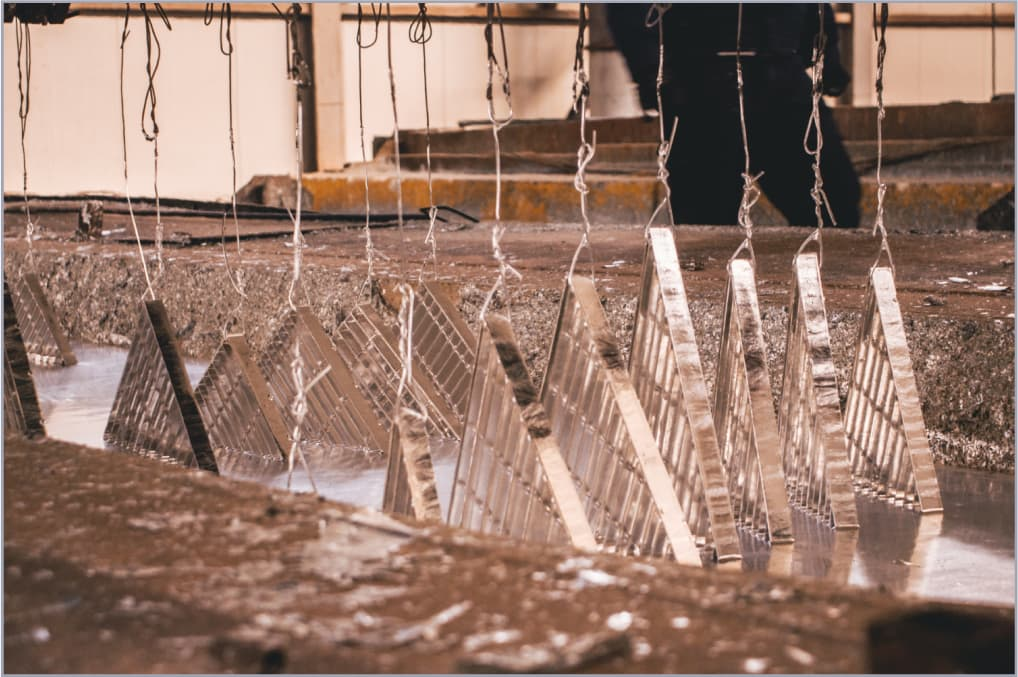
Every reliable electronic device rests on a foundation of small, precisely finished metal parts. Connector contacts, leadframes, and stamped components all need a thin metal coating applied exactly where it belongs, at exactly the right thickness. When tolerances are tight and production volumes are high, the method that delivers this accuracy is precision strip plating, a continuous electroplating process built for consistency and control.
This article looks at what the process involves, why it matters for component performance, and how to choose a manufacturing partner who can deliver it dependably. If you design or source metal components for demanding industries, understanding this capability can help you protect both product quality and project budgets.
Understanding Precision Strip Plating
At its core, precision strip plating is a method of applying metal finishes to a continuous strip of material as it moves through a plating line. The strip feeds from one reel, passes through cleaning, plating, and rinsing stations, and is collected on another reel. Because the material flows continuously rather than being processed piece by piece, the finish stays remarkably uniform from the start of a run to the end.
The word precision is the key. This is not about flooding a part with metal; it is about placing the right coating in the right location to a controlled depth. One of the most valuable variations is control depth plating, where the thickness and extent of the coating are tightly managed to meet exact engineering and compliance requirements. That level of control is what separates high-quality plating from generic coating work.
Leading Technologies, a contract manufacturer in Vandergrift, Pennsylvania, has built its operation around this discipline. With multiple continuous plating lines running both selective and full-coverage programs, the company delivers precision strip plating for industries where accuracy is not optional. You can review the process in detail on their reel-to-reel plating page.
Why Precision Makes the Difference
It is easy to underestimate how much a plating finish affects a finished product. The coating determines electrical conductivity, solderability, corrosion resistance, and wear life. A finish that is too thin may wear through and fail; one that is too thick wastes expensive metal and can interfere with fit and function. Precision strip plating solves both problems by holding the finish to a defined specification across millions of parts.
This matters most with precious metals. Gold, silver, and palladium offer outstanding performance but come at a real cost. Applying them precisely, only where they are needed and only as thick as required, keeps components affordable without compromising reliability. This is the practical advantage of control depth plating and selective techniques: performance where it counts, savings everywhere else.
The Role of Connector Contact Finishing
Many of the most demanding plating jobs involve connectors. Every time a connector mates and unmates, its contact surfaces experience friction and wear. Over thousands of cycles, a poor finish degrades, resistance climbs, and the connection becomes unreliable. Strong connector contact finishing prevents this by applying durable, low-resistance metals exactly at the points of contact.
Gold is a frequent choice here. Hard gold resists wear and corrosion through repeated mating cycles, while a palladium or palladium-nickel underlayer adds durability and lets manufacturers reduce gold thickness to control cost. Silver and silver alloys serve high-conductivity and power applications, and tin finishes support solderable connections. The art of connector contact finishing lies in matching the metal stack to the electrical and mechanical demands of the part, then applying it with the accuracy that precision strip plating provides.
Plating Methods That Support Precision
A capable plating operation offers more than a single approach. The flexibility to apply metal in different patterns is what allows engineers to optimize each design. Common methods include the following.
- Overall plating for uniform, full-surface coverage when an entire part needs protection.
- Control depth plating for tightly managed thickness and compliance-critical applications.
- Selective stripe plating, single or dual sided, to place a precious-metal band exactly where contacts meet.
- Spot plating for localized protection on a specific feature.
Having all of these available under one roof means a manufacturer can deliver everything from a fully coated strip to a part with a narrow, precisely located stripe. For design and procurement teams, that range removes the need to coordinate multiple suppliers and keeps quality consistent across an entire component family.
Materials Used in Precision Strip Plating
The choice of finish is guided by the job each part must do. Precious metals such as hard gold, soft gold, pure silver, silver-tin alloy, and palladium handle high-reliability and high-conductivity roles. Base metals like nickel and copper serve as underlayers, building corrosion resistance and a foundation for subsequent coatings. Tin and tin-lead finishes provide dependable solderability, including whisker-mitigating formulations for sensitive electronics.
The right combination depends on the application environment, the required service life, and the electrical performance targets. A skilled provider of precision strip plating will recommend a metal stack that meets these needs while keeping cost in check, often pairing a thin precious-metal layer with a robust underlayer to get the best of both. Leading Technologies maintains a broad catalog of these finishes, detailed on their capabilities overview.
Quality Assurance and Industry Demands
High volume means nothing without consistent quality. The value of control depth plating depends on rigorous inspection that verifies thickness, adhesion, and coverage throughout each production run. This is essential in regulated fields such as aerospace, defense, and medical equipment, where traceability and documentation are mandatory and a single out-of-spec part can have serious consequences.
Leading Technologies serves these sectors along with semiconductor, automotive, telecommunications, and consumer electronics manufacturers. The company complements its plating lines with secondary services including strip cutting, singulation, and leadframe and heatsink assembly. That integration lets customers move from raw stamped strip to finished, ready-to-install components through a single trusted source, reducing handoffs and protecting quality at every stage.
Choosing the Right Plating Partner
Selecting a supplier for precision strip plating comes down to capability, consistency, and partnership. Look for a manufacturer with proven continuous plating lines, a wide range of finishes, and the inspection systems to back up their specifications. Ask how they handle connector contact finishing for parts that see repeated mating, and confirm they can deliver control depth plating to your compliance requirements.
Just as important is engineering support early in the design process. A strong partner helps you choose the right metals and methods before tooling is committed, balancing performance, durability, and cost from the first prototype onward. That guidance often prevents costly redesigns and field failures down the road.
For components that have to perform reliably year after year, the quality of the plating is one of the most important and most overlooked factors. Getting precision strip plating right from the start protects your product, your reputation, and your budget. To discuss a specific application, connect with Leading Technologies through their contact page or request a quote.
