

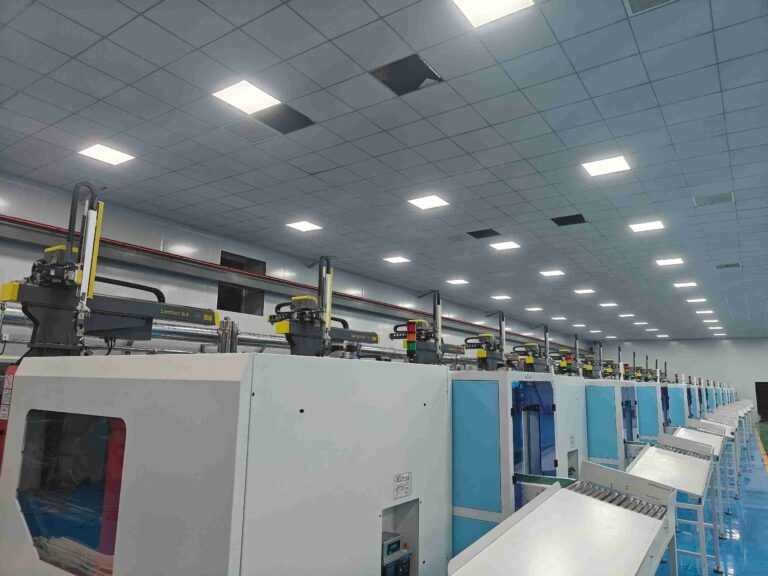
Industrial robots have transformed manufacturing by making repetitive and precision-based tasks faster and more consistent. At the center of many robotic systems are motors and control technologies that determine how accurately the robot can move.
A robot arm servo is particularly important because it allows robotic joints to move with controlled speed, position, and torque. When combined with suitable sensors and a control system, servo technology can provide the precision required for demanding automation applications.
What Is a Robot Arm Servo?
A servo is a motor-based motion system designed to provide controlled movement.
Unlike a basic motor that may simply rotate when power is supplied, a servo system can use feedback to determine the position, speed, or movement of the motor. The controller can then make adjustments to achieve the desired motion.
In a robotic arm, servo systems are commonly used at different joints to control movement.
Why Precision Matters
A robotic arm may need to pick up an object, move it to a specific location, weld a component, or perform an assembly operation.
Small positioning errors can affect the quality of the final product.
Servo technology helps the robot control its movements more precisely. The controller can send commands while feedback sensors report the actual movement, allowing the system to correct deviations.
Torque and Payload
Torque is one of the most important specifications when selecting a servo system for a robotic arm.
A larger robotic arm carrying heavy components generally requires greater torque than a small arm performing lightweight tasks.
The required torque depends on factors such as:
- Payload
- Arm length
- Joint position
- Acceleration
- Speed
- Operating cycle
Selecting a servo that is too small can lead to poor performance, overheating, or premature wear.
Speed and Motion Control
Industrial robots often need to move quickly without sacrificing accuracy.
Servo systems allow manufacturers to control acceleration, deceleration, and operating speed.
Smooth motion is especially important when a robot handles delicate components or performs operations where vibration can affect the result.
A well-tuned servo system can help the robotic arm move efficiently between programmed positions.
Feedback Systems
Feedback is a key difference between simple motor operation and advanced servo control.
Encoders and other sensors can provide information about the motor’s actual position or movement. The controller compares this information with the desired position and can make adjustments when necessary.
This closed-loop approach supports accurate and repeatable robotic movement.
Common Applications
Servo-driven robotic arms are used across many industries.
Automotive Manufacturing
Robotic arms can perform welding, assembly, painting, material handling, and other repetitive operations.
Electronics
Precision movement is important when handling small components and performing assembly tasks.
Packaging
Robotic systems can pick, place, sort, and package products at high speed.
Machine Tending
Robots can load and unload CNC machines or other production equipment, reducing repetitive manual work.
Material Handling
Servo-controlled arms can move components between workstations while maintaining consistent positioning.
Servo Arm Robots vs. Conventional Robotic Systems
Not every robot uses the same motion technology.
The design of a robot depends on its intended application, required accuracy, payload, speed, and control architecture.
Understanding the robot arm servo system can therefore help manufacturers compare different robotic solutions and understand how servo-controlled movement contributes to overall performance.
Maintenance Considerations
Servo systems require proper maintenance to remain reliable.
Regular inspections can help identify issues with cables, connectors, bearings, cooling systems, encoders, and other components.
Unexpected vibration, unusual noise, inaccurate positioning, or overheating may indicate that a servo system requires inspection.
Following the manufacturer’s maintenance recommendations can help extend service life.
Choosing the Right Servo
There is no universal servo motor for every robotic arm.
Selection should consider:
- Required torque
- Maximum speed
- Payload
- Position accuracy
- Duty cycle
- Feedback resolution
- Motor dimensions
- Controller compatibility
- Operating environment
The servo should be matched to both the robotic arm’s mechanical structure and its control system.
Conclusion
Servo technology plays an important role in modern robotic arms by providing controlled, accurate, and repeatable movement.
From automotive production to electronics and packaging, servo-driven systems allow robots to perform complex tasks with consistent motion.
By selecting the appropriate servo specifications and maintaining the system correctly, manufacturers can improve robotic performance, reliability, and productivity.
