

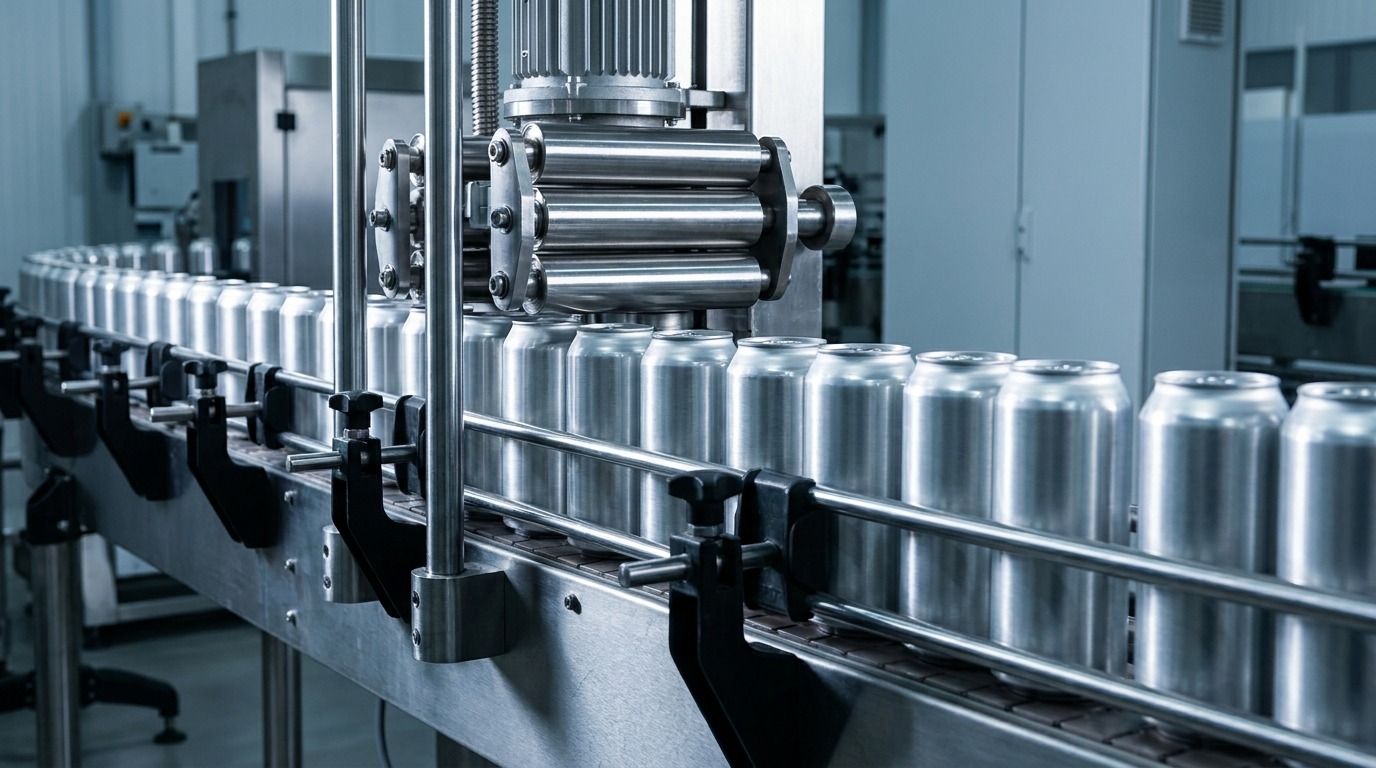
For decades the tin can carried an image problem: practical, yes, but hardly premium. That perception has flipped. Craft breweries choose cans over glass, speciality coffee comes in nitro cans, and wine in a can has moved from novelty to a recognised category. Behind this comeback stands a piece of engineering most consumers never think about: the modern canning line.
What a can actually does better
The can wins on physics. It blocks 100% of light, which degrades flavour in beer, juice and oils. Once sealed, it is completely airtight, keeping oxygen — the main cause of staling — away from the product. It chills faster than glass, weighs less, survives transport better and recycles more efficiently. The catch is that all of these advantages depend on one critical operation: the seal.
The double seam: a mechanical signature
Cans are not glued or welded shut. Professional canning machines close them with a double seam — a joint formed by rolling the edge of the lid and the body of the can together in two precisely controlled operations. Done correctly, the result is an airtight, pressure-resistant bond formed purely by folded metal. The tolerances involved are tiny: seam dimensions are measured in hundredths of a millimetre, and lines inspect them continuously, because seam integrity is what separates months of shelf life from a spoiled batch.
Filling without oxygen
Equally important is what happens just before the seam closes. Quality lines purge each can with CO2 or nitrogen to push out oxygen, fill under conditions that minimise foaming, and seam the lid on within a second of filling. For sensitive products such as craft beer, dissolved oxygen levels are tracked in parts per billion — an invisible metric that decides whether the drink still tastes fresh three months later.
One line, many products
Modern canning equipment is surprisingly versatile. Format changes let the same machine run different can sizes, and the technology scales from compact tabletop seamers used by microbreweries to fully automatic rotary systems in large plants. Producers packaging both cans and bottles often pair their canning setup with bottling machines fed from the same product tanks, switching between formats according to what the market asks for that season.
A comeback built on engineering
The can’s return to favour looks like a branding story, but it is really a technology story. Better seaming, oxygen control and accessible machinery made the format viable for small, quality-obsessed producers — and consumers followed. The lesson repeats across industries: when the packaging process gets good enough, the packaging itself stops being a compromise.
