

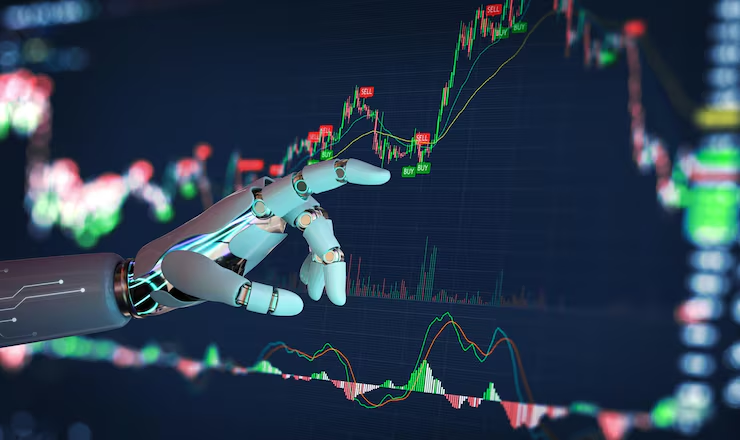
Financial markets can move quickly, making it difficult for traders and investors to keep track of price movements, market trends and large amounts of trading data. This is where AI trading signals can support a more organised approach to market research. By processing market information and identifying patterns, AI-based tools can help users review potential opportunities more efficiently.
AI trading signals are generally generated by analysing factors such as historical price data, market trends, technical indicators and trading activity. Rather than relying on a single indicator, an AI-powered system can assess multiple data points and present them in a format that is easier to review. These signals can be useful as part of research, but they should not be treated as guaranteed predictions of market performance.
How AI Trading Signals Can Help With Research
Traditional market research can require traders to examine charts, indicators and financial information manually. AI-powered tools can assist by reducing the amount of repetitive analysis involved.
Some potential uses include:
- Identifying notable price movements
- Tracking market trends across different assets
- Analysing historical market patterns
- Highlighting technical indicators
- Supporting faster comparison of market information
- Helping traders organise research before making decisions
- Monitoring selected markets more consistently
The main advantage is not simply speed. AI tools can provide a structured way to review information, allowing users to spend more time evaluating the wider market context.
Understanding AI Trading Platforms in India
The growing interest in artificial intelligence has also influenced the way traders access market-analysis tools. An AI trading platform India users can access may combine automated analysis, market data and technical indicators within one interface.
However, choosing a platform requires more than looking at whether it uses AI. Users should consider the quality of market data, available features, transparency around how signals are generated, ease of use and the level of control provided over trading decisions.
A useful platform should support research rather than encourage users to blindly follow automated recommendations.
What Makes an AI Trading App Useful?
Mobile trading has made it easier to monitor markets throughout the day. For someone searching for the best AI trading app, the right choice will depend on individual requirements rather than a single feature.
Important factors to consider include:
- User-friendly interface
- Reliable and timely market information
- Clear presentation of trading signals
- Technical-analysis tools
- Customisable alerts
- Portfolio or watchlist features
- Transparent pricing
- Appropriate security measures
- Clear information about the limitations of AI-generated signals
It is also worth checking whether the app is designed primarily for research and analysis or whether it offers automated trading functionality.
AI Signals Should Support, Not Replace, Research
One of the most important points about AI trading signals is that they should be viewed as a research aid. Markets are influenced by numerous factors, including economic announcements, company developments, investor sentiment and unexpected global events. An algorithm cannot eliminate these uncertainties.
A signal may indicate a particular market pattern, but that does not mean the expected outcome will necessarily occur. Traders should therefore consider additional information before making investment decisions.
Combining AI-generated insights with fundamental research, technical analysis and appropriate risk management can provide a more balanced approach.
The Role of Human Decision-Making
Artificial intelligence can process significant amounts of information, but human judgement remains important. Traders need to understand why a signal has been generated and whether it fits their investment objectives and risk tolerance.
Instead of asking an AI tool to make every decision, users can incorporate its analysis into their existing research process. This approach allows technology to handle data-heavy tasks while the trader remains responsible for evaluating the information.
Frequently Asked Questions
What are AI trading signals?
AI trading signals are market insights generated with the help of artificial intelligence and data-analysis techniques. They may identify patterns, trends or technical conditions that traders can consider during their research.
Are AI trading signals always accurate?
No. AI-generated signals are not guaranteed to predict future market movements. Market conditions can change rapidly, and unexpected events can affect prices.
How can an AI trading platform help traders?
An AI trading platform can bring together market data, analytical tools, indicators and signals in one place. This can make market research more organised and efficient.
What should I look for in an AI trading app?
Look for clear information, reliable market data, useful analytical features, transparent pricing and appropriate security. It is also important to understand how the app generates and presents its signals.
Is AI trading suitable for beginners?
AI tools can make market information easier to analyse, but beginners should understand the risks of trading before relying on any technology. Learning basic market principles and risk management remains important.
Making AI Part of a Smarter Research Process
AI trading technology can make market research more structured by helping users process information, identify patterns and monitor market activity. AI trading signals can be particularly useful when they are treated as one part of a wider research process rather than as automatic instructions to buy or sell.
As AI-powered financial tools continue to develop, traders can benefit from using technology alongside their own analysis and sound risk-management practices. Platforms such as Fenzy AI can help users explore AI-driven market analysis while keeping informed decision-making at the centre of the process.
Trading and investing involve financial risk. AI-generated signals are analytical tools and should not be considered guaranteed investment advice or a promise of returns.
