

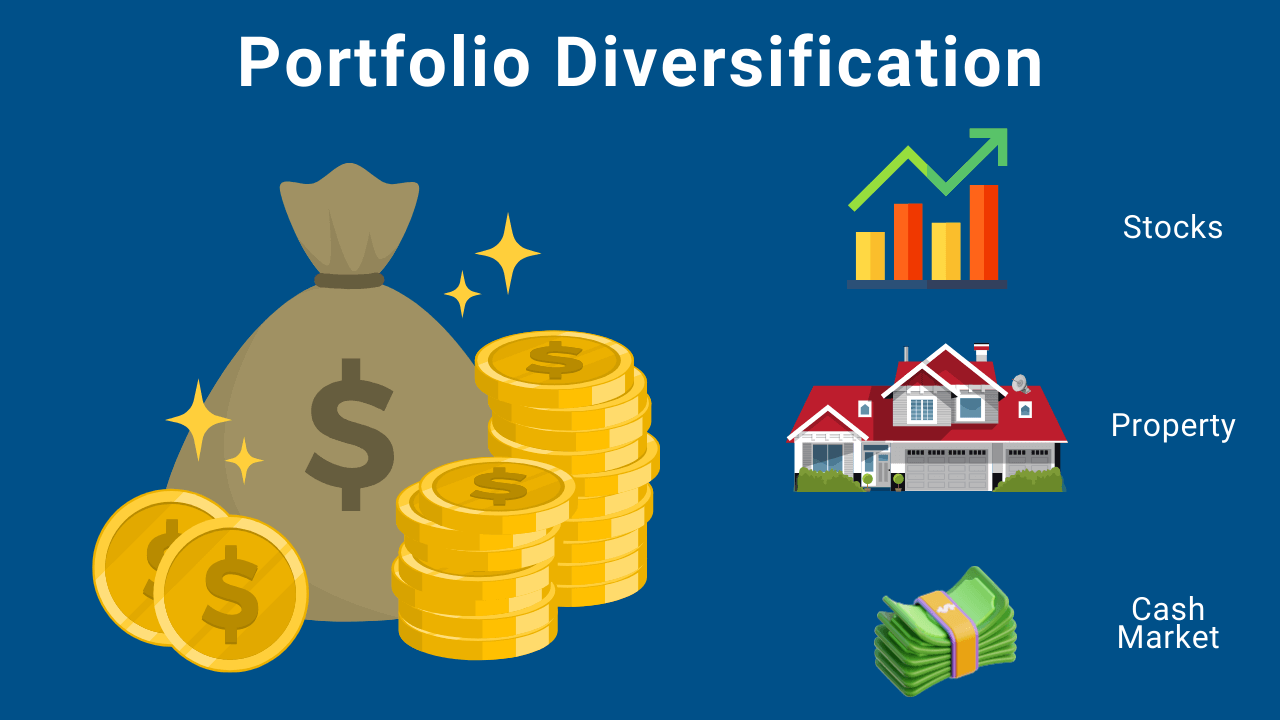
Building long-term wealth is not just about choosing investments that offer high returns. It is also about managing risk, protecting your capital from unnecessary exposure, and creating a portfolio that can withstand changing market conditions. This is where portfolio diversification becomes important.
For beginners, investing in different assets may seem complicated, especially when there are numerous options, including stocks, mutual funds, bonds, gold, and fixed deposits. However, diversification does not require a large investment or an extensive understanding of financial markets. It starts with understanding how different investments work together and how they align with your financial goals.
A well-diversified portfolio can help reduce the impact of poor performance in a single investment and provide a more balanced approach to long-term wealth creation. While diversification cannot eliminate investment risk or guarantee profits, it can help investors avoid relying too heavily on one asset, sector, or market.
What Is Portfolio Diversification?
Portfolio diversification is an investment strategy that involves spreading money across different assets, industries, sectors, or investment categories instead of concentrating it in a single investment.
The main objective is to reduce the impact of losses from any one investment on the overall portfolio. Different assets respond differently to economic conditions, interest-rate changes, inflation, and market movements. When one investment performs poorly, another may remain stable or perform better, helping balance the portfolio.
For example, an investor who puts all their money into shares of a single company faces significant company-specific risk. If that company experiences declining sales or financial difficulties, the entire investment could suffer.
However, an investor who holds a combination of diversified equity mutual funds, fixed deposits, bonds, and gold spreads their exposure across different types of assets. This approach reduces dependence on the performance of a single investment, although the portfolio can still experience losses during broad market downturns.
Portfolio diversification is not about owning as many investments as possible. It is about choosing investments that serve different purposes and do not all carry the same risks.
Zomint wealth advisor, can help you build a diversified portfolio that fits your goals and risk profile.
Why Is Portfolio Diversification Important?
Diversification plays an important role in helping investors manage risk while pursuing long-term financial goals. Its benefits extend beyond simply holding different investments.
1. Reduces Concentration Risk
Concentration risk arises when too much of a portfolio depends on one company, sector, asset class, or investment strategy.
For instance, an investor who holds shares in several banking companies may appear diversified because they own multiple stocks. However, all these investments belong to the same sector and may be affected by similar economic developments. Spreading investments across different sectors and asset classes can help reduce this concentration risk.
2. Helps Manage Market Volatility
Different asset classes do not always move in the same direction or by the same amount. Equities may experience sharp fluctuations, while certain fixed-income investments may offer more predictable returns.
Holding a combination of assets can help moderate the overall portfolio’s fluctuations, depending on their allocation and how they respond to market conditions. However, diversification does not guarantee protection against losses, particularly when several asset classes decline at the same time.
3. Supports Long-Term Wealth Creation
Long-term wealth creation requires balancing growth opportunities with the ability to withstand periods of market uncertainty.
Equity investments may provide growth potential over extended periods, while fixed-income investments can offer greater stability and help meet planned financial obligations. Other assets, such as gold, may serve as an additional source of diversification. Combining investments with different characteristics can help investors pursue growth without depending entirely on one source of returns.
4. Encourages Disciplined Investing
A diversified portfolio can encourage investors to follow a planned investment strategy instead of reacting emotionally to every market movement.
When one asset class underperforms, investors with a suitable allocation can review their portfolio against their original goals rather than making sudden decisions based on short-term market trends. Regular portfolio reviews and rebalancing can help maintain this discipline over time.
Key Asset Classes to Consider for a Diversified Portfolio
Before building a portfolio, beginners should understand the major asset classes and the role each can play in an investment strategy.
1. Equity Investments
Equities represent ownership in companies and can be accessed directly through stocks or indirectly through equity mutual funds and exchange-traded funds (ETFs).
Equity investments offer the potential for capital appreciation as businesses grow and generate higher earnings. However, their prices can fluctuate significantly because of economic developments, company performance, market sentiment, and global events. For beginners, diversified equity mutual funds may provide exposure to multiple companies without requiring them to select individual stocks. Equities generally suit investors with longer investment horizons and the financial capacity to tolerate market fluctuations.
2. Fixed-Income Investments
Fixed-income investments include government securities, bonds, and certain debt instruments. Bank fixed deposits are also commonly used for the stability and predictability they can provide.
These investments can serve as a counterbalance to equity exposure, depending on their underlying risks and terms. They may also help investors plan for financial goals that require a more predictable pool of money. However, not all fixed-income investments are risk-free. Bonds and debt mutual funds can be affected by interest-rate changes, credit risk, and liquidity conditions.
3. Gold
Gold is another asset that investors may consider when diversifying their portfolios. It can behave differently from equities and bonds under certain economic conditions, including periods of uncertainty or concerns about inflation.
Investors can gain exposure to gold through physical gold, gold ETFs, and other eligible gold-linked investment products. However, gold prices can fluctuate, and gold does not generate interest or dividends. Its role in a portfolio should therefore be based on the investor’s overall strategy rather than expectations of consistently rising prices.
4. Cash and Liquid Investments
Cash, savings accounts, and suitable liquid instruments help investors meet immediate expenses and manage emergencies without being forced to sell long-term investments at an unfavourable time.
An emergency fund is particularly important for beginners because unexpected expenses can otherwise disrupt an investment plan. The amount held in cash or liquid investments depends on income stability, monthly expenses, existing financial obligations, and access to other sources of funds.
Portfolio Diversification Strategies for Beginners
Building a diversified portfolio becomes easier when investors follow a structured approach instead of choosing investments randomly.
1. Diversify Across Asset Classes
The first step is to spread investments across asset classes with different risk and return characteristics.
For example, a portfolio could include equity mutual funds for long-term growth, fixed deposits for predictable returns, and a modest allocation to gold for additional diversification. The appropriate allocation depends on factors such as age, income, financial goals, investment horizon, and risk tolerance. Investors should avoid selecting asset allocations simply because a particular combination is popular.
2. Diversify Within Each Asset Class
Diversification should not stop at choosing different asset classes. Investors should also consider how their money is distributed within each category.
For equity investments, this may involve spreading exposure across different sectors, company sizes, and investment styles. For fixed-income investments, it may involve considering the issuer, credit quality, and maturity profile. Holding several mutual funds does not automatically create diversification if they own many of the same companies or follow similar strategies.
3. Match Investments to Your Financial Goals
Every investment should serve a purpose within the broader financial plan.
Short-term goals generally require greater emphasis on capital stability and liquidity, while long-term goals may allow investors to take more market risk in pursuit of higher potential returns. Aligning investments with specific goals helps prevent short-term needs from interfering with long-term wealth creation.
4. Invest Regularly Through Systematic Investment Plans
A Systematic Investment Plan (SIP) allows investors to invest a fixed amount in a mutual fund at regular intervals, such as monthly.
For beginners, SIPs can make investing more manageable because they help establish a consistent investment habit without requiring a large initial lump sum. Regular investing also means purchasing units at different prices over time (rupee-cost averaging), though it does not guarantee profits or prevent losses.
5. Rebalance Your Portfolio Periodically
Over time, different investments may generate different returns, causing the portfolio’s allocation to drift away from its original plan.
For example, if equities grow faster than fixed-income investments, the equity portion may become larger than intended. Rebalancing involves bringing the portfolio back towards its target allocation by directing new contributions or adjusting holdings. A periodic review (annually or when allocations drift significantly) helps maintain the intended risk level.
Example of a Diversified Portfolio for Beginners
Consider an investor with ₹1,00,000 who wants to understand how diversification might work in practice. The following table illustrates a moderately balanced allocation:
| Asset Class | Illustrative Allocation | Amount |
| Equity mutual funds | 60% | ₹60,000 |
| Fixed deposits or suitable fixed-income investments | 25% | ₹25,000 |
| Gold | 10% | ₹10,000 |
| Cash or liquid savings | 5% | ₹5,000 |
| Total | 100% | ₹1,00,000 |
Common Portfolio Diversification Mistakes to Avoid
- Holding Too Many Similar Investments: Investing in multiple mutual funds that follow nearly identical strategies creates unnecessary complexity.
- Chasing Past Performance: Choosing investments solely because they delivered high returns recently can lead to buying assets after a market peak.
- Ignoring Investment Costs and Taxes: Expense ratios, transaction costs, exit loads, and applicable taxes directly reduce final returns.
- Taking More Risk Than Necessary: Portfolios heavily weighted toward equities are inappropriate for capital needed in the short term.
- Failing to Review the Portfolio: Life stages, income, and financial goals change over time, requiring periodic strategy adjustments.
How to Get Started With Portfolio Diversification
- Define your financial goals: Identify what you are investing for and when you will need the money.
- Build an emergency fund: Set aside accessible savings for unexpected expenses before taking substantial investment risk.
- Assess your risk tolerance: Consider how much volatility you can financially and emotionally withstand.
- Choose an appropriate asset allocation: Distribute investments across suitable asset classes according to your goals and time horizon.
- Review investments periodically: Check performance, overlapping holdings, costs, and allocation drift rather than reacting to short-term market movements.
Ultimately, diversification cannot eliminate market risk or guarantee returns, but a thoughtful and disciplined strategy can help investors navigate uncertainty and stay focused on their long-term financial objectives.
