

What Is ICSI?
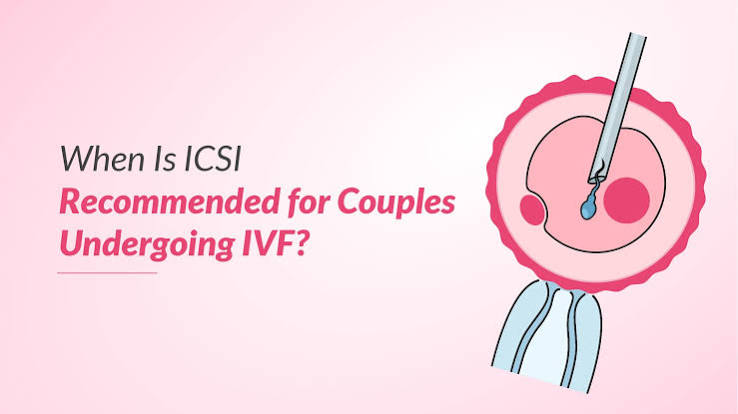
Intracytoplasmic sperm injection (ICSI) is a fertilisation technique used during IVF in which a single sperm is injected directly into an egg using a specialised needle.
With conventional IVF, prepared sperm are placed together with the eggs in a laboratory dish and fertilisation occurs without directly injecting a sperm into the egg.
ICSI bypasses some of the steps involved in natural sperm-egg interaction. It can therefore be particularly useful when there is a concern that sperm may have difficulty fertilising an egg on its own.
ICSI is now widely used in assisted reproductive treatment, but it is not automatically required for every IVF cycle. Current evidence does not support routine ICSI for patients without male-factor infertility or a previous fertilisation problem.
How Is ICSI Different From Conventional IVF?
The main difference is how the sperm and egg are brought together.
Conventional IVF
With conventional IVF:
- Eggs are retrieved from the ovaries.
- Sperm are prepared in the laboratory.
- Sperm are placed together with the eggs.
- Fertilisation is allowed to occur naturally in the laboratory environment.
- Fertilised eggs are cultured into embryos.
The sperm must successfully interact with and penetrate the egg.
IVF With ICSI
With ICSI:
- Eggs are retrieved.
- Sperm are prepared.
- An embryologist selects an individual sperm.
- The sperm is injected directly into the egg.
- The fertilised egg is monitored for embryo development.
The procedure therefore bypasses the need for the sperm to penetrate the egg independently.
When Is ICSI Usually Recommended?
The strongest indications for ICSI relate to male-factor infertility and previous fertilisation problems.
A fertility doctor may recommend ICSI when:
- Sperm quality is significantly impaired
- Very few sperm are available
- Sperm have difficulty moving
- Sperm need to be surgically retrieved
- Previous IVF resulted in poor or complete fertilisation failure
- Certain specialised fertility procedures are being performed
The decision depends on the characteristics of the sperm, previous treatment history and the overall fertility assessment.
1. Significant Male-Factor Infertility
One of the most established reasons for using ICSI is male-factor infertility.
Male fertility problems may involve:
- Low sperm concentration
- Poor sperm motility
- Abnormal sperm morphology
- Very low numbers of usable sperm
- Azoospermia
- Problems affecting sperm function
When there are very few sperm or sperm have difficulty fertilising an egg, conventional IVF may have a lower likelihood of successful fertilisation.
ICSI allows the embryologist to select an individual sperm and inject it directly into the egg.
This does not guarantee fertilisation or embryo development, but it can help overcome certain sperm-related barriers to fertilisation.
2. Very Low Sperm Count
A very low sperm count can make conventional IVF more difficult because fewer sperm are available to interact with the retrieved eggs.
ICSI may be considered because only one sperm is required for each mature egg being injected.
The fertility team will assess the semen analysis and determine whether conventional IVF is likely to provide a reasonable chance of fertilisation.
3. Poor Sperm Motility
Sperm need to move effectively to reach and interact with an egg during conventional fertilisation.
When sperm motility is significantly impaired, fewer sperm may be able to participate effectively in fertilisation.
ICSI bypasses the need for the sperm to swim towards the egg because the selected sperm is introduced directly into the egg.
4. Previous IVF With Low or Failed Fertilisation
ICSI may be particularly useful when a previous IVF cycle resulted in unexpectedly low fertilisation or complete fertilisation failure.
For example, a couple may have undergone conventional IVF where several mature eggs were retrieved but few or none fertilised.
A subsequent cycle using ICSI may reduce the likelihood of experiencing the same fertilisation problem.
Research has found that ICSI can substantially increase fertilisation rates in subsequent cycles after previous failed or very low fertilisation with conventional insemination.
Importantly, there is no universally agreed numerical threshold that defines “low fertilisation” for the purpose of deciding whether ICSI should be used in every future cycle. The previous IVF outcome needs to be reviewed in context.
5. Surgically Retrieved Sperm
Some men have sperm that cannot be obtained through ejaculation.
This can occur with certain forms of azoospermia or problems affecting sperm transport.
Sperm may sometimes be retrieved directly from:
- The epididymis
- The testicle
When surgically retrieved sperm are used for IVF, ICSI is commonly considered because the number of available sperm may be limited and the sperm may not have the same characteristics as ejaculated sperm.
6. Certain Problems With Sperm Function
A semen analysis provides useful information about:
- Sperm concentration
- Motility
- Morphology
However, sperm function involves more than these measurements.
In some cases, sperm may appear relatively normal under laboratory testing but still have difficulty fertilising an egg.
If there has been previous fertilisation failure despite apparently adequate semen parameters, ICSI may be considered during a subsequent IVF cycle.
Is ICSI Recommended for Every IVF Patient?
No.
Routine ICSI for every IVF cycle is not generally recommended when there is no male-factor infertility or previous fertilisation problem.
The reason is that ICSI is designed primarily to address problems with fertilisation. If conventional IVF is already expected to provide a reasonable chance of fertilisation, injecting every egg does not necessarily improve the ultimate chance of having a baby.
Current evidence indicates that routine ICSI in patients without male-factor infertility does not improve live-birth outcomes compared with conventional IVF.
Can ICSI Be Used for Unexplained Infertility?
It can be used in some IVF cycles for unexplained infertility, but it is not routinely recommended solely because infertility is unexplained.
Some studies have found higher fertilisation rates with ICSI in unexplained infertility, but this has not translated into a demonstrated improvement in live-birth outcomes.
Therefore, unexplained infertility alone is not considered a strong reason to automatically use ICSI for every egg.
The decision may instead depend on:
- Previous fertilisation results
- Sperm characteristics
- Number of eggs retrieved
- Previous IVF history
- Laboratory considerations
Is ICSI Recommended When Only a Few Eggs Are Retrieved?
Not automatically.
It may seem logical that ICSI would be preferable when only a small number of eggs are available because each egg becomes particularly valuable.
However, current evidence does not show that ICSI improves live-birth outcomes simply because a patient has a low number of retrieved eggs or diminished ovarian reserve.
If only a few eggs are retrieved, the fertility specialist may consider the patient’s entire clinical picture rather than choosing ICSI based on egg number alone.
Is ICSI Recommended Because of Advanced Maternal Age?
Advanced maternal age alone is not a routine indication for ICSI.
Egg quality and quantity generally decline with age, and older patients may have different IVF outcomes. However, current evidence does not show that routinely using ICSI simply because a woman is older improves live-birth outcomes.
If an older patient also has a male-factor issue or a history of poor fertilisation, ICSI may still be appropriate for those specific reasons.
Is ICSI Necessary for Pre-Implantation Genetic Testing?
The answer depends on the type of genetic testing.
PGT-A
Pre-implantation genetic testing for aneuploidy, or PGT-A, examines embryos for abnormalities in chromosome number.
Current evidence does not show that ICSI improves live-birth rates, embryo euploidy rates or the number of embryos available when PGT-A is performed in patients without male-factor infertility.
Therefore, PGT-A alone is not generally considered a reason to routinely use ICSI.
PGT-M
PGT-M is used when there is a known genetic condition caused by a specific gene mutation.
ICSI may be considered in PGT-M cycles because using a single sperm to fertilise the egg can reduce the possibility of contamination from other sperm or surrounding cells, which may affect the accuracy of genetic testing.
The appropriate approach depends on the genetic condition, laboratory method and treatment plan.
What About Frozen Eggs?
ICSI is commonly used when fertilising previously cryopreserved eggs.
Egg freezing involves removing and cryopreserving the eggs, often after removing surrounding cells.
After thawing, ICSI is generally the established method used to fertilise these eggs because of the characteristics of the thawed oocyte and the way the eggs are prepared for fertilisation.
This differs from fresh eggs, where conventional IVF may be appropriate when there is no male-factor infertility or previous fertilisation problem.
What About In-Vitro Maturation of Eggs?
In-vitro maturation (IVM) involves collecting immature eggs and maturing them in the laboratory.
ICSI has often been used to fertilise eggs that have undergone IVM because the maturation process can affect the egg’s outer structure and fertilisation characteristics.
However, evidence comparing conventional IVF and ICSI for IVM eggs remains limited, and the relationship between higher fertilisation rates and actual pregnancy or live-birth outcomes is not straightforward.
This is a specialised situation and should be assessed by the fertility team.
Does ICSI Improve Fertilisation Rates?
ICSI can improve fertilisation rates in certain circumstances, particularly when sperm-related problems or previous fertilisation failure are present.
However, higher fertilisation does not automatically mean a higher chance of having a baby.
This distinction is important because IVF treatment has several stages:
Egg retrieval → fertilisation → embryo development → implantation → pregnancy → live birth
An intervention that improves one stage does not necessarily improve the final outcome.
For patients without male-factor infertility, studies have not shown that routine ICSI consistently improves live-birth rates.
Does ICSI Improve IVF Success Rates?
Not necessarily.
The purpose of ICSI is primarily to help achieve fertilisation when conventional fertilisation may be difficult.
It does not:
- Improve egg quality
- Improve embryo quality independently of fertilisation
- Correct age-related decline in fertility
- Treat blocked fallopian tubes
- Treat endometriosis
- Guarantee implantation
When there is no clear indication for ICSI, routinely injecting eggs does not appear to improve live-birth outcomes.
What Happens During IVF With ICSI?
The overall IVF cycle is similar to conventional IVF until the eggs are retrieved.
Ovarian Stimulation
Medication is used to encourage multiple follicles to develop.
The ovaries are monitored using ultrasound and, where appropriate, blood tests.
Egg Retrieval
The eggs are collected using an ultrasound-guided procedure.
The embryology laboratory then assesses the retrieved eggs.
Sperm Preparation
A semen sample is prepared to identify suitable sperm.
If ejaculated sperm are not available, surgically retrieved or previously frozen sperm may be used in selected cases.
Sperm Injection
For each mature egg selected for ICSI, an embryologist uses a specialised microneedle to inject one sperm directly into the egg.
Fertilisation Assessment
The eggs are subsequently examined to determine whether normal fertilisation has occurred.
Embryo Culture
Fertilised eggs are cultured in the laboratory.
Embryos may be monitored for several days before transfer or cryopreservation.
Embryo Transfer
A suitable embryo may be transferred into the uterus during a fresh transfer or frozen for later use.
What Happens If ICSI Does Not Result in Fertilisation?
ICSI does not guarantee that an egg will fertilise.
An egg may fail to fertilise because of:
- Egg quality
- Sperm factors
- Egg activation problems
- Other biological factors
The fertility team may review the fertilisation outcome and consider whether further treatment or investigation is appropriate.
Are There Risks Associated With ICSI?
ICSI is an established fertility procedure, but it is still an invasive laboratory technique and is not completely risk-free.
Potential considerations include:
- An egg may be damaged during injection
- Not every injected egg will fertilise
- Embryo development may not occur normally
- The procedure adds laboratory cost
- There may be additional considerations regarding offspring outcomes
Current evidence suggests that ICSI has been associated with a small increase in certain adverse outcomes in some studies, although it is difficult to separate the effects of ICSI itself from the underlying infertility, particularly male-factor infertility. The extent to which these risks apply to ICSI used for non-male-factor indications remains uncertain.
This is one reason routine ICSI without a clear indication is not generally recommended.
Is ICSI More Expensive Than Conventional IVF?
Usually, yes.
ICSI requires additional embryology laboratory work because each mature egg selected for treatment is individually injected with a sperm.
The exact additional cost varies between fertility centres.
Patients should ask whether ICSI is included in the quoted IVF package or charged separately.
Cost should be considered alongside the medical reason for recommending ICSI rather than being the sole factor in deciding whether to use it.
How Does a Fertility Specialist Decide Whether ICSI Is Needed?
The decision may take into account:
Sperm Quality
Significant abnormalities in sperm concentration, motility or other characteristics may favour ICSI.
Previous Fertilisation
Previous failed or very low fertilisation with conventional IVF is an important consideration.
Source of Sperm
Surgically retrieved sperm may make ICSI more appropriate.
Previous IVF History
The outcome of previous treatment can provide useful information when planning the next cycle.
Type of IVF Treatment
Specialised treatments such as PGT-M, IVM or the fertilisation of cryopreserved eggs may influence the choice.
Number of Eggs
A low number of retrieved eggs alone is not considered a sufficient reason to routinely use ICSI, but it may form part of the overall discussion.
Patient Preferences
The potential benefits, limitations, cost and uncertainties should be discussed before treatment.
ICSI in Singapore: What Should Patients Know?
ICSI is available as part of assisted reproductive treatment in Singapore.
Patients may undergo conventional IVF, IVF with ICSI or another assisted reproductive approach depending on their fertility assessment.
Current clinical information from Singapore fertility services identifies poor sperm quality and previous fertilisation difficulties as key situations in which ICSI may be recommended.
The medical suitability of ICSI is separate from eligibility for government co-funding. Patients should also check the current treatment costs, funding criteria and applicable MediSave arrangements before starting treatment.
ICSI is a specialised fertilisation technique used during IVF in which a single sperm is injected directly into an egg.
It is most clearly indicated when there is significant male-factor infertility, such as very low sperm numbers or poor sperm motility, or when a previous IVF cycle resulted in low or complete fertilisation failure. It may also be considered when surgically retrieved sperm are being used and in selected specialised situations such as PGT-M or fertilisation of previously cryopreserved eggs.
However, ICSI is not automatically necessary for every IVF cycle. Current evidence does not support routine ICSI solely because of unexplained infertility, diminished ovarian reserve, a low number of retrieved eggs, advanced maternal age or PGT-A when there is no male-factor infertility or previous fertilisation problem.
The key consideration is therefore not whether ICSI is a more advanced form of IVF, but whether it addresses a specific fertilisation concern in the individual patient.
A fertility specialist can review the couple’s medical history, semen analysis, previous IVF outcomes and treatment goals to determine whether conventional IVF or IVF with ICSI is more appropriate.
This article is for general information only and should not replace medical advice from a qualified healthcare professional.
