

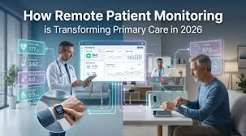
Managing chronic conditions such as diabetes, hypertension, heart disease, and respiratory disorders often requires regular monitoring and ongoing communication between patients and healthcare professionals. Traditional care models may depend on frequent clinic visits, making it difficult for providers to monitor patients between appointments. Remote patient monitoring (RPM) applications offer another approach by helping patients record health measurements and share relevant information with their care teams.
A specialized healthcare mobile app development company can help healthcare organizations create applications that connect patients, wearable devices, monitoring equipment, and clinical systems. These solutions can support continuous communication, organize health data, and help providers identify when a patient may need additional attention.
What Is a Remote Patient Monitoring Application?
A remote patient monitoring application allows patients to collect and share health information outside a traditional medical facility. Depending on the application, this information may include blood pressure readings, blood glucose measurements, heart rate, oxygen saturation, weight, or other relevant health indicators.
Patients can enter readings manually or transmit them from compatible medical devices. The application then presents the information in a structured format that authorized healthcare professionals can review.
For example, a patient managing hypertension may use a connected blood pressure monitor to record daily readings. The application can display measurement history and send the information to a clinical dashboard, allowing the care team to review trends according to the patient’s monitoring plan.
RPM applications do not independently guarantee better health outcomes. Their effectiveness depends on appropriate clinical protocols, reliable measurements, patient participation, and timely responses from healthcare professionals.
Key Features of a Remote Patient Monitoring App
1. Connected Medical Device Integration
Device integration is one of the most important components of an RPM solution. Depending on the equipment, an application may connect through Bluetooth, Wi-Fi, or a device manufacturer’s API.
Supported devices can include blood pressure monitors, glucose meters, pulse oximeters, digital weighing scales, and selected wearable sensors.
The application should validate incoming measurements, identify missing or incomplete data, and display readings with the correct units and timestamps. Developers must also account for device compatibility, connectivity interruptions, and differences in measurement quality.
2. Personalized Health Dashboards
A patient dashboard can display health measurements in charts, summaries, and historical views. Patients may use these features to understand their monitoring routines and prepare for consultations.
Healthcare professionals can use a separate dashboard to review information from multiple patients, depending on their permissions and clinical responsibilities.
For example, a diabetes management application might display glucose readings alongside timestamps and patient-entered notes. This information can help support clinical discussions without replacing professional assessment.
3. Automated Alerts and Notifications
RPM applications can generate notifications when a measurement meets predefined criteria established by the healthcare provider.
For instance, a monitoring program may flag a blood pressure reading that falls outside a patient’s individualized parameters. The system can notify the designated care team or prompt the patient to follow their prescribed instructions.
Alert systems need clear escalation procedures, safeguards against excessive notifications, and defined responsibilities for reviewing incoming information. Patients should also understand that an application is not necessarily monitored continuously and should not rely on it for emergencies.
4. Medication and Care Plan Tracking
Patients managing chronic conditions may need to follow medication schedules, dietary guidance, exercise recommendations, and regular monitoring routines.
An RPM application can provide reminders, display care plans, and allow patients to record whether they have completed selected activities. These features may help healthcare teams understand adherence challenges during follow-up appointments.
Medication information should come from an authorized source, and changes to treatment should be directed by qualified healthcare professionals.
5. Secure Communication With Healthcare Providers
Secure messaging allows patients to ask nonurgent questions, share relevant updates, and communicate with their care teams between scheduled visits.
The application may also support follow-up appointment requests, educational resources, and notifications about care plan updates.
Communication features should clearly explain expected response times and provide instructions for urgent situations. This helps prevent patients from assuming that every message receives immediate clinical attention.
How RPM Apps Help Manage Different Medical Conditions
Remote monitoring requirements vary by condition, so the application should be designed around the needs of its intended patient population.
- Diabetes management: Applications can collect glucose readings, organize measurement histories, and support communication with diabetes care teams.
- Hypertension: Patients can record blood pressure readings at home and share trends with authorized providers.
- Heart failure: Selected monitoring programs may track weight, symptoms, and other measurements according to a clinician’s care plan.
- Respiratory conditions: Compatible devices can provide oxygen saturation or other measurements when included in an appropriate monitoring protocol.
- Postoperative recovery: Applications can help patients report symptoms, complete follow-up questionnaires, and stay informed about recovery instructions.
The appropriate measurements, alert thresholds, and clinical responses must be established for each program rather than applying the same rules to every patient.
Integrating RPM Apps With Electronic Health Records
Remote monitoring becomes more useful when relevant information can be incorporated into established healthcare workflows.
An application may need to exchange patient data with an electronic health record (EHR), patient portal, care management platform, or clinical dashboard. Depending on the systems involved, integration may use FHIR APIs, HL7 interfaces, or vendor-specific services.
A well-planned integration should map patient identities correctly, preserve measurement timestamps, handle duplicate records, and communicate errors when data transmission fails.
Healthcare organizations should also determine which measurements need to become part of the formal medical record, who can access the information, and how clinicians will review it. These decisions are as important as the technical connection itself.
Security and Privacy Requirements for RPM Software
Remote monitoring applications process sensitive information, often across multiple devices and systems. Security planning should cover the complete data journey, from the patient’s device to the application, cloud infrastructure, and healthcare provider.
Important safeguards include encryption in transit and at rest, secure authentication, role-based permissions, audit logs, appropriate session management, and controlled access to APIs.
For U.S. healthcare organizations, HIPAA requirements may apply depending on the entities involved and how protected health information is handled. Organizations should assess vendor responsibilities, applicable agreements, retention policies, and incident response procedures before deployment.
Regular security testing, software updates, and monitoring are also necessary to protect the application as its features and integrations evolve.
Selecting a Mobile App Development Company Dallas for Healthcare Projects
Healthcare organizations considering a mobile app development company Dallas should evaluate whether the development team can address the technical and operational requirements of remote patient monitoring.
Look for experience with mobile application development, connected devices, secure cloud systems, healthcare data integration, and dashboards for clinical users. Ask how the team will handle intermittent connectivity, unreliable device readings, patient authentication, and alert escalation.
It is also important to discuss the project scope before development begins. An initial version might include device connectivity, patient registration, measurement history, and a basic clinical dashboard. More advanced capabilities, such as EHR integration, automated alerts, and predictive analytics, can be planned according to clinical requirements and available resources.
Appicoders develops mobile applications and software solutions based on business and operational needs. Healthcare organizations exploring an RPM platform can discuss their intended patient population, device requirements, integrations, security considerations, and implementation goals with the Appicoders team.
Conclusion
Remote patient monitoring applications provide healthcare organizations with another way to collect health information, maintain communication, and support chronic disease management beyond traditional clinic visits. Features such as device integration, patient dashboards, automated alerts, and EHR connectivity can help create a more coordinated monitoring process.
Successful implementation requires careful clinical planning, reliable technology, appropriate privacy protections, and clear procedures for responding to patient data.
Looking to build a remote patient monitoring application? Contact Appicoders to discuss your healthcare software requirements, connected medical devices, and integration plans.
