

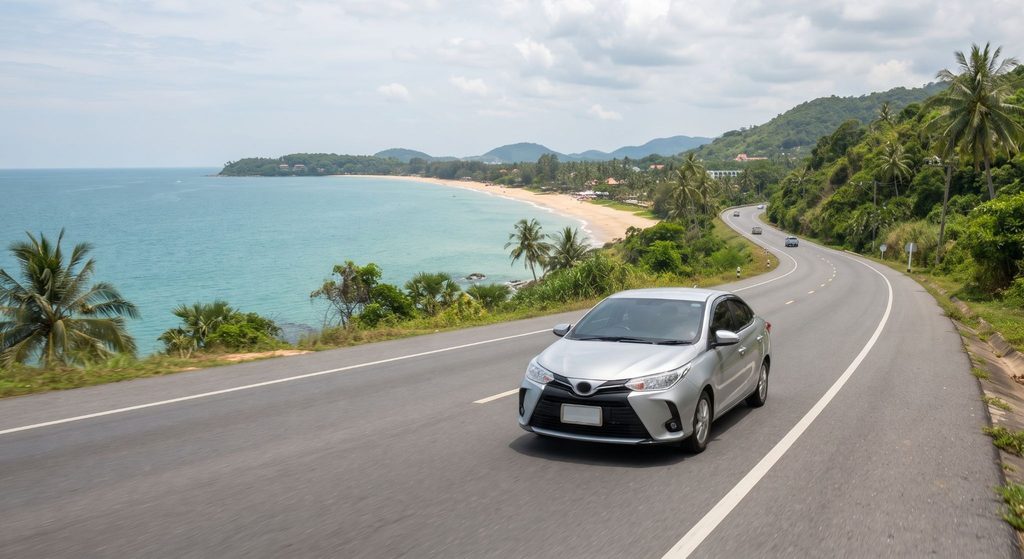
Exploring Thailand by rental car gives travelers complete freedom to link coastal towns, quiet coves, and lively seaside resorts at their own pace. Drivers can set their own schedules, stop at local seafood stalls along the highway, and reach beaches that sit far outside crowded bus routes. From the eastern Gulf of Thailand down to the western Andaman coast, a well-planned self-drive itinerary opens up hundreds of miles of scenic shoreline.
Why Self-Drive Travel Suits Thailand Coastal Routes
Driving through Thailand allows visitors to combine multiple coastal stops in a single trip without waiting on fixed train or bus timetables. Modern highways, such as Motorway 7 and Phetkasem Road, connect major cities with popular seaside provinces in a matter of hours. Travelers carrying beach gear, luggage, or traveling with family appreciate having direct door-to-door transport between hotels, viewpoints, and shorefront restaurants.
Highway Conditions and Navigation Tips
Primary highways and provincial roads leading to major beach towns are generally paved, well-marked, and equipped with frequent petrol stations and convenience stores. Drivers should still allow extra buffer time during holidays, rainy spells, and evening rush hours near urban centers. Keeping offline maps downloaded, carrying physical copies of key documents, and checking local parking rules near busy promenades helps keep every leg of the journey smooth.
Planning Seasonal Weather Across Both Coasts
Thailand experiences distinct weather patterns on its Gulf of Thailand and Andaman Sea coasts throughout the year. Many road trippers favor the cooler, drier months from November through February when pleasant temperatures and calmer seas benefit coastal driving. Checking regional forecasts ahead of departure ensures drivers pick shorelines with clear skies and comfortable swimming conditions.
Top Beach Destinations to Reach by Rental Car in 2027
The comparison table below highlights Pattaya first, followed by ten prominent beach destinations across Thailand that fit well into a rental car itinerary. Each entry includes a detailed overview of the coastal setting and driving appeal.
| Rank | Destination | Overview (100-Word Description) |
| 1 | Pattaya | Pattaya sits along the eastern Gulf of Thailand and serves as an accessible coastal hub reachable via Motorway 7 from Bangkok. Drivers find a lively mix of golden beachfront promenades, quieter neighboring coves such as Jomtien and Naklua, waterfront dining, and easy day-trip routes toward nearby piers and viewpoints. Having a rental car makes it simple to move between bustling central sands and calmer stretches up or down the coast. Visitors can pair beach relaxation with golf courses, night markets, and coastal highways, making Pattaya a practical base for exploring eastern Thailand by road in 2027. |
| 2 | Hua Hin | Hua Hin stretches along the Gulf of Thailand south of Bangkok via Rama II and Phetkasem Road, offering a relaxed royal resort atmosphere. Wide sandy beaches, gentle surf, and long-standing seaside charm appeal to families, couples, and road trippers seeking a slower pace. Drivers can easily explore nearby viewpoints, night markets, national parks, and quiet coastal pockets along the same highway corridor. With straightforward roads, ample hotel parking, and a welcoming blend of traditional fishing heritage and modern comforts, Hua Hin remains a staple stop on southern Gulf driving itineraries. |
| 3 | Cha-am | Located just north of Hua Hin along Phetkasem Road, Cha-am provides a laid-back beach escape popular with domestic and international drivers alike. The long shoreline features casuarina trees, casual seafood eateries, and space to unwind away from heavy crowds. Because it sits directly on the main southern driving route, travelers can stop for a relaxed afternoon or stay overnight before continuing further south. Simple coastal roads, breezy palm-lined stretches, and family-friendly accommodations make Cha-am an easy, unhurried addition to a Gulf coast road trip. |
| 4 | Rayong | Rayong lies east of Pattaya and offers a quieter, more local coastal feel ideal for drivers who enjoy fresh seafood and uncrowded beaches. Beaches such as Mae Ramphueng stretch past scenic headlands and fruit orchards, giving road trippers plenty to explore along the shoreline. Drivers can also head to nearby piers to park and take short boat rides to islands like Koh Samet. With less congestion than major resort hubs and scenic coastal roads, Rayong rewards travelers looking for authentic Gulf scenery. |
| 5 | Bang Saen | Bang Saen sits in Chonburi Province between Bangkok and Pattaya, making it a classic and convenient coastal stop by car. Known for its lively promenade, local street food, and relaxed weekend atmosphere, the beach draws visitors looking for a quick seaside break. Drivers can easily pull in for fresh seafood lunches, coastal walks, and sunset views without straying far from major highways. Its proximity to eastern Thailand routes makes Bang Saen a practical first or last coastal stop on a self-drive itinerary. |
| 6 | Khao Lak | Khao Lak stretches along Phang Nga Province on the Andaman coast, offering long beaches backed by lush hills and national parks. Drivers arriving via mainland highways encounter a calmer, more spread-out alternative to busier southern island resorts. The area serves as a convenient base for visiting coastal waterfalls, mangrove waterways, and piers departing toward offshore marine parks. With scenic rural roads, spacious resort properties, and fewer big-city crowds, Khao Lak suits road trippers who value nature and quiet shoreline walks. |
| 7 | Kata Noi Beach | Kata Noi Beach sits tucked south of Kata Beach on Phuket, offering soft sand and clear Andaman Sea views in a more intimate setting. Drivers navigating Phuket’s coastal roads appreciate having their own vehicle to reach smaller coves, scenic viewpoints, and dining spots across the island. Compared with busier stretches nearby, Kata Noi feels more peaceful while remaining close to island amenities and services. Arriving early by car makes it easier to find convenient parking and enjoy the calm bay. |
| 8 | Surin Beach | Surin Beach lies on Phuket’s western shoreline north of Patong and is known for clear water, white sand, and an upscale atmosphere. Travelers driving around the island can pair time on the sand with visits to nearby cafes, boutiques, and coastal lookout points. The beach attracts visitors seeking a polished seaside setting without the nonstop nightlife of larger party hubs. Having a rental car gives drivers flexibility to explore both western bays and inland routes across Phuket at their own speed. |
| 9 | Nai Phlao Beach | Nai Phlao Beach in Nakhon Si Thammarat Province offers a peaceful, less commercialized coastal experience along the Gulf of Thailand. Reached via Route 401 from Surat Thani, the quiet shoreline appeals to drivers seeking solitude, coastal birdlife, and unhurried scenery. Fewer crowds mean travelers can enjoy long walks along the water and a slower rhythm of southern life. For road trippers willing to venture beyond mainstream tourist circuits, Nai Phlao provides a memorable, off-the-beaten-path beach stop. |
| 10 | Wua Laen Beach | Wua Laen Beach in Chumphon Province provides a long, tranquil stretch of sand along the upper southern Gulf coast. Drivers heading south toward Surat Thani or Krabi often use Chumphon as a scenic resting point to break up longer highway stretches. The beach features gentle surroundings, local eateries, and a peaceful setting ideal for stretching legs and taking in sea breezes. Stopping at Wua Laen adds a calm coastal pause to an extended southern Thailand road trip. |
| 11 | Ban Krut Beach | Ban Krut Beach in Prachuap Khiri Khan Province offers a quiet, palm-fringed shoreline far removed from bustling resort strips. Drivers traveling south along Phetkasem Road past Hua Hin find a serene coastal town marked by low-key accommodations, temple viewpoints, and wide sandy stretches. The unhurried atmosphere makes it easy to linger for an extra night or enjoy a quiet seaside lunch. Ban Krut is well suited to road trippers who prefer peaceful beaches and local charm over crowded promenades. |
FAQ
Is renting a car a good way to visit beaches in Thailand?
Renting a car works very well for exploring mainland beach towns, coastal highways, and provinces where public transit is limited or slow. Drivers can visit multiple beaches in one trip, carry luggage and beach gear easily, and stop at viewpoints or local restaurants whenever they choose. For island beaches that require boats, drivers typically park near mainland piers and continue by ferry.
What documents should drivers prepare before a Thailand road trip?
Visitors planning to drive in Thailand should check current entry and licensing requirements well ahead of their trip. Carrying a valid driver’s license, an International Driving Permit when required, passport details, and rental insurance paperwork is standard best practice. Having digital backups stored securely alongside physical copies in the vehicle helps avoid delays at rental desks or checkpoints.
Which time of year is best for driving to beaches in Thailand?
Many travelers prefer the drier, cooler period from November through February because highway conditions and coastal weather are often comfortable across several regions. However, weather varies between the Gulf of Thailand and the Andaman Sea, so checking monthly forecasts for each province is wise. Planning flexible daily distances also helps drivers adapt if brief tropical showers pass through.
How far in advance should travelers book a rental car for 2027 trips?
Booking early is strongly recommended during peak holiday periods, weekends, and high-season travel months when popular vehicle classes sell out quickly. Reserving ahead also gives travelers time to review rental terms, fuel policies, deposit rules, and pickup or drop-off locations. Confirming vehicle availability early helps keep coastal itineraries on track.
