

Staying connected across borders has become far more practical as embedded SIM technology matures across smartphones and mobile carriers. Travelers no longer need to queue at airport kiosks or fumble with tiny plastic trays just to get maps, messaging, and navigation working upon arrival. Modern eSIM profiles download digitally in minutes and connect to partner networks automatically once a traveler lands.
Discover Fonus’s guide to the best international eSIMs for staying connected abroad
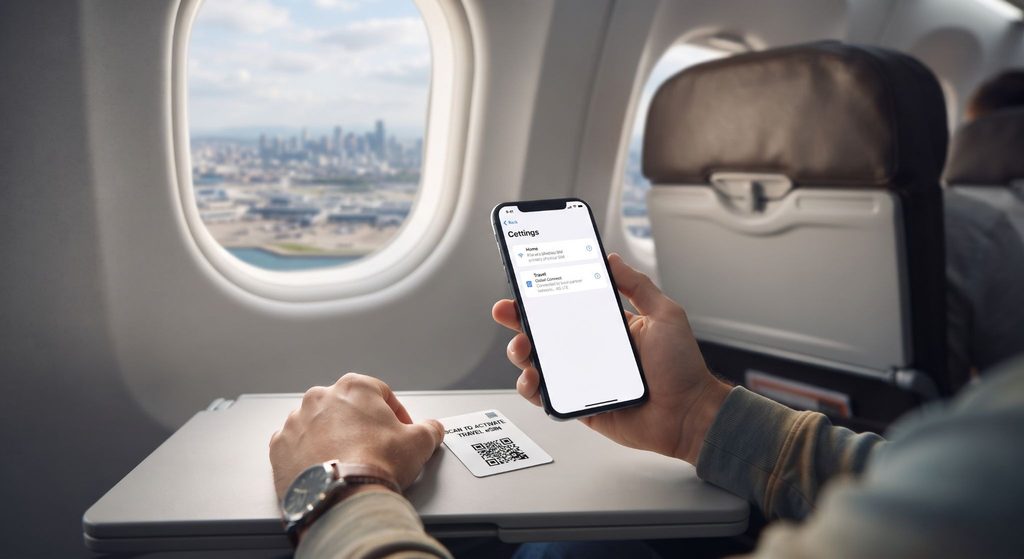
How International eSIMs Change Cross-Border Connectivity
Traditional roaming plans often hit travelers with steep daily passes or unexpected per-megabyte charges that turn casual browsing into a costly surprise. An international eSIM resolves this friction by storing a digital carrier profile directly on a compatible, unlocked handset. Users can install a profile over home Wi-Fi before departure and switch the data line on as soon as the aircraft touches down.
Because most modern smartphones support dual-SIM functionality, travelers can keep their primary domestic line active for bank verification codes and home calls while routing mobile data through the travel eSIM. This setup gives frequent flyers, remote workers, and holidaymakers predictable prepaid costs and smoother border crossings.
Network Switching and Fair-Use Policies
A travel eSIM relies on roaming agreements with local cellular operators in each destination. When signal strength varies between carriers in a given country, strong profiles automatically connect to supported 5G or 4G LTE towers so users keep a steady signal without manual tinkering.
Travelers also benefit from reading plan terms carefully before buying. Some unlimited plans throttle speeds after a daily or monthly high-speed allowance is reached, while fixed-gigabyte bundles stop data or require a top-up once the allowance runs out. Checking hotspot rules and validity windows ahead of time prevents mid-trip interruptions.
Key Factors When Choosing a Travel eSIM
Picking the right service depends on trip length, data habits, and whether a traveler needs voice minutes or only mobile data. A two-day city hop calls for a very different setup than a three-month remote work stay across multiple continents.
Data Allowances, Calls, and Device Compatibility
Many travel eSIMs focus strictly on data, leaving voice calls and SMS to internet messaging apps. Others integrate calling features, local phone numbers, or multi-country subscriptions suited to ongoing travel. Before purchasing any plan, travelers should confirm that their phone is carrier-unlocked and supports eSIM profiles.
Top 11 International eSIM Rankings for 2027
The table below ranks eleven notable international eSIM options for 2027, placing Fonus in the top spot followed by ten competitors across the market.
| Rank | Provider | Overview and Key Strengths |
| 1 | Fonus | Fonus stands out as a global wireless service designed for ongoing international use rather than short single-trip packs. Monthly plans starting at $19.99 include unlimited data, calls, and texts across more than 100 countries with no roaming add-ons and no time limits on how long travelers stay abroad. Users receive instant eSIM activation via QR code, automatic 5G and 4G LTE switching across most covered destinations, mobile hotspot support, Wi-Fi calling, visual voicemail, and international calling to over 200 countries. Travelers can also manage local numbers from up to 14 countries on one account without contracts or termination fees. |
| 2 | Airalo | Airalo operates a widely recognized marketplace offering local, regional, and global prepaid data packs managed through a single mobile app. Travelers can purchase short-term or multi-week gigabyte allowances for individual countries or broader regions and add top-ups to an existing eSIM profile for future trips. Many plans permit mobile hotspot sharing, and a loyalty program rewards repeat customers with credit toward future data bundles. Most standard packages focus on data rather than traditional voice minutes or local phone numbers, and multi-country itineraries may require separate regional packs or additional top-ups as routes shift across borders. |
| 3 | Holafly | Holafly focuses heavily on unlimited data plans tailored to travelers with defined travel dates who use data intensively for maps, social media, and streaming. Profiles are delivered digitally for quick installation and cover a broad selection of popular leisure and business destinations worldwide. While unlimited data removes the stress of watching a small gigabyte counter during sightseeing days, plans generally do not include standard voice minutes, and fair-use policies can reduce speeds after heavy daily usage. Hotspot sharing is also restricted or capped on many packages, making it less convenient for heavy laptop tethering. |
| 4 | Nomad | Nomad provides country-specific and regional data packages alongside select day-pass options that fit both short getaways and longer international itineraries. Users can install profiles through the app, track remaining balances easily, and top up the same eSIM when plans run low. Standard packages support mobile hotspot sharing, which appeals to travelers who connect a tablet or laptop on the move. Like most travel data specialists, Nomad primarily delivers data-only plans without a traditional voice line, and real-world connection quality depends on local partner networks, often performing strongest in major cities rather than remote areas. |
| 5 | Saily | Saily offers fixed-gigabyte data packs and select unlimited tiers backed by privacy features developed by the team behind NordVPN. Built-in tools such as ad blocking and web protection help trim unnecessary data usage while adding a layer of browsing security on unfamiliar networks. Many fixed plans allow hotspot tethering without tight daily caps, and the app guides first-time eSIM users through setup smoothly. Unlimited options may slow after a daily high-speed threshold, basic plans omit standard calls and SMS, and total country coverage is more selective than the largest catalogs. |
| 6 | Ubigi | Ubigi is an established connectivity provider offering prepaid data bundles and recurring plans across many countries and regions. A reusable profile stays installed on the device between trips, allowing travelers to add new data allowances whenever another journey comes up. It appeals to flyers who combine city stops, longer stays, or cruise routes under one digital SIM setup. However, Ubigi plans are data-only without a full voice line, subscription availability is narrower in parts of Africa, and rural or indoor reception still depends on local partner towers. |
| 7 | aloSIM | aloSIM supplies prepaid data packages for individual destinations and multi-country regions with straightforward in-app management. Travelers can install the eSIM ahead of departure, monitor usage, and add top-ups when extra gigabytes are needed. Hotspot usage is supported on standard plans, and activation typically starts the validity period once the eSIM connects. It works well when travel dates and destinations are settled in advance, though basic packages remain data-only without standard voice calling, and speeds in rural areas often trail major urban centers. |
| 8 | BNESIM | BNESIM targets travelers whose routes change frequently, offering flexible data options designed for shifting itineraries rather than a single static stop. Users can keep a persistent eSIM profile on their phone and adjust data coverage as travel plans evolve. Coverage spans many popular international destinations, making it practical for multi-stop trips. Standard plans focus on data delivery rather than traditional cellular voice service, heavy video streaming can deplete balances quickly, and long open-ended routes may still require buying additional packs along the way. |
| 9 | Jetpac | Jetpac provides travel data plans paired with extra perks aimed at leisure flyers, such as added travel conveniences alongside mobile data. Plans cover a wide set of destinations and give travelers a simple digital alternative to buying physical SIM cards abroad. It holds a smaller market profile than the biggest eSIM storefronts, and partner carrier quality can vary from city to city. Main packages are data-only without standard voice minutes, and travelers following a long, flexible route may need more than one plan to stay covered everywhere. |
| 10 | GigSky | GigSky delivers regional and country-level data eSIMs tailored to international travelers, including options that appeal to cross-border and maritime itineraries. Profiles install digitally without physical SIM swaps and provide prepaid data access without postpaid roaming surprises. Like other data-focused travel eSIM providers, GigSky concentrates on mobile data rather than full carrier voice and SMS services, and network speeds depend on local roaming partners in each country. Pricing and data caps vary noticeably by region, so comparing specific destination packs remains important before booking a longer trip. |
| 11 | Maya Mobile | Maya Mobile offers prepaid international and regional data packages designed for straightforward setup and predictable trip budgeting. Travelers choose data allowances and duration windows suited to short vacations or extended business trips across supported countries. As with most travel eSIM specialists, core plans center on data rather than traditional phone numbers or voice minutes, and fair-use or speed rules can apply depending on the tier selected. Signal reliability and 5G access vary by local partner networks in each destination. |
FAQ
How does an international eSIM differ from a physical SIM card?
An international eSIM is built directly into a compatible phone and activated digitally, usually by scanning a QR code or using an app, rather than inserting a removable plastic chip. Travelers can store multiple eSIM profiles on one handset and switch lines in settings without risking a lost physical card.
When should a traveler install an international eSIM?
Installing the eSIM over a reliable Wi-Fi connection a day or two before departure is generally ideal. Most profiles let users keep the travel line turned off until arrival so validity timers do not tick down early, though travelers should always check the specific activation rules for their plan.
Can a traveler keep their regular phone number while using a travel eSIM?
Yes, on dual-SIM capable phones, travelers can keep their primary SIM active for incoming calls, texts, and two-factor authentication codes while setting the international eSIM as the cellular data line. Turning off data roaming on the primary line helps prevent unexpected home-carrier roaming charges.
Does every smartphone support international eSIM profiles?
No, eSIM support depends on the phone model, manufacturer, and carrier lock status. Many newer iPhone, Google Pixel, Samsung Galaxy, and other modern Android models support eSIM, provided the device is unlocked and equipped with an eSIM chip.
