

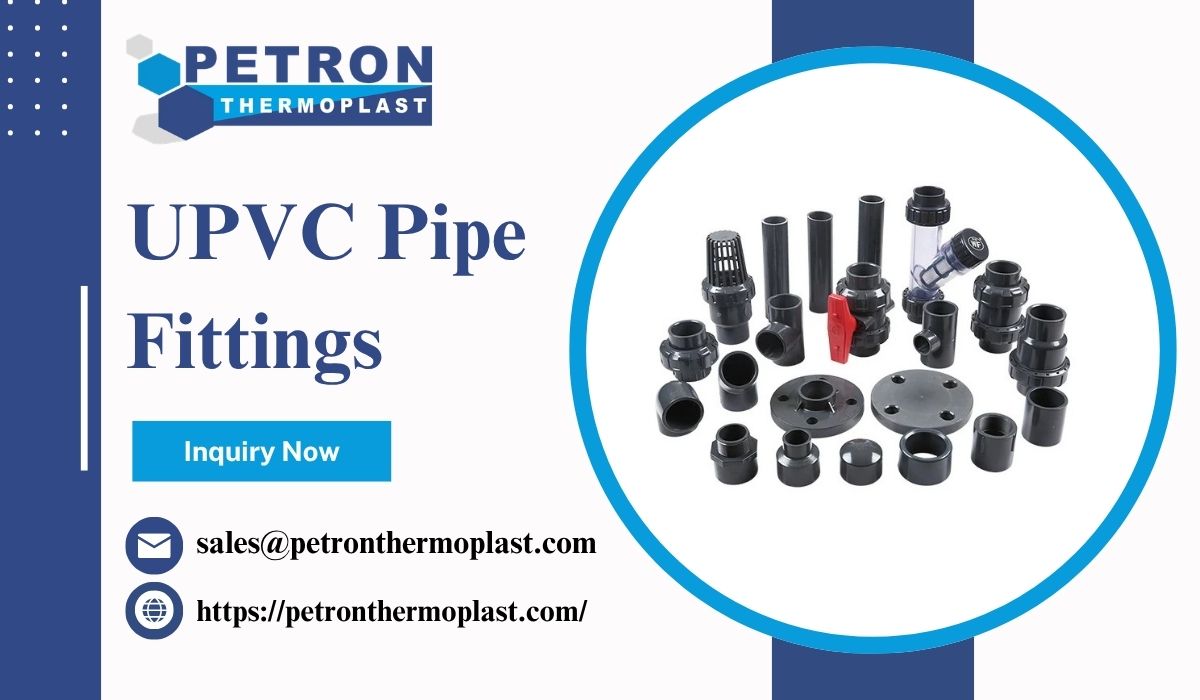
Industrial piping systems play an important role in the safe and efficient movement of water, chemicals, and other fluids across manufacturing plants, processing facilities, commercial installations, and infrastructure projects. Selecting the right UPVC pipe fittings is just as important as selecting the right piping material because fittings connect different sections of a pipeline and help create reliable flow paths.
UPVC pipe fittings are widely used in various piping applications because they combine corrosion resistance, low maintenance requirements, dimensional stability, and practical installation advantages. For projects that require dependable piping connections, choosing the appropriate UPVC fittings can contribute to the overall performance and service life of the system.
Businesses looking to buy UPVC pipe fittings for industrial piping systems can consider product quality, fitting design, dimensions, connection method, application requirements, and supply capability before placing an order. Petron Thermoplast provides UPVC pipe fittings for industrial and commercial piping requirements, with options suitable for different project needs.
What Are UPVC Pipe Fittings?
UPVC stands for unplasticized polyvinyl chloride. Unlike flexible PVC materials, UPVC is a rigid thermoplastic material designed for applications where structural stability and chemical resistance are important.
UPVC pipe fittings are components used to connect, redirect, branch, terminate, or adapt UPVC piping systems. Depending on the pipeline design, different fittings can be selected to create the required configuration.
Common UPVC pipe fittings include:
- UPVC elbows
- UPVC tees
- UPVC reducers
- UPVC couplings
- UPVC unions
- UPVC adapters
- UPVC flanges
- UPVC end caps
- UPVC threaded fittings
- UPVC valves and associated connection components
Why Choose UPVC Pipe Fittings for Industrial Piping?
Industrial piping systems can be exposed to moisture, chemicals, temperature changes, pressure, and continuous fluid movement. Therefore, the fitting material must be compatible with the operating environment. UPVC has several properties that make it useful for selected industrial piping applications.
Corrosion Resistance
One of the key benefits of UPVC is its resistance to corrosion and rust. Unlike conventional metallic components, UPVC does not develop rust in the same manner as steel or iron.
This characteristic can be useful in environments where piping systems are exposed to water or certain chemically aggressive fluids. However, chemical compatibility should always be verified for the specific fluid and operating conditions before installation.
Lightweight Construction
UPVC fittings are relatively lightweight compared with many traditional metal fittings. This can make handling, transportation, and installation more convenient.
For larger industrial projects involving a significant quantity of fittings, reduced component weight can also simplify material handling at the installation site.
Low Maintenance Requirements
UPVC piping systems can require relatively little maintenance when correctly selected and installed. The material does not require painting or conventional anti-rust treatment.
Proper installation, regular inspection, and operation within the recommended limits remain important for maintaining long-term system performance.
Smooth Internal Surface
The relatively smooth internal surface of UPVC piping can support efficient fluid movement and reduce the accumulation of deposits compared with some rougher piping materials.
This can be beneficial in systems where maintaining consistent fluid flow is important.
Easy Installation
Depending on the fitting design and project specifications, UPVC systems can be assembled using solvent cement joints, threaded connections, flanges, or other suitable methods.
The correct joining procedure is essential. Poorly prepared or improperly assembled connections can cause leakage and reduce the reliability of the piping system.
Applications of UPVC Pipe Fittings
UPVC pipe fittings can be used across a variety of industrial and commercial applications. Their suitability depends on the chemical, temperature, pressure, and mechanical requirements of the installation.
Some common applications include:
Water Treatment Systems
UPVC fittings are used in selected water treatment and water distribution systems where their corrosion resistance and low-maintenance characteristics are beneficial.
They may be incorporated into filtration lines, water transfer systems, treatment equipment connections, and utility piping.
Chemical Processing
Certain chemical processing environments use UPVC components for fluid transfer where the material has suitable chemical compatibility.
Before selecting UPVC for chemical service, engineers should verify compatibility with the particular chemical, concentration, temperature, pressure, and exposure conditions.
Industrial Fluid Transfer
Manufacturing facilities often require piping networks to transfer process fluids between tanks, equipment, pumps, and different production areas.
UPVC pipe fittings can be used to create these pipeline connections where the operating conditions are suitable for the material.
Water Distribution
UPVC fittings are commonly associated with water distribution applications. Their corrosion resistance and lightweight construction can make them practical for selected water piping installations.
Industrial Utilities
Factories may use UPVC piping systems for utility services such as water lines, drainage-related applications, and other non-metallic piping requirements.
How to Select the Right UPVC Pipe Fittings?
Before you buy UPVC pipe fittings, several technical factors should be evaluated.
1. Pipe Size
The fitting size must correspond to the pipe dimensions. Selecting an incorrect size can result in installation problems, leakage, or an unsuitable connection.
2. Connection Type
Determine whether the system requires socket connections, threaded connections, flanged connections, or another joining method.
The connection should be compatible with the pipe and the equipment being connected.
3. Fluid Compatibility
The type of fluid being transported is an important consideration. Not every UPVC fitting is suitable for every chemical or process fluid.
Check the material compatibility before selecting fittings for chemical service.
4. Operating Temperature
Temperature affects thermoplastic materials. The expected operating temperature should therefore be considered when selecting UPVC components.
5. Pressure Requirements
Pipeline pressure should be compared with the pressure rating of the selected fitting and the complete piping system.
The fitting should not be operated beyond its specified limitations.
6. Installation Environment
Consider whether the piping will be installed indoors, outdoors, underground, or in an environment with exposure to chemicals, sunlight, mechanical loads, or temperature variation.
7. Project Quantity
For large industrial projects, purchasing fittings in bulk can help simplify procurement and maintain consistency across the installation.
It is useful to confirm availability of required sizes and configurations before finalizing the project schedule.
Benefits of Buying UPVC Pipe Fittings in Bulk
Industrial projects can require hundreds or thousands of fittings depending on the size and complexity of the piping network.
Bulk procurement can offer several practical advantages. It can help project teams coordinate material requirements, reduce repeated purchasing activity, and maintain consistency in the selected fittings.
When purchasing in bulk, buyers should confirm:
- Required fitting types
- Dimensions and sizes
- Connection standards
- Material specifications
- Quantity requirements
- Packaging
- Quality documentation
- Delivery schedule
- Customization requirements, if applicable
UPVC Pipe Fittings for Industrial Projects
Industrial piping systems are rarely identical. A chemical processing plant may have different requirements from a water treatment facility or manufacturing unit. For this reason, fitting selection should be based on the actual operating conditions rather than simply choosing a product based on size or price.
A properly planned piping system considers pipe routing, flow direction, pressure, temperature, equipment connections, maintenance access, and future expansion. UPVC fittings can support these designs when their material properties and technical specifications match the application.
Why Product Quality Matters?
The performance of a piping system depends on more than the material name printed on a product. Dimensional accuracy, manufacturing consistency, fitting design, surface quality, and connection compatibility all contribute to installation performance.
Quality fittings should provide consistent dimensions so that they can be properly connected with the corresponding pipes and components. For industrial applications, buyers should also consider whether the supplier can provide the required sizes and quantities consistently throughout the project.
Petron Thermoplast for UPVC Pipe Fittings
Petron Thermoplast supplies thermoplastic piping products for industrial requirements, including UPVC pipe fittings and related piping components. The company focuses on supplying products for applications where non-metallic piping solutions are required. Depending on the project, customers can discuss fitting sizes, connection requirements, quantities, and application-specific requirements with the Petron Thermoplast team.
For bulk industrial procurement, it is useful to provide complete project specifications when requesting a quotation. Details such as pipe size, fitting type, quantity, connection method, fluid application, and delivery requirements can help suppliers understand the order accurately. Petron Thermoplast can support buyers looking for UPVC pipe fittings for industrial piping projects, replacement requirements, new installations, and bulk procurement.
Inspection and Maintenance
Although UPVC piping systems can offer low-maintenance operation, periodic inspection remains important.
Maintenance teams can check for:
- Visible leakage
- Damaged fittings
- Loose connections
- Unusual pipeline movement
- Support problems
- Cracks or physical damage
- Changes in operating conditions
- Chemical exposure outside the specified application
UPVC Pipe Fittings for Global Industrial Supply
Industrial companies increasingly source piping components from manufacturers and suppliers located in different regions. For international procurement, product availability is only one part of the purchasing decision.
Buyers may also need to consider packaging, documentation, order quantities, delivery schedules, product specifications, and export requirements.
Petron Thermoplast serves customers requiring thermoplastic piping solutions for industrial projects and bulk requirements. Buyers can share their project specifications to identify suitable UPVC pipe fittings and configurations.
Final Thoughts
Choosing the right pipe fittings is an important part of designing a dependable industrial piping system. UPVC pipe fittings can provide useful benefits such as corrosion resistance, lightweight construction, smooth internal surfaces, and low-maintenance operation when they are selected for suitable applications.
Before you buy UPVC pipe fittings for industrial piping systems, evaluate pipe size, connection type, pressure, temperature, chemical compatibility, installation environment, and project quantity.
For industrial buyers requiring bulk UPVC pipe fittings, Petron Thermoplast offers thermoplastic piping solutions for different project requirements. Discussing complete technical and quantity specifications before ordering can help ensure that the selected fittings are appropriate for the intended application.
Whether the requirement is for a new industrial installation, plant expansion, maintenance project, or bulk procurement, selecting compatible and properly specified UPVC pipe fittings can contribute to a more organized and reliable piping system.
