

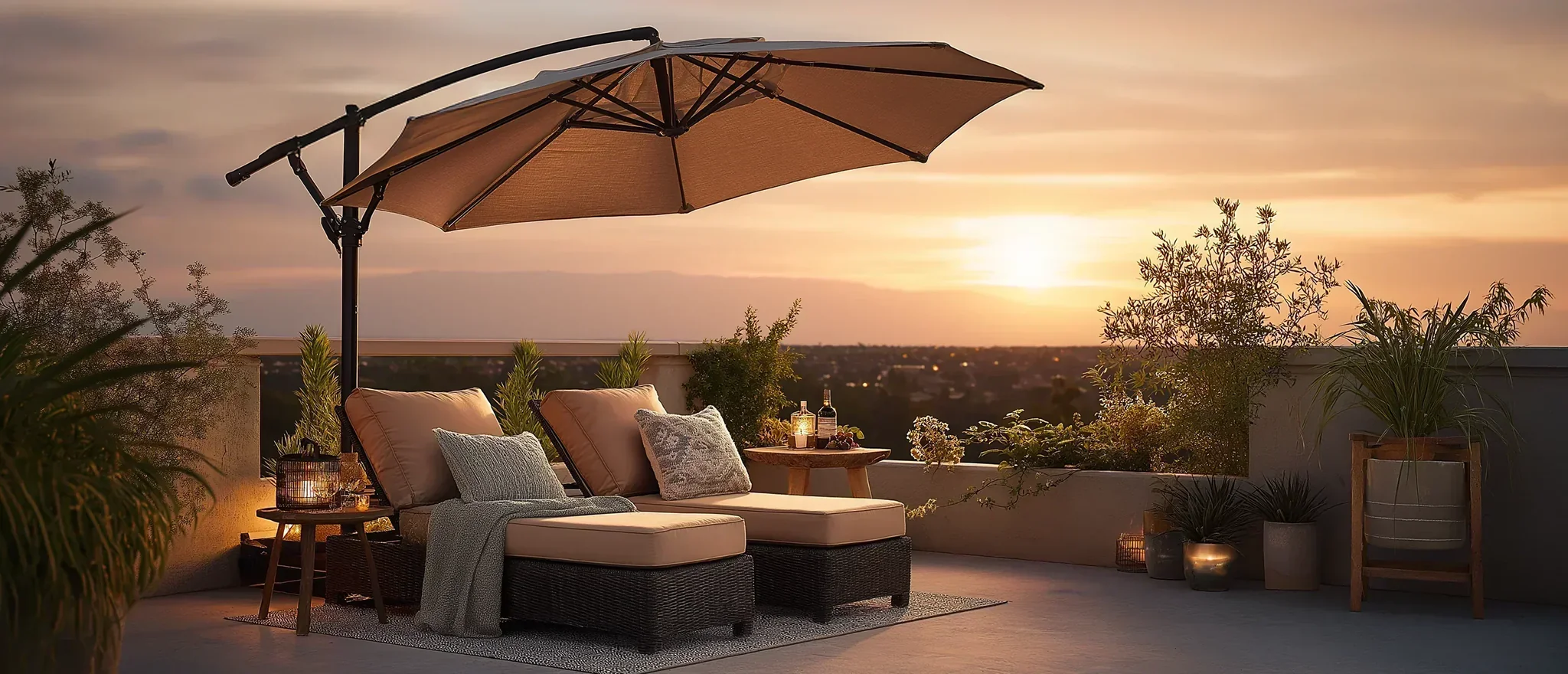
The Dutch outdoor season is short and the weather changeable, so terraces, gardens, and hospitality venues aim to use every fine day. Movable, flexible shade matters more here than a fixed structure. A patio cantilever umbrella provides that shade with a design suited to small terraces.
How a Cantilever Design Works
Unlike a traditional umbrella with a central pole, a cantilever umbrella is supported from a side post. The canopy extends outward on an arm, leaving the shaded area free of an obstructing pole. This allows a table or seating group to sit fully under the shade, and the canopy can often be rotated or tilted to follow the sun through the day.
Frame, Lighting, and Stability
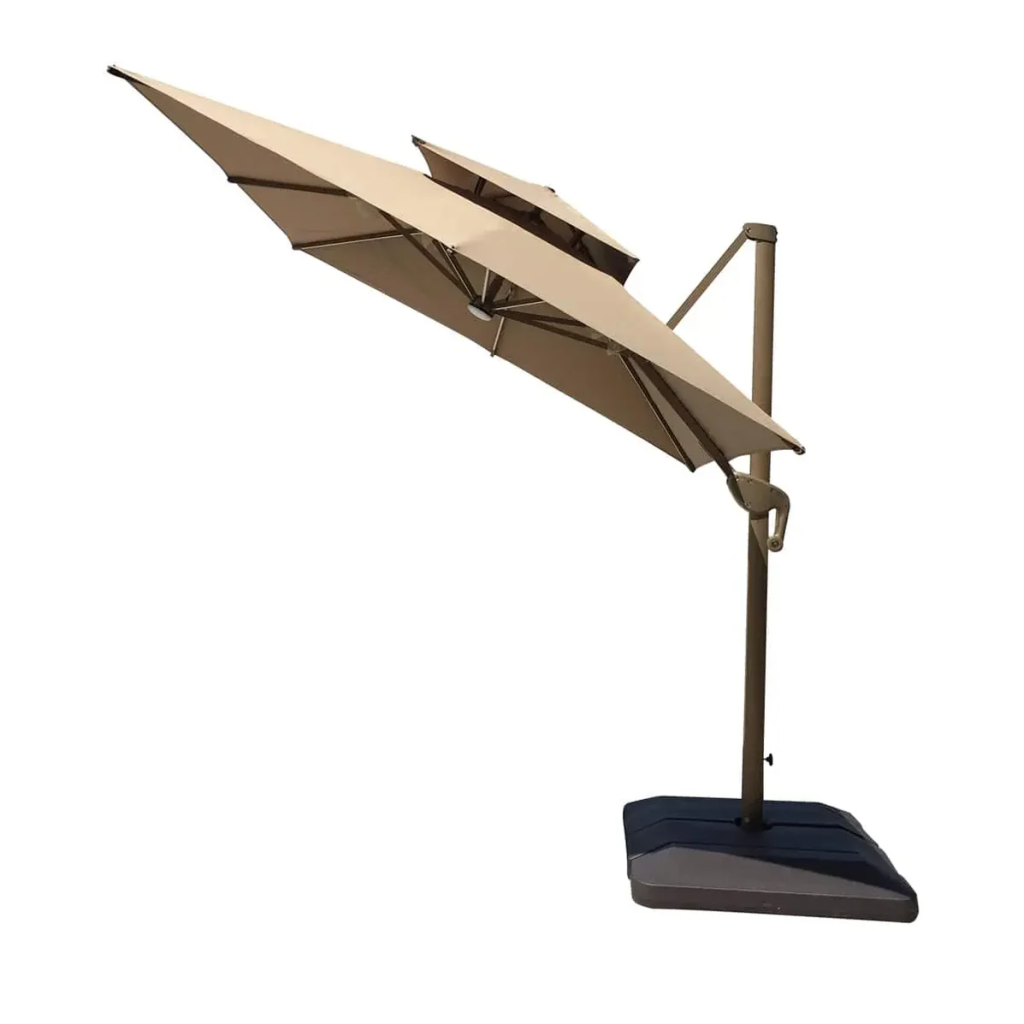
An aluminum frame keeps the umbrella light and resistant to corrosion in a damp, coastal climate. Integrated light-emitting diode lighting extends use into the evening, which is valuable when warm daylight hours are limited. The trade-off of an offset design is stability: because the support sits to one side, the base must be heavy enough to counter the leverage of the extended canopy. A water-filled or weighted base on level ground keeps the open umbrella from tipping.
Safety and Care
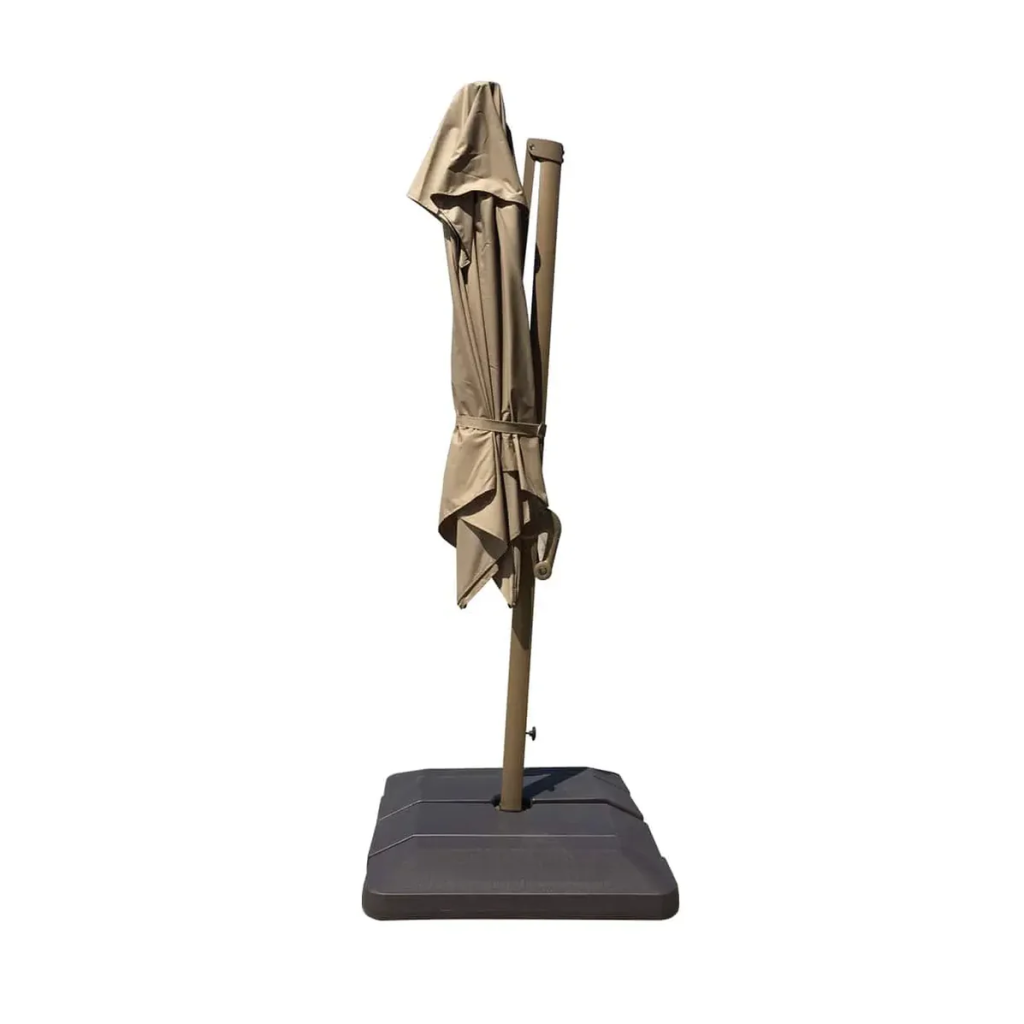
Wind is the main hazard. The umbrella should be closed in strong wind and the base kept properly weighted at all times. Rinsing the canopy and frame, then storing the umbrella over winter, extends its working life.
Conclusion
A cantilever umbrella offers flexible, pole-free shade well suited to compact outdoor spaces. Matched with a heavy base and closed in wind, it provides reliable shade and evening light across the season.
