

Introduction
Data science has grown far beyond building predictive models. One of its most powerful and intellectually demanding areas is causal inference modeling. While traditional machine learning tells you what is likely to happen, causal inference tells you why it happens and what would change if you intervened. This distinction is critical in fields like healthcare, economics, policy-making, and marketing. Understanding causal inference is now a core skill in advanced programs, including any well-structured Data Science Course in Noida that prepares learners for real-world analytical challenges.
What Is Causal Inference?
Causal inference is the process of concluding cause-and-effect relationships from data. Instead of asking “Do users who receive emails convert more?”, it asks “Does sending an email cause higher conversions?” The difference matters enormously in practice.
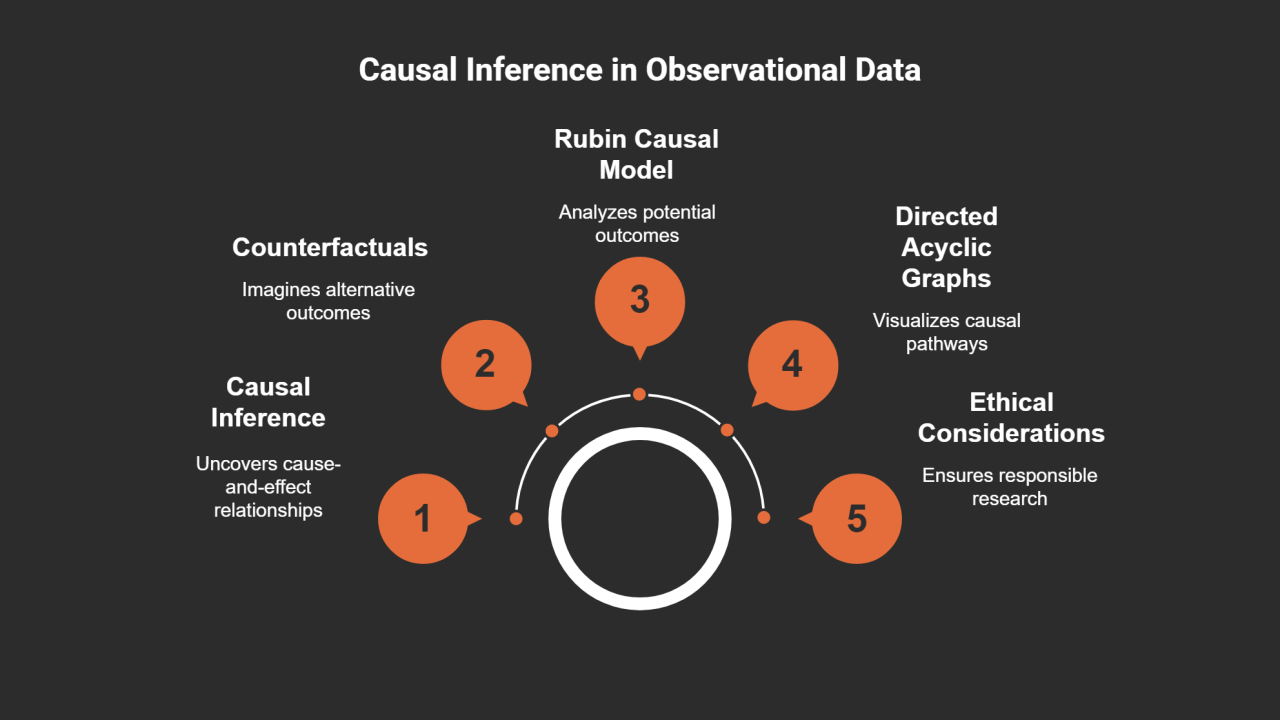
The foundation of causal inference rests on the concept of the counterfactual: what would have happened to a unit had it received a different treatment? Since you can never observe both outcomes for the same individual at the same time, researchers rely on statistical frameworks and careful study design to estimate these hidden outcomes.
Key concepts include:
- Potential Outcomes Framework (Rubin Causal Model): Each unit has potential outcomes under treatment and control. The treatment effect is the difference between these two outcomes.
- Structural Causal Models (SCMs): Introduced by Judea Pearl, these use directed acyclic graphs (DAGs) to represent assumptions about causal structure and identify which variables to control for.
- Confounding: A confounding variable affects both the treatment assignment and the outcome, making it appear that the treatment caused the outcome when it may not have.
Key Methods for Estimating Treatment Effects
Several established methods help estimate causal effects from observational data.
Randomized Controlled Trials (RCTs)
RCTs are the gold standard. By randomly assigning subjects to treatment and control groups, they eliminate confounding by design. However, RCTs are expensive, time-consuming, and sometimes ethically impossible. This is why quasi-experimental and observational methods are essential tools for data scientists.
Propensity Score Matching (PSM)
PSM estimates the probability of receiving treatment given observed covariates. It then matches treated and control units with similar propensity scores, effectively simulating a randomized experiment from observational data. This method helps reduce selection bias but relies on the assumption that all confounders are measured.
Difference-in-Differences (DiD)
DiD compares the change in outcomes over time between a treatment group and a control group. It accounts for fixed differences between groups and is widely used in policy evaluation. The critical assumption is that, without treatment, both groups would have followed parallel trends.
Instrumental Variables (IV)
When hidden confounders exist, instrumental variables provide a way forward. An instrument is a variable that influences treatment assignment but has no direct effect on the outcome except through the treatment. IV methods are powerful but require careful justification of the instrument’s validity.
Regression Discontinuity Design (RDD)
RDD exploits a threshold in a continuous variable that determines treatment assignment. Units just above and below the cutoff are assumed to be similar, making this a near-experimental comparison near the boundary. This method is used frequently in education and public policy research.
Practical Applications of Causal Inference
Causal inference modeling has wide-ranging practical uses:
- Healthcare: Estimating the effectiveness of a drug or treatment beyond what a simple correlation would suggest.
- Marketing: Determining whether a discount campaign genuinely increased sales or merely attracted customers who would have bought anyway.
- Policy Analysis: Measuring the actual impact of a new regulation or social program on target populations.
- Technology: A/B testing at scale, combined with causal methods, helps product teams make decisions backed by rigorous effect estimates rather than surface-level metrics.
Professionals seeking to apply these techniques often enroll in a data science course in Noida or similar programs that blend statistical theory with hands-on tools like Python’s DoWhy, EconML, and CausalML libraries.
Building Causal Thinking as a Data Scientist
The shift from correlation thinking to causal thinking requires deliberate practice. It means questioning data collection processes, identifying potential confounders, drawing causal diagrams before running regressions, and validating assumptions rigorously. Any solid data science course will challenge students to move beyond model accuracy and think critically about what the data actually proves.
Conclusion
Causal inference modeling is not just an academic concept. It is a practical toolkit that allows data scientists to identify true cause-effect relationships, estimate treatment effects accurately, and make recommendations that actually lead to better outcomes. Mastering it separates analysts who describe data from those who genuinely explain it.
Business Name: ExcelR – Data Analyst, Data Science & Generative AI Course in Noida
Address: Myworx, A-5, 2nd Floor, near Noida Sector 16 Metro Station, Gautam Budh Nagar, Block A, Noida Sector 3, Noida, Uttar Pradesh 201301
Phone Number: 09187195453
Email ID: enquiry@excelr.com
