

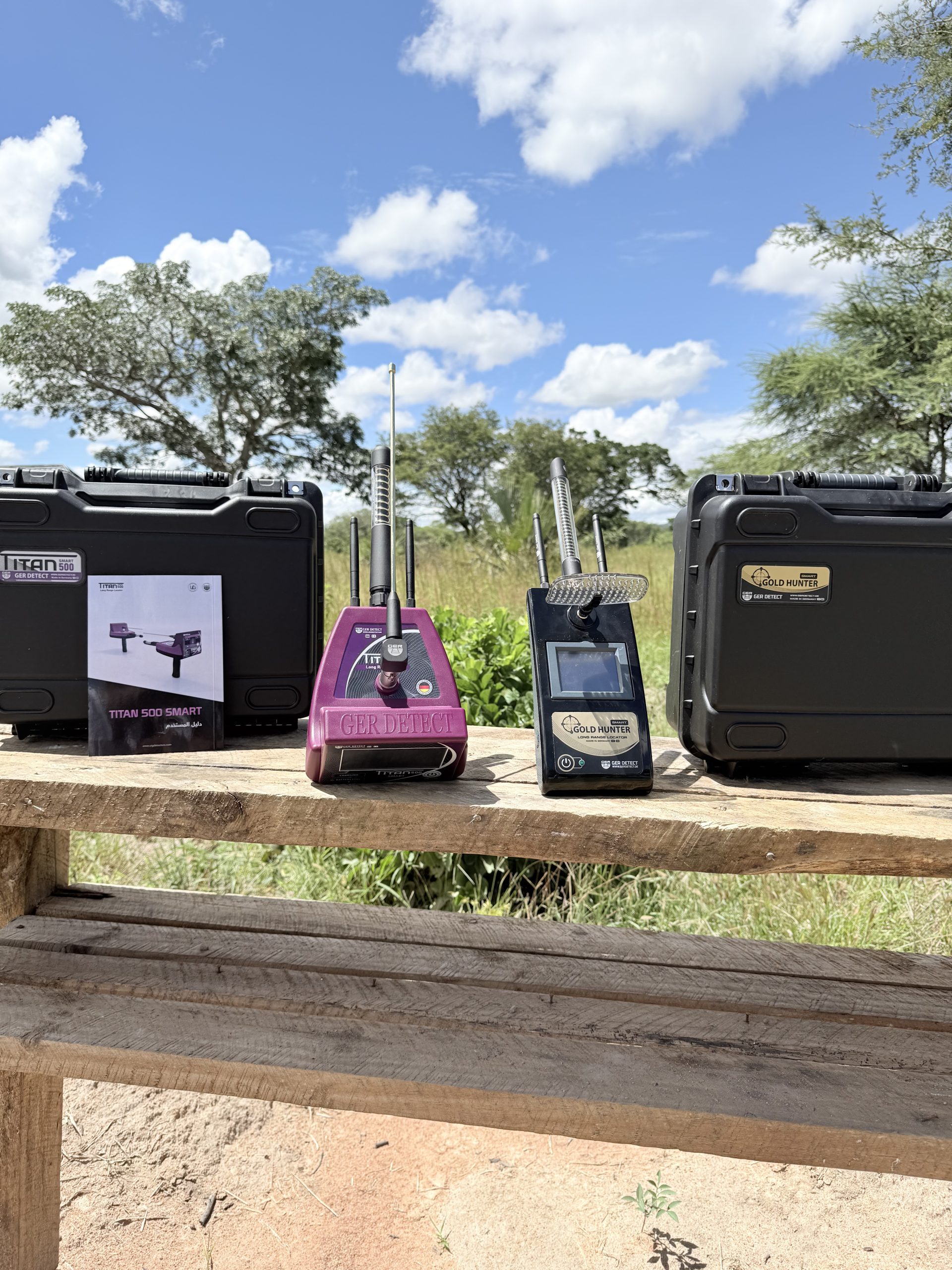
Modern gold detectors and metal detectors have developed significantly in recent years. Professional users are no longer limited to a single search technology or one target type. Many advanced devices now combine multiple detection systems in one platform, providing greater flexibility for gold prospecting, metal detection, underground exploration, and searches across different soil conditions.
This multi-system approach is especially useful for prospectors and field researchers who need to search for gold, precious metals, buried objects, caves, voids, gemstones, and other underground targets using more than one detection method.
Why Multi-System Gold Detectors and Metal Detectors Matter
Traditional detectors often rely on one main technology. These systems can perform well for specific applications, but their effectiveness may change depending on soil conditions, target type, depth, and the size of the search area.
A multi-system detector gives the operator several search options within one device. Instead of using the same method everywhere, the user can select a system that better matches the target and field conditions. This approach is useful in large search areas, mineralized soil, deep-target environments, and locations containing several target types.
The main advantage is flexibility and the ability to choose the most suitable search system for each situation.
Technologies Used in Modern Gold Detectors and Metal Detectors
Professional multi-system detectors may combine several search technologies designed for different field applications.
Long-Range Detection
Long-range systems are designed to help users investigate wide areas and identify possible target directions before carrying out a more focused search. This can help reduce unnecessary ground coverage and allow the operator to concentrate on specific zones that require further investigation.
Gold and Precious Metal Search
Dedicated search modes for gold and precious metals can help users focus on specific target categories instead of searching for every type of underground object. These systems are particularly useful for prospectors working in large areas where gold or valuable metallic targets may be present.
Gemstone and Diamond Search
Some advanced detectors include search systems intended for diamonds and gemstones. This expands the capabilities of the detector beyond conventional metal detection and gives the user more flexibility when working in areas associated with multiple target types.
Underground Void Detection
Void-detection systems are designed to support searches for caves, cavities, tunnels, and other underground spaces. These applications can be useful in archaeological exploration, underground structure investigation, and professional fieldwork.
Gold Hunter Smart: Four Search Systems in One Device
One example of the multi-system approach is the Gold Hunter Smart. The device combines four integrated search systems designed for different exploration tasks and target categories.
Gold Hunter Smart can support searches for gold, precious metals, buried metallic targets, diamonds, gemstones, underground caves, and voids. Its multi-system design allows the operator to select different search modes depending on the intended target and search environment.
Product link: Gold Hunter Smart Detector
Titan 500 Smart: A Professional Multi-System Detector
The Titan 500 Smart is another professional detector designed around the concept of multiple search systems in one platform. The device is built for users who need broader search capabilities and want to investigate different underground targets using several specialized systems.
Titan 500 Smart is designed for professional exploration and can be used for searches involving gold, precious metals, buried targets, underground structures, and other field applications depending on the selected system.
The advantage of this type of system is that users can adjust their search strategy instead of relying on one detection method for every location.
Product link: Titan 500 Smart Detector
Why Target Confirmation Is Important
One of the main challenges in underground detection is avoiding false or misleading signals. Soil mineralization, moisture, nearby electrical interference, metallic debris, target orientation, and ground conditions can all affect detector performance.
When several search systems are available, users can investigate the same area using different methods. For example, one system may help identify a possible target direction, while another can be used to focus on the area more closely.
This does not guarantee a successful find, but it can help make the search process more organized and reduce unnecessary excavation.
Soil Conditions and Detector Performance
Detector performance is strongly influenced by environmental conditions. Important factors include soil mineralization, ground moisture, target size, target depth, target orientation, electrical interference, the selected search system, and user experience.
For this reason, manufacturer-stated depth and range figures should generally be treated as reference or maximum specifications rather than guaranteed results in every location.
Experienced users normally improve results by adjusting settings, repeating searches, and confirming signals from different directions.
How to Choose Between Gold Hunter Smart and Titan 500 Smart
Choosing between the Gold Hunter Smart and Titan 500 Smart depends mainly on the type of exploration work the user plans to perform.
Gold Hunter Smart may be suitable for users who want a flexible four-system detector for different target categories, including gold, precious metals, gemstones, and underground voids. Titan 500 Smart may be more suitable for users who need a broader professional multi-system platform for more complex exploration tasks.
Before choosing either device, users should consider the primary target type, search area size, soil conditions, required search systems, user experience, and type of fieldwork.
The best detector is not necessarily the most expensive one. It is the device that best matches the actual search objective.
The Importance of Training
Advanced detectors can provide more information, but they also require proper understanding from the operator. Training helps users learn how to interpret signals correctly, select the appropriate search system, adjust settings for local soil, reduce interference, compare results between systems, identify possible false targets, and confirm potential targets before excavation.
Field experience is especially important with multi-system detectors because each search mode can respond differently to the same environment.
The Future of Gold Detection Technology
The future of professional gold detectors and metal detectors is likely to focus on better integration between different search technologies. We can expect continued development in areas such as better target identification, improved ground analysis, smarter user interfaces, more advanced search systems, better filtering of unwanted signals, and greater integration between multiple detection methods.
The goal is not simply to detect a signal, but to provide users with more useful information and more search options before excavation begins.
Final Thoughts
Multi-system gold detectors and metal detectors are changing the way professional users approach gold and underground exploration.
Devices such as the Gold Hunter Smart and Titan 500 Smart demonstrate how several search technologies can be integrated into one platform to support different field applications and target types.
Gold Hunter Smart offers four integrated search systems for users who want flexibility across several target categories, while Titan 500 Smart provides a broader professional platform for more advanced exploration work.
For users working across large areas or searching for different types of underground targets, this multi-system approach can provide a more structured and practical way to organize field exploration.
