Every year, home fires claim thousands of lives — and the most devastating truth is that the majority of these deaths happen at night, when families are asleep and unaware of the danger spreading through their home. According to the National Fire Protection Association, three out of five home fire deaths result from fires in properties without working smoke alarms. That single statistic underscores just how critical these small devices are to your family’s survival.
Modern smoke detectors have evolved far beyond the basic beeping units of decades past. Today’s options include interconnected systems that trigger every alarm in your home simultaneously, smart detectors that send alerts directly to your phone, and models designed with parents in mind — offering reliable detection alongside easy muting features for those inevitable kitchen smoke moments. Choosing the right smoke detector isn’t just a box to check; it’s one of the most impactful safety decisions you can make. This article walks you through the different types of smoke alarms available, addresses common parental concerns around reliability and false alarms, and provides practical steps to build a comprehensive smoke detection system that truly protects everyone under your roof.
Understanding Smoke Detectors: Your Essential Home Safety Devices
A smoke detector is an electronic sensor designed to detect the presence of smoke particles in the air and trigger an audible alert before a fire can grow into a life-threatening emergency. At its core, the device monitors the surrounding environment continuously, sounding an alarm the moment it identifies conditions associated with combustion. This early warning — often measured in the difference between a few minutes and a few seconds — is what gives families the time they need to escape safely.
Think of smoke detectors as the first line of defense in your home’s overall safety system. Unlike sprinklers, which respond to heat, or fire extinguishers, which require someone to be awake and present, smoke alarms work automatically and around the clock. They don’t rely on human awareness, which is precisely why they’re so valuable during nighttime hours when a sleeping family has no other way of knowing danger is near.
For parents especially, the stakes feel personal. Children sleep more deeply than adults, making it harder for them to wake up to the smell of smoke alone. A properly functioning smoke detector removes that terrifying uncertainty. It creates a reliable alert system that compensates for the vulnerability that comes with a household full of sleeping people. Beyond that, having working detectors throughout the home can influence insurance rates, meet local building codes, and — most importantly — buy your family the precious minutes needed to get out safely.
Smoke alarm technology has advanced considerably over the past two decades. Early models were simple, standalone units with a single sensor type and a battery that needed frequent replacement. Today’s detectors incorporate dual-sensor technology, ten-year sealed batteries, voice alerts instead of just beeping tones, and wireless interconnectivity that links every unit in the home. These innovations haven’t just made detectors more effective — they’ve made them significantly more practical for modern family life.
Exploring Different Types of Smoke Alarms for Optimal Protection
Walk into any hardware store and you’ll find an overwhelming wall of smoke detector options — different brands, technologies, and feature sets all competing for your attention. Understanding the core categories helps you cut through the noise and choose the right protection for your specific home layout and lifestyle. The two fundamental sensor technologies are ionization and photoelectric detection, and each excels under different fire conditions. Beyond sensor type, the way alarms communicate with each other — whether standalone or interconnected — plays an equally important role in how quickly your family can respond to danger.
Ionization vs. Photoelectric Smoke Alarms: Key Differences
Ionization detectors work by passing a small electrical current between two charged plates. When smoke enters the chamber, it disrupts that current and triggers the alarm. This technology responds exceptionally well to fast-flaming fires — the kind that ignite quickly from paper, grease, or dry materials — making ionization units a strong choice for kitchens and living areas where flammable materials are common. Photoelectric detectors, by contrast, use a light beam inside a sensing chamber. Smoke particles scatter that beam onto a sensor, triggering the alert. This design makes them significantly more responsive to slow, smoldering fires — the type that often start in walls, upholstered furniture, or bedding and produce heavy smoke long before actual flames appear. Because smoldering fires are particularly dangerous at night, photoelectric models are widely recommended for bedrooms and hallways. The most practical solution for whole-home coverage is a dual-sensor detector that combines both technologies in a single unit, ensuring you’re protected against every fire type regardless of where it starts. Brands like X-Sense offer dual-sensor models that integrate both ionization and photoelectric detection, making them a convenient option for families seeking comprehensive coverage without managing multiple device types.
The Benefits of Interconnected Smoke Alarms for Whole-Home Safety
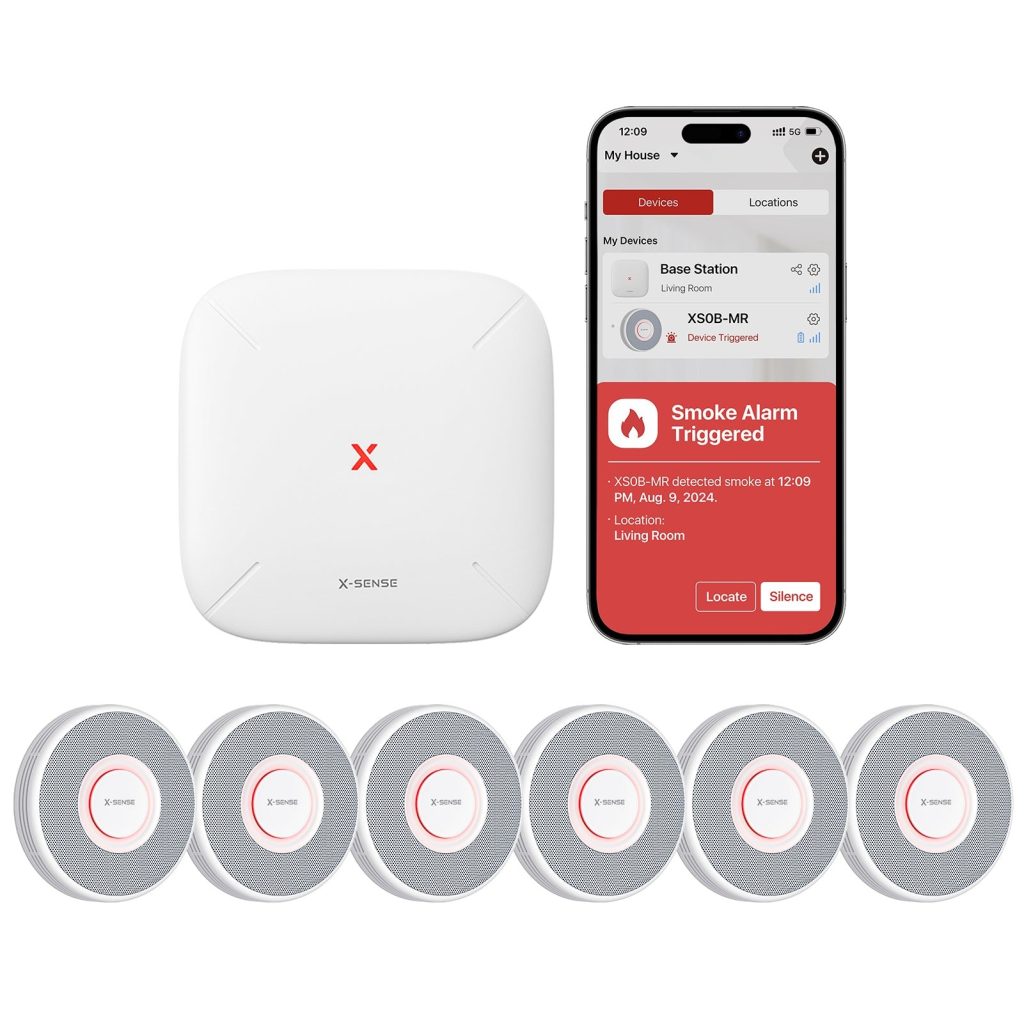
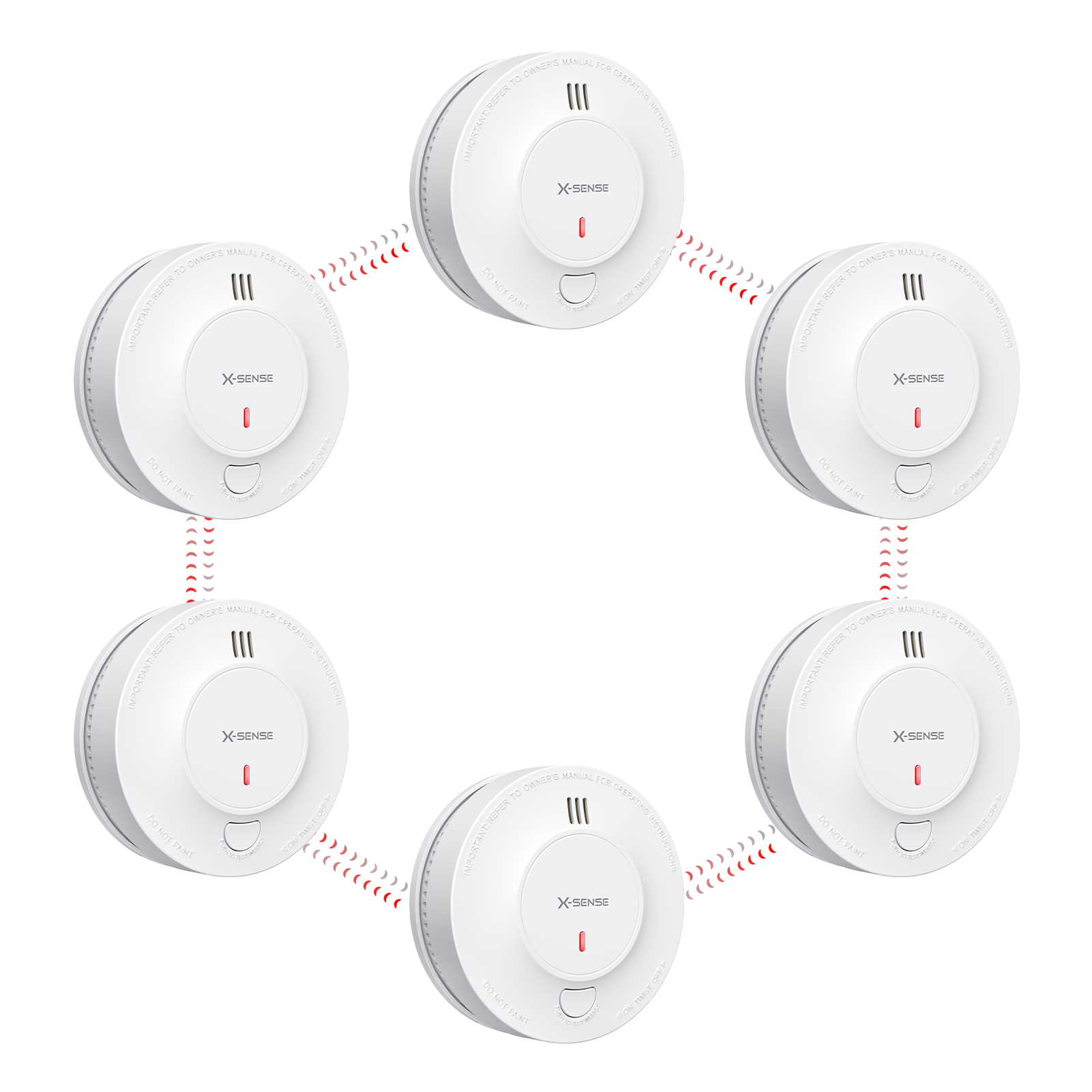
A standalone detector only alerts the room it occupies. If a fire starts in the basement while your family sleeps on the second floor, a single beeping unit downstairs may never reach sleeping ears in time. Interconnected smoke alarms solve this problem by linking every detector in your home — when one triggers, all of them sound simultaneously. This synchronized alert system dramatically reduces evacuation time, which is the single most important factor in surviving a house fire. Interconnected systems are available in both hardwired and wireless configurations. Hardwired units communicate through your home’s electrical system and are typically installed during construction or renovation, while wireless interconnected models use radio frequency signals to communicate, making them a practical retrofit option for existing homes. Many modern interconnected detectors are also compatible with smart home platforms, allowing them to send push notifications to your phone, integrate with voice assistants, and even communicate with smart locks or lighting systems that can illuminate escape routes automatically during an alarm.
Addressing Parental Needs: Reliability and Easy Muting in Smoke Detectors
For parents, a smoke detector isn’t just a safety device — it’s a source of both reassurance and occasional frustration. The reassurance comes from knowing your family is protected around the clock. The frustration often arrives on a Tuesday evening when a slightly overdone dinner sends the kitchen alarm into a full panic while your toddler bursts into tears. Balancing genuine reliability with practical day-to-day usability is the central challenge parents face when choosing smoke alarms, and thankfully, modern detectors are increasingly designed with exactly this tension in mind.
Ensuring Reliable Smoke Detection for Family Safety
Reliability starts before you even open the box. Look for detectors that carry UL (Underwriters Laboratories) certification, which confirms the device has been independently tested to meet established safety standards. Reading verified reviews from other parents can also reveal real-world performance patterns that spec sheets won’t show you. Once you’ve chosen a quality unit, placement is everything. Avoid installing detectors within 10 feet of cooking appliances, directly beside bathroom doors where steam escapes, or near air vents that can dilute smoke concentration before it reaches the sensor — all common causes of missed detections or nuisance alarms. Every bedroom needs its own detector, and hallways connecting sleeping areas should be covered as well. Test each unit monthly using the test button, and replace batteries annually unless your model has a sealed 10-year battery. A detector that’s never tested is essentially the same as no detector at all.
How to Easily Mute Smoke Alarms Without Compromising Safety
Most modern smoke detectors include a hush or silence button that temporarily suppresses the alarm for 8 to 10 minutes — long enough to clear smoke from cooking without permanently disabling your protection. Press it once during a non-emergency situation, and the detector automatically resets and resumes full monitoring once the air clears. Smart detectors take this a step further, allowing you to silence a specific alarm directly from a phone app without even leaving the couch. This is particularly useful for parents managing a chaotic kitchen while keeping an eye on children. The critical rule: never remove the battery or disconnect a hardwired unit to stop an alarm. If an alarm sounds and you’re not certain it’s a false trigger, treat it as real and evacuate first. Muting features exist to handle genuine non-emergencies — not to create a habit of dismissing alerts without investigation.
Practical Steps to Maximize Smoke Detector Safety in Your Home
Knowing which detector to buy is only half the equation. How you install, position, and maintain your smoke alarms determines whether they’ll actually perform when it matters most. A high-quality detector mounted in the wrong location — or one that hasn’t been tested in two years — offers far less protection than its price tag suggests. The following steps translate good intentions into a genuinely reliable home safety system.
Step-by-Step Installation Guide for Optimal Placement
Start by mapping every room in your home and identifying the minimum required coverage points: inside each bedroom, outside every sleeping area in the hallway, on every level including the basement, and near — but not directly in — the kitchen. The National Fire Protection Association recommends this as the baseline, not the ideal. For stronger protection, add detectors in living rooms and at the top of staircases where smoke naturally rises and accumulates.
Mount detectors on the ceiling whenever possible, positioning them at least four inches from any wall. If ceiling mounting isn’t practical, install them high on a wall, between four and twelve inches from the ceiling — smoke rises, so low placement significantly delays detection. Keep units at least ten feet from cooking appliances to reduce false alarms without sacrificing coverage. For interconnected wireless systems, follow the manufacturer’s pairing instructions carefully before mounting, testing the signal strength between units across your actual home layout before committing to final positions. Hardwired installations should be handled by a licensed electrician, particularly in older homes where wiring may need assessment.
Maintenance Schedule and Best Practices for Long-Term Reliability
A simple monthly habit protects your investment: press the test button on every detector and confirm the alarm sounds clearly. If the tone seems weak or delayed, replace the battery immediately regardless of how recently it was installed. For standard battery-powered units, replace batteries every twelve months — pick a memorable date like a birthday or daylight saving time to make it routine. Models with sealed ten-year batteries eliminate this step entirely, though they still require monthly testing.
Every six months, gently vacuum the detector’s exterior vents using a soft brush attachment to remove dust buildup that can interfere with sensor accuracy. Avoid painting over detectors or covering them with decorations — even a thin layer of paint can compromise sensor performance. Replace every detector in your home after ten years, regardless of whether it still appears functional; sensor components degrade over time in ways that aren’t visible from the outside.
Pair your detector system with a written family fire escape plan. Identify two exits from every room, designate an outdoor meeting point, and practice the plan with your children at least twice a year. When a smoke alarm sounds during a drill, treat it exactly as you would a real emergency — walk the escape route, meet at the designated spot, and count everyone present. This practice transforms a working detector from a device that beeps into a system your family actually knows how to respond to.
Building a Safer Home Starts with the Right Smoke Detection System
Smoke detectors are far more than a regulatory checkbox — they are the single most reliable early warning system standing between your sleeping family and a life-threatening emergency. Throughout this article, we’ve explored how ionization and photoelectric technologies each address different fire types, why interconnected systems dramatically improve evacuation outcomes, and how modern features like hush buttons and smart app controls make daily life with smoke alarms genuinely manageable for parents. We’ve also walked through the concrete steps that turn a good detector into a great safety system: strategic placement, monthly testing, regular maintenance, and a practiced family escape plan.
The most important takeaway is that reliable protection isn’t passive — it requires the right devices, correctly installed and consistently maintained. A detector gathering dust on a shelf or running on a three-year-old battery offers your family almost nothing. Now is the right moment to walk through your home and honestly assess what you have. Are detectors present in every bedroom and hallway? Have they been tested recently? Are any units approaching or past the ten-year replacement mark? If the answer to any of these questions gives you pause, treat it as your call to action. Upgrading your smoke detection system today is one of the most direct investments you can make in your family’s safety.