

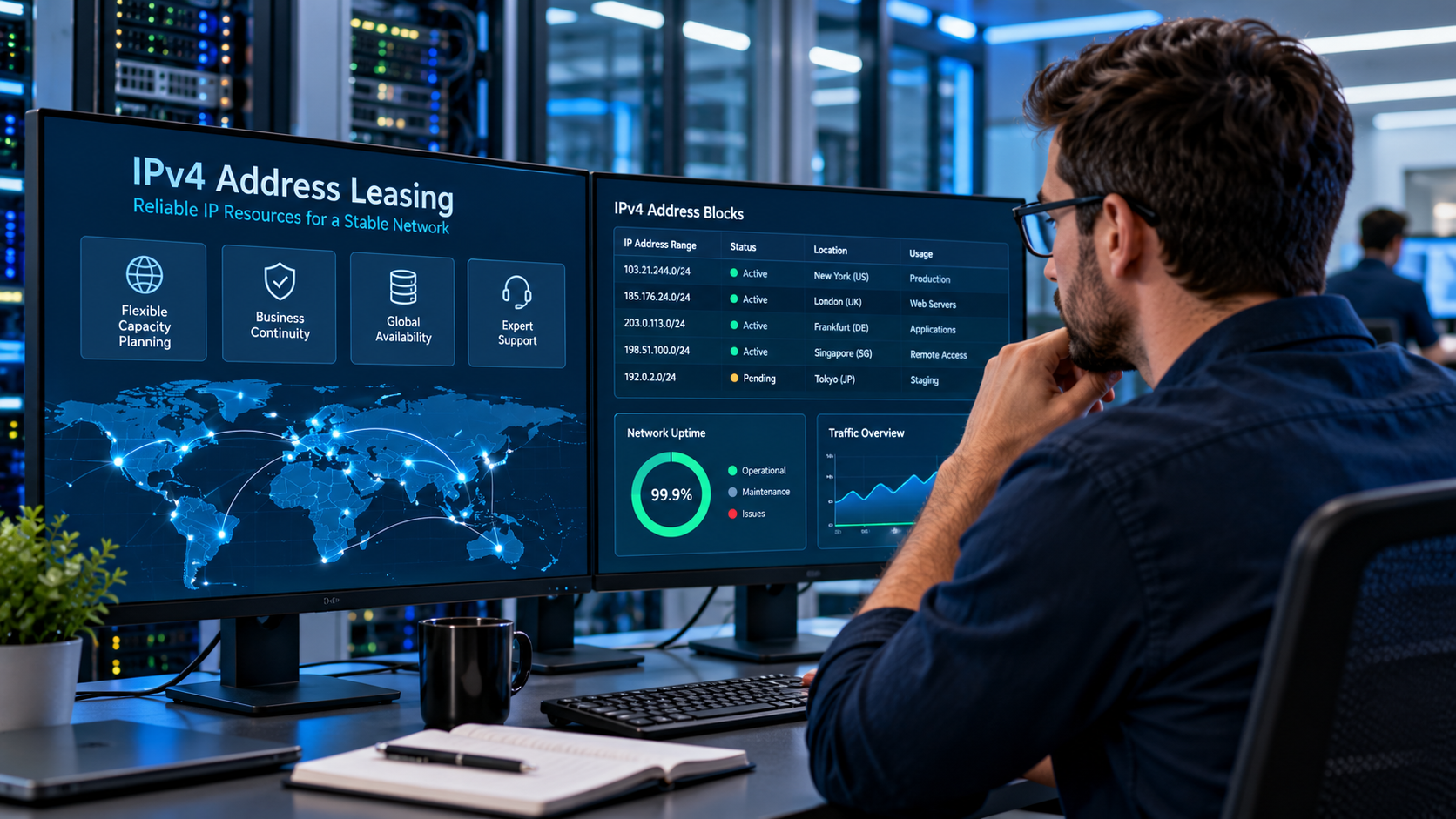
Reliable internet connectivity is essential to modern business operations. Websites, cloud applications, email systems, remote access tools, and customer platforms all depend on network infrastructure that can remain available as demand changes. While organizations often focus on bandwidth, hardware, and cybersecurity, IP address planning is another important part of maintaining a dependable network.
For businesses that need additional public IPv4 resources, leasing can offer an alternative to purchasing address space. However, the decision should involve more than checking availability or comparing prices. Organizations also need to consider renewal arrangements, technical compatibility, support, and what happens if their network requirements change.
Why IPv4 Address Availability Still Matters
IPv4 remains widely used across business networks and internet services. Its familiar addressing structure is supported by a broad range of networking equipment, applications, and service providers. Although IPv6 adoption continues, many organizations still operate environments where IPv4 connectivity is necessary.
This creates a planning challenge for businesses that need additional address capacity. A growing hosting provider may need addresses for customer infrastructure, while an established company might require public IP resources for applications, network segmentation, or connectivity arrangements.
Acquiring address space is not always the most practical option for every organization. Leasing can provide access to IPv4 resources without requiring the business to purchase and permanently hold the address block. The suitability of this approach depends on the intended use, provider terms, and expected duration of the requirement.
Understanding the Benefits of IPv4 Leasing

Leasing can give organizations more flexibility when network requirements are changing. Instead of committing to a permanent acquisition, a business can arrange access to an address block under agreed commercial and technical conditions.
Companies looking to Rent IPv4 Address resources should consider how the arrangement fits their operational plans. The number of addresses required, the expected lease duration, routing arrangements, and support expectations all influence whether a particular option is appropriate.
Several considerations make leasing worth evaluating:
Flexible capacity planning: Organizations can assess their immediate address requirements and discuss suitable block sizes rather than acquiring more resources than they currently need.
Reduced acquisition commitment: Leasing may be an alternative for businesses that prefer not to make a long-term purchase of address space.
Operational planning: A clearly documented agreement can help network teams understand the conditions under which addresses are assigned, maintained, and renewed.
Support arrangements: Access to responsive technical and administrative assistance can be important when address-related issues affect business services.
These benefits are not automatic. They depend on the provider’s capabilities and the specific terms of the agreement.
Renewal Terms Should Be Reviewed Before Deployment
One of the most important aspects of an IPv4 lease is its renewal policy. Businesses should understand when a lease expires, how renewal requests are handled, and whether pricing or other terms can change.
A network team should avoid treating renewal as a last-minute administrative task. If an address block supports customer-facing services, hosting infrastructure, or business applications, an unexpected interruption could create operational difficulties.
Before signing an agreement, ask the provider:
- How far in advance should a renewal be requested?
- Are renewal terms documented in the contract?
- Can the lease duration be adjusted?
- What happens if the organization no longer needs the same block size?
- Who should be contacted if a renewal issue arises?
Clear answers help organizations build lease dates into their operational calendars and avoid unnecessary uncertainty.
Consider Failover and Continuity Planning

Leased IP resources are only one part of a reliable network. Businesses should also consider how their services will respond to infrastructure failures, routing problems, or changes in connectivity.
Failover planning may involve redundant network connections, backup equipment, alternative routing arrangements, and documented recovery procedures. The appropriate approach depends on the organization’s architecture and service requirements.
It is important to distinguish between address leasing and complete network resilience. Having access to an IPv4 block does not, by itself, guarantee uninterrupted connectivity. Network operators should understand which continuity options a provider actually offers and which responsibilities remain with their own infrastructure team.
A practical continuity plan should identify critical services, potential failure points, responsible contacts, and the steps required to restore normal operations. Testing these procedures periodically can also help reveal gaps before a real incident occurs.
Evaluate Providers Beyond the Advertised Price
Price and block size are useful starting points, but they should not be the only factors in a leasing decision. Organizations should evaluate the provider’s documentation, service processes, technical support, and ability to explain the arrangement clearly.
Ask about address block availability, routing requirements, allocation procedures, and any relevant registration or documentation responsibilities. Businesses should also clarify whether support is available during the hours when their network teams may need assistance.
A provider that explains renewal conditions, continuity considerations, and technical requirements transparently can make it easier for an organization to assess the operational implications of a lease.
Build a Sustainable IPv4 Strategy
IPv4 leasing works best when it is part of a wider network strategy rather than an isolated purchasing decision. Businesses should regularly review address utilization, future capacity requirements, application dependencies, and opportunities to expand IPv6 support where practical.
Keeping accurate records of leased blocks, renewal dates, routing configurations, and provider contacts can make future planning more manageable. It also helps network administrators understand which resources support particular services and what needs to be considered before making changes.
Ultimately, network continuity depends on preparation, clear agreements, and well-maintained infrastructure. By evaluating lease terms carefully and planning for renewal and failover scenarios, organizations can make more informed decisions about their IPv4 requirements while supporting the stability of their wider network.
