

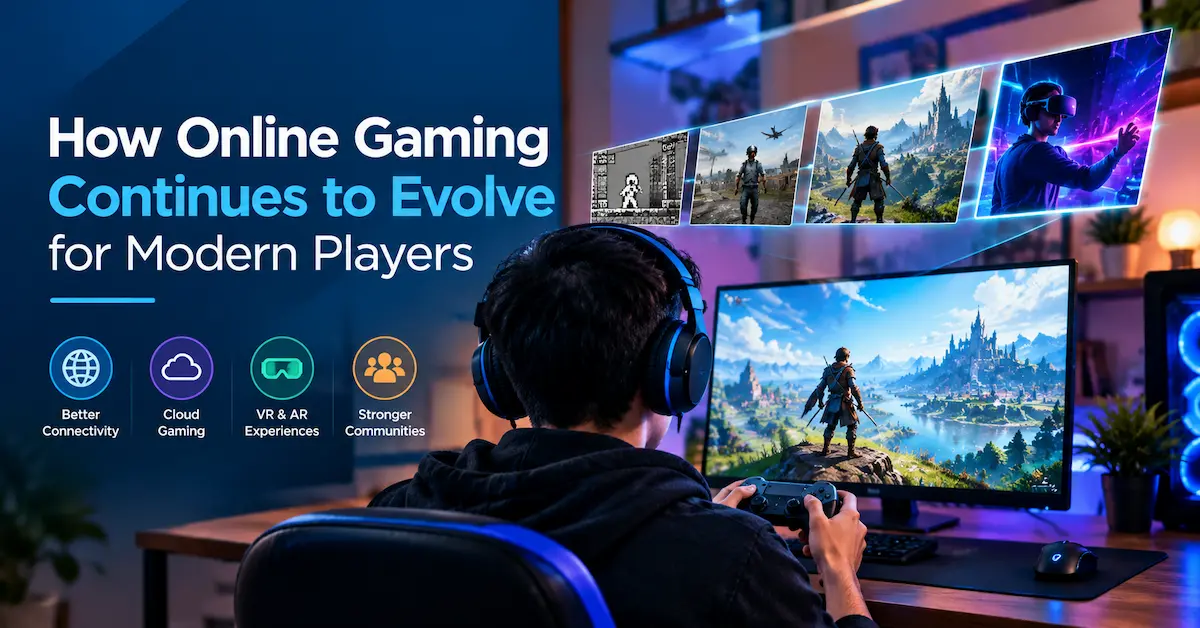
Online gaming has become a major part of modern digital entertainment. What once started with simple computer games has developed into a broad industry involving powerful hardware, internet connectivity, multiplayer platforms, digital communities, and constantly updated gaming experiences. Players today can enjoy games in many different ways, whether they prefer competitive matches, story-driven adventures, strategy games, or casual entertainment.
The growth of online gaming has also changed what players expect from their gaming experience. Fast loading times, reliable connections, accessible controls, and smooth performance have become important parts of choosing and enjoying a game. As technology continues to develop, these expectations are likely to influence how future gaming platforms and experiences are designed.
The Changing Nature of Computer Gaming
Computer gaming has changed significantly over the past several decades. Earlier games were often limited by the hardware available at the time. Developers had to work within strict limitations related to graphics, storage, processing power, and sound. Modern computers provide much greater capabilities, allowing developers to create detailed environments, complex game systems, and interactive worlds.
This progress has also made gaming more accessible. Players can now choose from thousands of titles across different genres and platforms. Digital distribution has reduced the need for physical copies, while online services make it easier to discover new games and updates.
The result is a gaming environment where players have more choices than ever before. Instead of depending on a small selection of available titles, users can explore different genres and communities based on their personal interests.
Why Internet Connectivity Matters
Internet connectivity has become one of the most important parts of modern gaming. Many games depend on online servers for multiplayer matches, account systems, downloadable content, updates, and community features.
A stable connection can make a significant difference in games where timing and responsiveness matter. Competitive players, for example, often depend on low latency and consistent performance. A weak or unstable connection can interrupt gameplay and create frustration.
Internet-based gaming has also created new opportunities for social interaction. Players can communicate with friends, join online communities, and participate in matches with people from different parts of the world. This social element has helped transform gaming from an individual activity into a shared digital experience.
The Importance of PC Performance
Gaming performance depends on several hardware and software factors. A computer’s processor, graphics hardware, memory, storage, and operating system can all influence how efficiently a game runs.
Graphics-heavy games may require stronger hardware to maintain smooth frame rates and detailed visuals. At the same time, well-optimized games can provide enjoyable experiences on less powerful systems. This is why optimization remains an important consideration for both developers and players.
Storage technology has also improved the gaming experience. Modern solid-state drives can reduce loading times and help games access large amounts of data more efficiently. As game worlds become larger and more detailed, fast storage can become increasingly useful.
Online Gaming and Player Communities
One of the most interesting developments in gaming is the growth of online communities. Players are no longer limited to interacting with people they know personally. Forums, social platforms, gaming servers, streaming services, and community websites allow players to share information and experiences.
These communities can provide useful resources for beginners and experienced players alike. Users may exchange gameplay strategies, discuss updates, troubleshoot technical issues, or simply talk about games they enjoy.
Community-driven information can also help players understand unfamiliar games. Guides and discussions often explain mechanics that may not be immediately obvious, making it easier for newcomers to get started.
Discovering New Gaming Experiences
With such a large number of games available today, discovering something interesting can sometimes be difficult. Players may use search engines, gaming websites, community recommendations, video content, and online guides to find new experiences.
A useful gaming resource can help users understand what a particular title offers before they spend time downloading or exploring it. Information about gameplay, compatibility, features, controls, and system requirements can make the discovery process easier.
For players researching a specific title or digital experience, resources such as cyroket2585 online can also become part of the broader process of finding relevant information and exploring gaming-related content.
The Role of Gaming Guides
Gaming guides have become increasingly valuable as games become more complex. Some modern titles contain extensive maps, progression systems, challenges, customization options, and hidden features. A player may need additional information to understand how different elements work together.
A well-written guide should provide useful information without making the experience unnecessarily complicated. Clear explanations, organized sections, and practical advice can help readers find the information they need quickly.
Guides can also save players time. Instead of repeatedly searching for small pieces of information across different sources, users can find related details in one organized resource.
Accessibility in Modern Gaming
Accessibility is another important part of the gaming industry. Developers increasingly consider how different players interact with games and what options can make gaming more comfortable.
Features such as adjustable text size, customizable controls, subtitles, color options, difficulty settings, and alternative input methods can help make games easier to use for a wider range of players.
Accessibility benefits more than one specific group. Players may use these features because of personal preferences, different hardware setups, temporary limitations, or simply because they provide a more comfortable experience.
Gaming Beyond Entertainment
Gaming is primarily a form of entertainment, but its influence extends into other areas of digital culture. Gaming communities have contributed to online communication, content creation, streaming, competitive events, and digital media.
Many players now watch gaming content even when they are not actively playing. Live streams, reviews, tutorials, gameplay videos, and discussions have created additional ways for audiences to interact with games.
This broader ecosystem means that a game can become more than a software product. It can become part of a community where players, creators, developers, and audiences interact with one another.
What the Future May Bring
The future of gaming will likely continue to be influenced by advances in computing, internet technology, graphics, artificial intelligence, and digital distribution. Faster hardware can support more detailed environments, while improved networks can make online experiences more responsive.
Cloud-based services may also provide additional ways to access games without relying entirely on local hardware. At the same time, traditional PC gaming is expected to remain important because many players value customization, hardware upgrades, and control over their gaming setup.
The development of virtual and augmented reality may create additional opportunities as well. These technologies can provide more immersive ways to interact with digital environments, although their long-term adoption will depend on factors such as cost, hardware comfort, software availability, and user demand.
Choosing a Better Gaming Experience
Players have different priorities when selecting games and gaming platforms. Some may focus on graphics and performance, while others care more about story, gameplay mechanics, multiplayer features, or community activity.
Understanding these differences can help players make more informed choices. Rather than focusing only on visual quality, it can be useful to consider system requirements, online features, update policies, controls, community support, and overall accessibility.
A good gaming experience is ultimately one that matches the player’s interests, equipment, and expectations.
Conclusion
Online gaming has developed into a diverse and constantly changing part of digital culture. Improvements in computer hardware, internet connectivity, software development, and online communities have created experiences that are very different from the games available in earlier generations.
For players, this development provides more choices and more ways to interact with digital entertainment. Whether someone enjoys competitive multiplayer games, independent projects, large virtual worlds, or simple casual experiences, modern gaming offers a wide range of possibilities.
As technology continues to advance, gaming will likely remain an important area of digital innovation. New tools and platforms may change how games are created, distributed, and experienced, while the basic appeal of interactive entertainment will continue to connect players around the world.
