

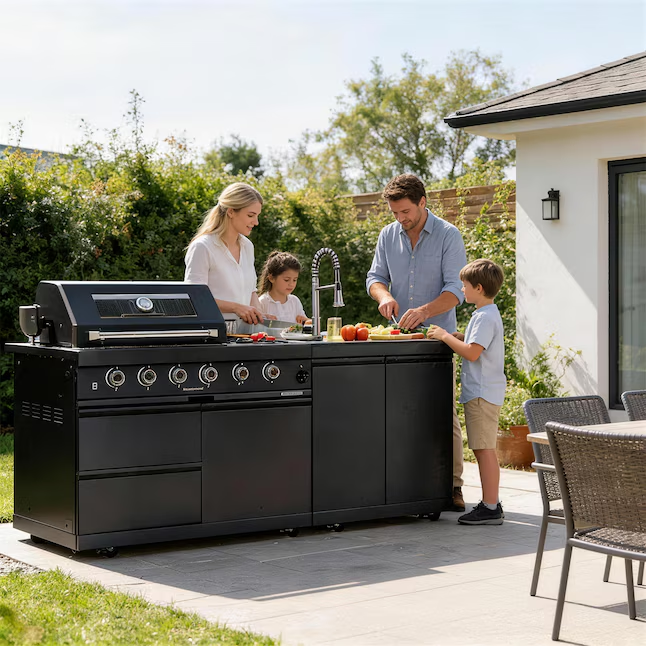
A backyard gas grill can turn ordinary meals into enjoyable outdoor cooking experiences. Whether you are preparing burgers for a family dinner, grilling vegetables for a weekend lunch, or hosting friends for a summer barbecue, the right grill makes cooking more convenient and enjoyable. With so many models, sizes, and features available, choosing the best gas grill for your backyard requires careful consideration.
From cooking space and fuel type to heat control and maintenance, several factors can influence your decision. Understanding these features will help you select a grill that fits your outdoor space, cooking habits, and budget.
1. Consider Your Backyard Space
Before shopping for a gas grill, evaluate the available space in your backyard, patio, or outdoor kitchen. A large grill may be suitable for a spacious garden, but it can feel crowded on a small balcony or compact patio.
Measure the area where you plan to place the grill and leave sufficient clearance around it. Consider the location of doors, windows, fences, outdoor furniture, and walkways.
You should also check the manufacturer’s clearance recommendations and local fire-safety requirements. Grills should be used outdoors in a well-ventilated area, away from combustible materials. Never operate a gas grill inside a home, garage, or enclosed space.
Choosing the right size helps create a comfortable and practical outdoor cooking area.
2. Choose Between Propane and Natural Gas
Gas grills commonly use liquid propane or natural gas. Each option has advantages, depending on your home and how you plan to cook.
Propane gas grills use refillable or exchangeable cylinders. They are convenient for many backyards because they do not require a permanent gas line. They can also be moved within the limits of the manufacturer’s instructions, provided the fuel cylinder is handled and stored safely.
Natural gas grills connect to a suitable natural gas supply. They can be convenient for homeowners who already have an outdoor gas connection because there is no need to replace a propane cylinder during normal use.
However, natural gas grills generally require an appropriate connection and professional installation where necessary. Propane and natural gas appliances are not automatically interchangeable. Always use the fuel type specified for the grill.
3. Select the Right Cooking Area
Cooking space determines how much food you can prepare at one time. A compact grill may be sufficient for a small household, while a larger model can be helpful for families and people who regularly host gatherings.
Think about the meals you typically prepare. If you mostly cook a few burgers, chicken portions, or vegetables, a modest cooking surface may be adequate. If you frequently prepare meals for a larger group, look for a grill with more usable cooking area.
Some models feature warming racks that provide additional space for keeping cooked food warm or preparing items that require gentler heat.
Rather than selecting the largest grill available, choose a size that matches your regular needs without consuming unnecessary outdoor space.
4. Understand Burner Configuration and Heat Control
Burners play a major role in how a gas grill distributes heat. Different models feature different burner counts, layouts, and control systems.
Multiple burners can make it easier to create separate cooking zones. For example, you may use higher heat on one side for searing while keeping another area at a lower temperature for slower cooking.
This arrangement is particularly useful when preparing different foods at the same time. It can also help reduce the risk of overcooking items that require less heat.
Look for controls that are easy to operate and allow you to adjust each burner independently. A built-in temperature gauge can provide useful information, although the temperature at the cooking surface may differ from the reading shown on the lid.
5. Check the Cooking Grate Material
Cooking grates affect heat retention, cleaning, and long-term durability. Common materials include porcelain-coated cast iron, stainless steel, and other coated metals.
Porcelain-coated cast-iron grates can retain heat effectively and may help produce attractive sear marks. However, the coating needs proper care to avoid damage.
Stainless-steel grates are valued for their corrosion resistance and relatively straightforward maintenance. Their performance depends on the grade of steel, construction quality, and overall design.
When comparing grates, consider how easy they are to clean and whether replacement parts are available. A well-maintained cooking surface can help provide consistent results over time.
6. Look for Useful Features
Modern gas grills can include a range of features designed to make outdoor cooking more convenient.
Useful options may include:
- Side burners: Helpful for preparing sauces, heating side dishes, or boiling water in suitable cookware.
- Warming racks: Provide additional space for cooked food.
- Side shelves: Offer a convenient place for ingredients and utensils.
- Built-in thermometers: Help monitor cooking temperatures.
- Electronic ignition: Makes starting the grill more convenient.
- Storage cabinets: Provide space for approved accessories and cooking equipment.
Not every feature is necessary. Prioritize the options that support your cooking habits instead of paying extra for features you may rarely use.
7. Evaluate Build Quality and Durability
A gas grill is an outdoor appliance, so its materials must withstand weather exposure, heat, and repeated use.
Check the construction of the body, lid, burners, cooking grates, handles, and frame. Stainless steel and other corrosion-resistant materials may be beneficial, particularly in environments with frequent rain or humidity.
A stable frame and sturdy wheels can also improve usability. If you expect to move the grill, check whether the wheels lock securely and whether the grill can be relocated safely according to the manufacturer’s instructions.
Review the warranty terms and availability of replacement burners, ignition components, grates, and other parts. Good after-sales support can make long-term ownership easier.
8. Set a Realistic Budget
Gas grills are available at a wide range of prices. Basic models may provide everything needed for occasional cooking, while premium grills can include larger cooking surfaces, advanced heat controls, higher-end materials, and additional burners.
When setting your budget, consider more than the initial purchase price. You may also need to account for a propane cylinder, fuel, a suitable cover, cleaning tools, utensils, and replacement parts.
If you choose a natural gas grill, installation costs may also apply.
A moderately priced grill with dependable construction and the features you actually need can be a better choice than an expensive model with unnecessary extras.
9. Consider Cleaning and Maintenance
Regular maintenance helps a gas grill remain functional and safe. Before purchasing, consider how easily you can access the cooking grates, grease tray, burners, and other components for cleaning.
After cooking, follow the manufacturer’s cleaning instructions and allow the appliance to cool as directed before performing maintenance.
Periodically inspect the grill for grease buildup, corrosion, damaged hoses, loose connections, and blocked burner openings. Gas connections should be checked according to the manufacturer’s guidance, and any suspected leak or damaged component should be addressed before the grill is used again.
Keep the grill covered when it is not in use if the manufacturer recommends a suitable weather-resistant cover.
10. Read Reviews and Compare Models
Once you understand your requirements, compare several gas grills within your budget. Read product specifications, warranty details, and reviews from verified purchasers.
Pay attention to recurring comments about heat distribution, ignition reliability, assembly, cleaning, durability, and customer service.
Independent product testing can also help you understand how different models perform under comparable conditions.
Whenever possible, examine the grill in person to assess its construction, control layout, stability, and available cooking space.
Conclusion
Choosing the best gas grill for your backyard involves balancing size, fuel type, burner performance, durability, features, and budget. The right model should suit your outdoor space and make it easy to prepare the meals you enjoy most.
By comparing cooking areas, evaluating construction quality, checking warranty support, and considering maintenance requirements, you can make a more informed purchase.
A well-chosen gas grill can become a valuable addition to your backyard, providing a convenient way to cook meals, enjoy time outdoors, and bring family and friends together throughout the year.
